5 Best Website Builders for Musicians I Tested in 2026
TL;DR
- Vitara.ai: Best for musicians who want to build a custom AI-powered website with flexible pages and workflows.
- Bandzoogle: Best for musicians who want built-in music tools like EPKs, music players, tour dates, and direct selling.
- Noiseyard: Best for independent artists who want a music-focused website live quickly with minimal setup.
- Wix: Best for musicians who want broad design flexibility, apps, ecommerce, and room to expand their website.
- Squarespace: Best for musicians who prioritize polished design, photography, video, and professional visual presentation.
Your music can live on Spotify, YouTube, Instagram, and plenty of other platforms.
But none gives you one place you fully control.
A good musician website should let fans hear your music, promoters find your EPK, venues check shows, and buyers purchase merch without jumping across different links.
Most website builders for musicians promise the same things: easy setup, great templates, and tools to grow your audience.
They do not all deliver them the same way.
So I compared five popular options around what matters most to musicians: music playback, tour dates, EPKs, merch, email capture, design control, mobile usability, SEO, pricing, and setup effort.
Here is the quick version.

Create artist pages, tour sections, booking forms, newsletter signups, merch flows, and custom experiences from simple AI prompts.
Start Building with Vitara.ai →
Quick Comparison: The 5 Best Website Builders for Musicians
| Builder | Best For | Standout Strength | Starting Point |
|---|---|---|---|
| Vitara.ai — Recommended | Custom AI-built musician websites | Custom pages and workflows from prompts | Free tier |
| Bandzoogle | Built-in musician tools | Music player, EPK, tours, direct sales | $9.16/mo annually |
| Noiseyard | Fast music-first setup | EPK, music, events, mailing list, store | $6.90/mo annually |
| Wix | Overall flexibility | Templates, apps, events, ecommerce | Free/paid plans |
| Squarespace | Visual design | Polished layouts, audio, portfolios, commerce | $19/mo annually |
Bandzoogle currently starts at $9.16 per month when billed annually, while Noiseyard’s Lite plan starts at $6.90 per month annually. Squarespace’s current U.S. Basic pricing is $19 per month when billed annually.
If you want music-specific features ready from day one, Bandzoogle and Noiseyard are the obvious starting points.
Wix gives you broader flexibility, while Squarespace is strongest when visual presentation is the priority.
Vitara takes a different route.
Instead of staying inside a predefined musician template, you can describe the site or workflow you want and create a more custom experience with AI.
Vitara’s current builder library includes dedicated options for artists, ecommerce sites, event websites, photography sites, and other use cases.
You can see
that approach in Vitara’s artist website builder.
How I Evaluated These Musician Website Builders
I did not want to compare these platforms by simply counting features on their pricing pages.
The real question is whether a musician can build and maintain the site they actually need.
So I used the same musician-site checklist for each option:
- Homepage and artist bio
- Music playback or streaming embeds
- Tour dates
- EPK or press section
- Email signup
- Merch or product page
- Booking/contact form
- Mobile-friendly design
- SEO controls
- Custom domain
I also checked whether those features were native or required extra apps, plugins, or higher-priced plans.
That matters.
A music website builder may technically support music, merch, and events while still making you stitch several tools together.
Customization mattered too.
I looked at how much freedom each builder gives you once you want to move beyond the original template.
For selling, I considered subscription costs, platform commissions, and how easily you can add products.
One disclosure before the rankings: Vitara.ai is our product.
That is why I am applying the same criteria to every builder and will point out Vitara’s limitations as clearly as its strengths.
Now, let us get into the individual builders.
Best Musician Website Builder for Custom AI-Powered Sites
1. Vitara.ai — Best for Building a Custom Music Website With AI

Vitara works differently from most website builders for musicians.
Instead of choosing a fixed template and filling preset blocks, you describe the website you want and let AI generate the structure, pages, forms, and logic around it.
That is useful if your site needs to go beyond a basic music player and bio.
You can create artist pages, newsletter forms, merch flows, booking forms, event pages, galleries, and other custom experiences without starting from a blank canvas.
Vitara’s artist website builder can generate portfolio pages, selling flows, SEO settings, contact forms, and custom sections from prompts.
The biggest advantage is customization.
If you want to change the layout or add a new workflow, you can refine the site with another prompt instead of rebuilding everything manually.
Paid plans also support custom domains and code editing or download, giving you more control as the site grows.
The tradeoff matters, though.
Vitara is not a dedicated music platform.
Bandzoogle gives musicians ready-made EPKs, music players, and tour calendars. With Vitara, you are creating the experience you want rather than switching on predefined musician features.
Key Musician Website Features
- AI-generated pages and layouts from prompts
- Custom booking, newsletter, and inquiry forms
- Ecommerce and merchandise workflows
- Event and tour pages
- SEO controls
- Custom-domain support on paid plans
- Editable and downloadable code on paid plans
Pricing
- Starter: Free
- Build: $20/month
- Scale: Starts at $50/month
Verdict: Vitara is a strong fit if you want an AI website builder for musicians with more freedom to create custom pages and workflows instead of staying inside a traditional music-site template.
Want to build beyond a basic artist portfolio?
Explore Vitara’s ecommerce website builder for merch or its event website builder for shows and launches.
Build custom booking flows, event pages, merchandise experiences, contact forms, and fan-focused sections without being tied to a fixed template.
Build Your Music Website →
Best Music-First Website Builder for Musicians
2. Bandzoogle — Best for Built-In Music Tools
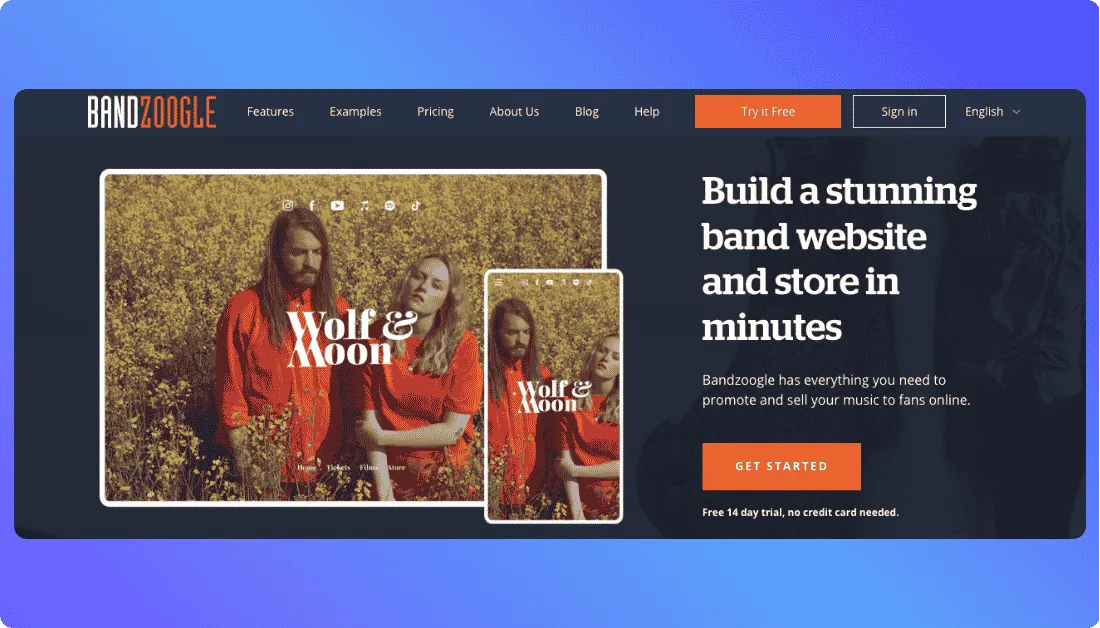
Bandzoogle feels like it was designed around the questions musicians actually ask.
Where is my music player?
How do I add tour dates?
Where does my EPK go?
Can I sell merch without giving the builder a cut?
Most of those tools are already built in.
Bandzoogle includes music players, tour calendars, mailing-list forms, EPK templates, music and merch selling, ticket sales, analytics, and integrations such as Bandsintown.
Its biggest advantage is how little you need to assemble yourself.
You are not searching through an app marketplace just to add basic musician features.
The EPK tools are especially useful. You can combine music, photos, a bio, press quotes, videos, contact information, downloads, and gig dates on one shareable page.
Selling is another strong point.
Bandzoogle currently charges 0% platform commission on sales, although payment-processing fees can still apply.
The limitation is flexibility.
Its system is built around Bandzoogle’s musician-focused structure. If you need unusual custom logic or workflows, a more open-ended builder may fit better.
Key Musician Website Features
- Built-in music players
- EPK and Onesheet templates
- Tour calendar
- Mailing-list signup tools
- Music, merch, and ticket selling
- Bandsintown and Bandcamp integrations
- 0% Bandzoogle commission on sales
Pricing
- Lite: $9.16/month billed annually
- Standard: $14.16/month billed annually
- Pro: $18.33/month billed annually
- 14-day free trial
Verdict: Bandzoogle is the strongest choice for musicians who want music-specific tools ready from day one and would rather avoid stitching several apps together.
Best Musician Website Builder for Fast, Music-First Setup
3. Noiseyard — Best for Getting a Music Website Live Quickly
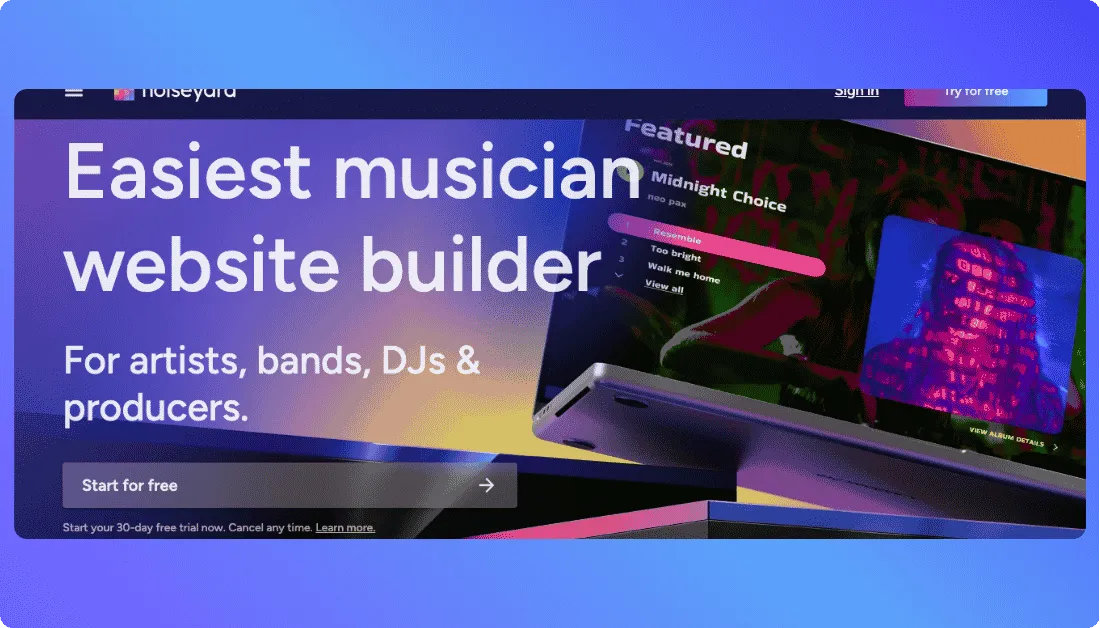
Noiseyard is a dedicated musician website builder.
You do not start with a blank canvas.
The platform gives you ready-made musician pages, then lets you customize the design, add music, announce gigs, collect emails, and build an EPK without separate plugins.
That makes setup straightforward.
The Lite plan includes an EPK page, event calendar, newsletter tools, unlimited mailing-list subscribers, and a custom domain.
If you want to upload and sell music or merch directly, you need the Standard plan or above.
That adds a sitewide music player, digital music sales, merchandise, discounts, download codes, a tip jar, and sales data.
Noiseyard also takes 0% commission on sales. Payment-provider transaction fees can still apply.
The main tradeoff is customization.
Its ready-made structure helps you launch quickly, but musicians who want unusual layouts, custom logic, or highly specific workflows may prefer a more open-ended builder.
Key Musician Website Features
- EPK and ready-made musician pages
- Event calendar and gig announcements
- Built-in newsletter tools
- Unlimited mailing-list subscribers
- Music player and uploads on Standard+
- Merch and digital music sales on Standard+
- 0% Noiseyard commission on sales
Pricing
- Lite: $6.90/month billed annually
- Standard: $11.90/month billed annually
- Unlimited: $16.50/month billed annually
- 30-day free trial
Verdict: Noiseyard is a good music website builder for independent artists who want to launch quickly and keep music, email, EPK, and selling tools in one system.
Best All-Around Website Builder for Musicians
4. Wix — Best for Flexibility, Apps, and Music Features
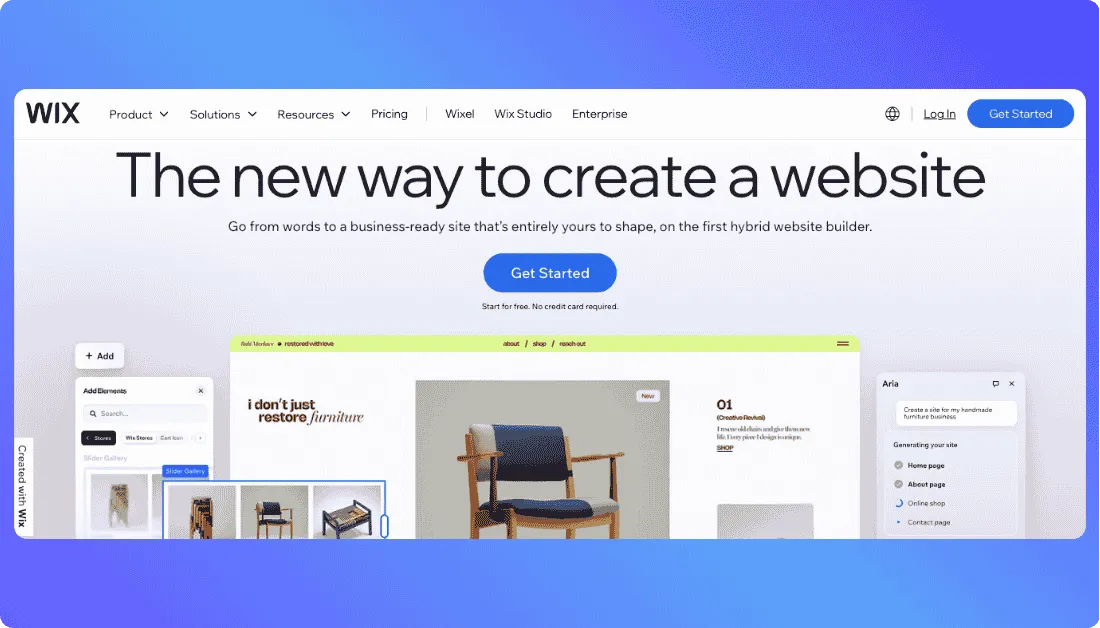
Wix gives you more room to experiment.
It combines musician-focused templates with a drag-and-drop editor, AI website creation, ecommerce, marketing tools, and an app marketplace.
Wix is also more music-friendly than a typical general-purpose builder.
Wix Music lets you create albums, singles, and playlists, customize the player, let fans stream or download tracks, and sell music from your site.
You can also embed Spotify and SoundCloud, use Bandsintown for tour dates, and add Wix Events for shows and ticketing.
That flexibility is its biggest advantage.
You can start with a simple artist site and later add a store, blog, bookings, or events without changing platforms.
But more options also mean more setup.
Unlike Bandzoogle or Noiseyard, Wix does not put every musician-specific feature inside one focused workflow. You may spend more time choosing apps, layouts, and settings.
One limitation is worth knowing: Wix says Wix Music is available in the Wix Editor but not the Studio Editor.
Key Musician Website Features
- Music-focused templates
- Wix Music player
- Track, album, and playlist uploads
- Spotify and SoundCloud embeds
- Wix Events and Bandsintown
- Ecommerce and marketing tools
- AI-assisted website creation
Pricing
Wix offers a free plan for testing and building, while paid-plan pricing varies by market and features.
If you want to accept payments, check the ecommerce-enabled plan available in your region before publishing.
Verdict: Wix is one of the best website builders for musicians who want broad design flexibility and a large ecosystem without moving to a developer-focused platform.
Still deciding whether Wix is worth it?
Read our full Wix review or compare the best Wix alternatives.
Best Musician Website Builder for Design
5. Squarespace — Best for Visual Artists and Design-First Music Sites
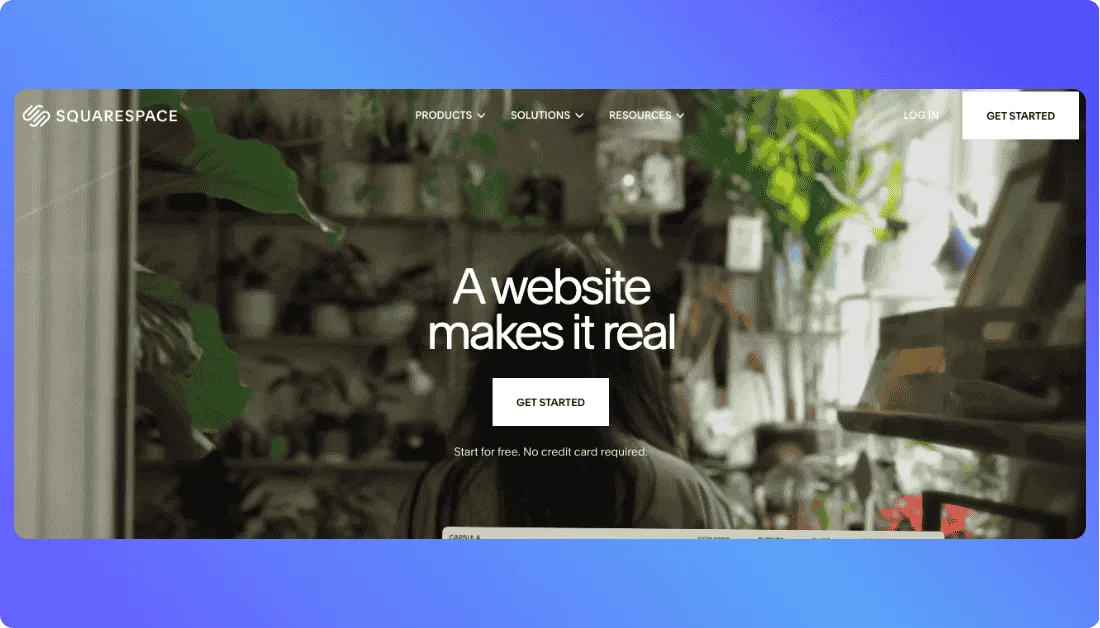
Squarespace makes sense when presentation is a major part of your music brand.
Its templates are polished and easy to adapt for album artwork, press photography, music videos, tour announcements, and artist portfolios.
It is not just a portfolio builder, either.
Squarespace lets you upload tracks with audio blocks, embed music from Spotify and SoundCloud, create event pages, connect Bandsintown, and sell merchandise or downloadable music through its commerce tools.
That makes it capable enough for artists and bands that want a professional website without spending hours adjusting every design detail.
The biggest strength is visual consistency.
Typography, galleries, images, video, and mobile layouts feel like parts of the same site instead of separate widgets.
The tradeoff is that Squarespace is not as music-specific as Bandzoogle or Noiseyard.
You can build an EPK, but you usually assemble it from normal pages, galleries, audio blocks, forms, and downloads rather than using one dedicated musician workflow.
Key Musician Website Features
- Music and audio blocks
- Spotify and SoundCloud embeds
- Events and Bandsintown integration
- Ecommerce for merch and digital downloads
- Mailing-list and contact forms
- Mobile-responsive templates
- Built-in SEO and analytics tools
Pricing
- Basic: $19/month billed annually
- Core: $29/month billed annually
- Plus: $49/month billed annually
- 14-day free trial
Squarespace currently lists those annual-plan prices for U.S. customers, with pricing varying by location.
Verdict: Squarespace is a strong website builder for artists and musicians who care most about polished design, photography, video, and professional presentation.
Not sure which plan makes sense?
Read our Squarespace pricing guide or compare the best Squarespace alternatives.
Which Musician Website Builder Fits Your Workflow?
There is no single winner for every musician.
The right choice depends on what you want to manage yourself and what you want the platform to handle.
| Your Situation | Go With | Why |
|---|---|---|
| Want a custom AI-generated website | Vitara.ai | Build custom pages and workflows from prompts |
| Want music tools ready immediately | Bandzoogle | EPK, music player, tours, and selling are built in |
| Want the fastest music-first setup | Noiseyard | Ready-made tools with less configuration |
| Want broad design and app flexibility | Wix | Large ecosystem with strong music features |
| Want a polished visual portfolio | Squarespace | Strong templates and presentation |
| Want maximum DIY control | WordPress | Highly customizable, but requires more maintenance |
If you mainly need music tools, Bandzoogle or Noiseyard will involve less setup.
If you want more freedom to shape the site around your workflow, Vitara or Wix makes more sense.
What to Check Before You Commit
Before paying for any musician website builder, test it with your real content.
Build your actual site. Add your tracks, EPK, tour dates, merch, and booking form instead of judging a polished demo.
Check what is truly built in. A feature may exist only through an external app, embed, plugin, or higher-priced plan.
Calculate the real selling cost. Include platform commissions, payment-processing fees, plugins, and ecommerce upgrades.
Check what you control. Your domain, mailing list, fan data, content, and export options matter if you ever change platforms.
Test everyday updates. Adding Friday’s gig or replacing an EPK photo should take minutes, not become a web-development task.
Start with AI, refine your site with prompts, connect a custom domain, and edit or download the code as your artist brand grows.
Try Vitara.ai Free →
Final Takeaway
The best website builder for musicians depends on how you want to work.
Bandzoogle is the easiest recommendation if you want music players, EPKs, tour tools, and direct selling built into one music-first platform.
Noiseyard is a strong choice if you want a simpler setup with musician-specific tools ready to use.
Wix gives you more flexibility and a larger app ecosystem, while Squarespace is better suited to musicians who care most about polished visual presentation.
Vitara.ai fits a different type of workflow.
It makes more sense when you want to describe a custom musician website, generate it with AI, and keep more freedom over how the experience works.
If you want to compare that approach with other AI builders,
see our Lovable vs Vitara, Base44 vs Vitara, and Bolt.new vs Vitara comparisons.
Frequently Asked Questions
What is the best website builder for musicians in 2026?
For built-in music tools, Bandzoogle is one of the strongest choices. Vitara is better suited to musicians who want a custom AI-generated site, while Wix offers broader flexibility and Squarespace focuses more heavily on visual design.
What is the best free website builder for musicians?
Wix and Vitara both let you start building without paying immediately, but free plans usually come with limits around domains, branding, storage, or advanced features.
Use the free version to build a real test site before deciding whether the paid plan is worth it.
Is Bandzoogle better than Wix for musicians?
Bandzoogle is usually easier if you want music-specific features such as EPKs, music players, tour dates, and direct sales already built in.
Wix is better if you want more design freedom, apps, and room to expand beyond a traditional musician website.
Can I build a musician website with AI?
Yes.
An AI website builder for musicians can generate layouts, pages, forms, and other functionality from prompts.
Vitara follows this approach instead of limiting you to predefined music templates. You can explore its AI website builder or read our guides to chat-based AI app builders and vibe coding tools to understand the workflow.
Is WordPress good for musicians?
WordPress can work well if you want maximum control and do not mind managing hosting, themes, plugins, updates, and security.
It is powerful, but it generally requires more maintenance than dedicated musician website builders.
If you are comparing other design-first platforms too, our Webflow alternatives, Webflow pricing, and Framer pricing guides are useful starting points.
You can also compare v0 vs Webflow and v0 vs Framer.
What should every musician website include?
At minimum, include your music, artist bio, upcoming shows, EPK or press information, contact details, email signup, streaming links, and a clear way to buy merch or support your work.
A strong press section also needs professional visuals, which is where a photography website builder can help organize galleries and media assets.
If selling is important, our guide to AI ecommerce website builders can help you compare broader store-building options.
What’s New?