Top 5 Best AI Ecommerce Website Builders in 2026
AI ecommerce website builders are everywhere right now.
Every website builder, ecommerce platform, and online store tool is racing to add AI features. Some call it an AI store builder. Some call it an AI website generator. Some just add “AI-powered” to the pricing page and hope nobody asks too many questions.
But most store owners are still spending hours on work that has nothing to do with actually selling.
- They struggle to design a store that looks clean and trustworthy.
- They write product descriptions from scratch for every item.
- They edit homepage sections, banners, and product pages again and again.
- They try to set up SEO, payments, and store layouts without knowing what matters.
AI ecommerce website builders are supposed to fix all of that. And some of them actually do. But this market has grown so fast that it’s hard to tell which tools genuinely help you launch a better online store and which ones just create a nice-looking homepage with weak ecommerce features behind it.
I compared 5 AI ecommerce website builders across store design, product pages, AI features, ease of use, pricing, and real ecommerce flexibility to find out which ones are actually worth using.
Here’s what I found.

Create custom product pages, filters, checkout flows, dashboards, and store logic with AI prompts.
Start Building with Vitara.ai →
Quick Comparison Table: Best AI Ecommerce Website Builders
Before we get into the full reviews, here’s a quick side-by-side look at the 5 best AI ecommerce website builders worth comparing.
| Tool | Best For | AI Strength | Ecommerce Strength | Starting Price |
|---|---|---|---|---|
| Vitara.ai | AI-built ecommerce websites with frontend and backend | Turns plain text prompts into working web apps, with code, backend logic, and custom flows | Useful for stores that need more than a basic template, like custom checkout flows, product filters, dashboards, or booking-style features | Free plan available; paid plans from around $20/month |
| Wix AI | Design control and ease of use | Prompt-to-site generation, AI sections, AI design help, and built-in AI business tools | Product management, payments, inventory, SEO tools, marketing, and multichannel selling options | Free plan available; ecommerce requires a paid plan |
| Squarespace Blueprint AI | Beautiful, polished storefronts | Brand-led AI website generation, curated layouts, AI copy, and design suggestions | Product pages, checkout, responsive templates, built-in SEO tools, and marketing features | 14-day free trial; paid plans start from around $16/month |
| Hostinger AI | Budget-friendly ecommerce launch | AI store generation, AI product descriptions, AI SEO tools, logo maker, and image tools | Simple product selling, payments, shipping, taxes, hosting, and ecommerce support | Ecommerce plans start from around $3.99/month on promo pricing |
| Manus | Custom interactive ecommerce websites | AI agent that can create full-stack sites, custom logic, calculators, configurators, and guided flows | Helpful for differentiated shopping experiences, product logic, customer accounts, payments, and analytics | Free plan available; Pro starts from around $20/month |
Here is my quick takeaway for you:
- Vitara.ai is the best option if you want AI to build something more flexible than a standard storefront.
- Wix AI is better if you want design control
- Squarespace is great for polished visuals
- Hostinger is the budget pick
- Manus is worth looking at if you need custom ecommerce logic or interactive buying flows.
Top 5 Best AI Ecommerce Website Builders in 2026 (Explained in Detail)
Let me now walk you through each tool. I have covered what it does, who it is best for, where its AI features actually help, how useful it is for ecommerce, pricing, and the overall experience of building an online store with it.
1. Vitara.ai
2. Wix AI
3. Squarespace Blueprint AI
4. Hostinger AI
5. Manus
1. Vitara.ai
⭐Best For
Founders, creators, and small businesses that want an AI ecommerce website builder that can create more than a basic online store template.
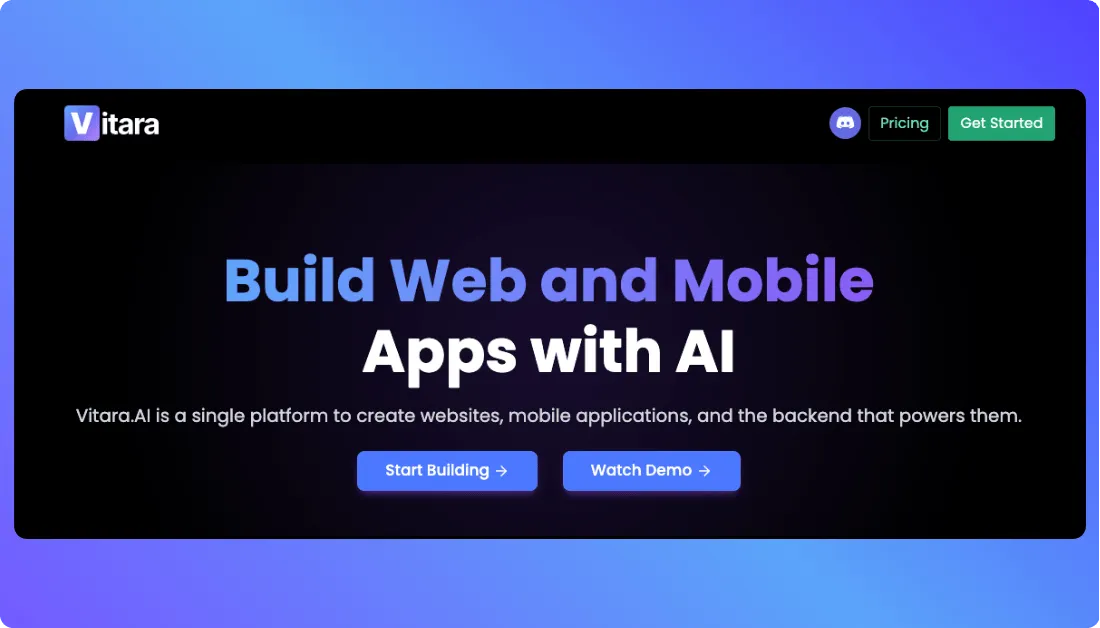
Vitara.ai is the most interesting tool on this list because it does not feel like a normal drag-and-drop website builder.
Instead of only giving you a few ecommerce templates and asking you to edit sections manually, Vitara.ai lets you describe what you want to build in plain English. From there, it helps generate the website or app structure with AI-powered development support.
That makes it useful if your ecommerce idea needs something a little more custom.
For example, you may want an online store with product filters, custom checkout logic, customer dashboards, appointment-style ordering, quote request forms, or a unique product browsing flow. A standard ecommerce website builder can sometimes feel limiting for that kind of setup.
Vitara.ai is better suited for people who want AI to help build the actual experience, not just write homepage copy or generate a pretty layout.
The main thing to understand is that Vitara.ai is not the most traditional option here. If you want a simple template where you just change colors, upload products, and publish in one afternoon, Wix or Hostinger may feel easier.
But if you want more flexibility and you like the idea of building with prompts, Vitara.ai gives you a stronger starting point.
Key Features
- AI-powered development platform that lets you build with prompts.
- Useful for creating custom ecommerce websites, web apps, dashboards, and product flows.
- Code editing and code download available on paid plans.
- Custom domain support on the Build plan.
- Faster AI processing on paid plans.
- Good fit for ecommerce ideas that need custom logic instead of only a fixed template.
- Flexible enough for founders who want to create something more product-like than a basic storefront.
Pricing
- Starter plan available for free with limited usage
- Build plan starts at $20/month
- Build includes 100 monthly credits, code editing, code download, custom domain support, and faster AI processing
- Scale plan starts at $50/month with 250 monthly credits
- Custom plans are available for larger or more specific requirements
Describe your ecommerce idea and let Vitara help create the frontend, backend, product flow, and code.
Build with Vitara AI →
2. Wix AI
⭐Best For
Small businesses that want strong design control, ecommerce tools, and an easy AI website builder without needing to code.
Wix AI is one of the safest choices for beginners because it gives you a nice balance between AI speed and manual control.
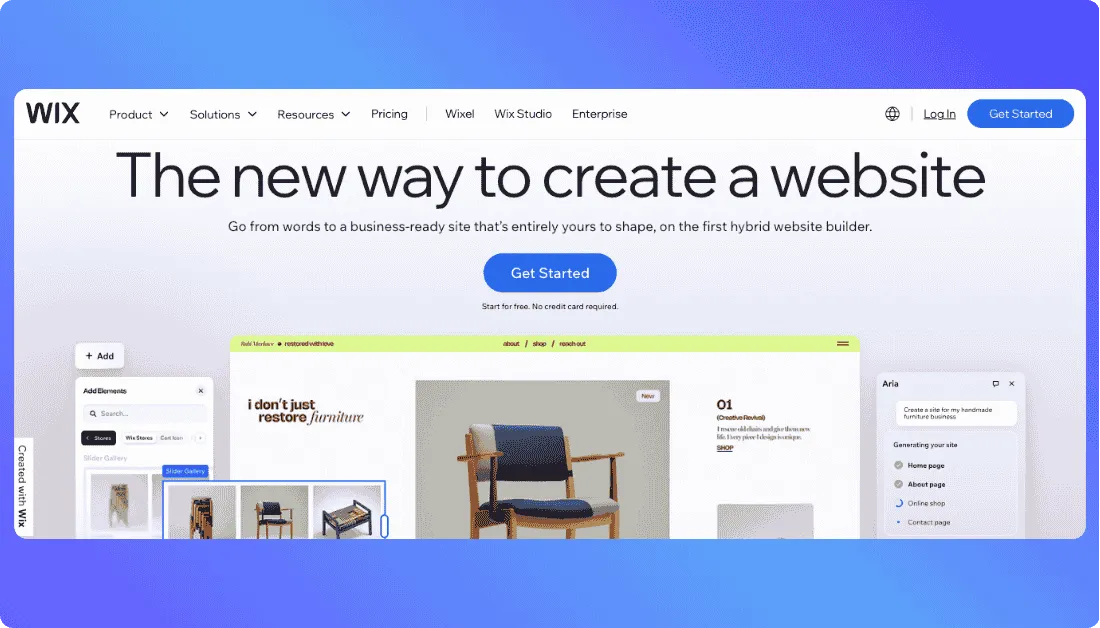
You can describe the type of online store you want, and Wix can generate a business-ready website with relevant pages, design sections, copy, and visuals. After that, you are not stuck with whatever the AI gives you. You can still use the editor to move sections, change layouts, adjust colors, update product pages, and shape the store around your brand.
That is where Wix does well.
Some AI ecommerce website builders give you a fast result, but editing it later feels awkward. Wix is different because its regular website editor is already mature. The AI helps you get started, while the drag-and-drop editor lets you clean things up properly.
For ecommerce, Wix covers the basics most small stores need. You can manage products, accept payments, handle inventory, use marketing tools, and work on SEO from inside the platform.
It is especially helpful if you are building a small product store, a boutique brand, a service business with products, or a creator shop.
The downside is that Wix may not be the best long-term fit for very large ecommerce operations. If you are planning a complex store with advanced backend needs, custom workflows, and a huge catalog, you may eventually want something more specialized.
But for most small businesses, Wix AI is easy to recommend.
Key Features
- AI website generator that turns prompts into a complete website structure.
- Built-in AI agent for design, content, and business help.
- Drag-and-drop editor for changing layouts, colors, images, and sections.
- Ecommerce tools for products, payments, inventory, and product galleries.
- Built-in SEO tools, including AI meta tag suggestions and SEO checklists.
- Mobile-friendly website output with reliable hosting included.
Pricing
- Free plan available for testing the builder
- Light plan starts at around $17/month
- Core plan starts at around $29/month and includes basic ecommerce features
- Business plan starts at around $39/month with standard ecommerce features
- Business Elite starts at around $159/month for advanced ecommerce and larger business needs
- Prices can vary by location, billing cycle, and taxes
Also Read:
Want to see how Wix compares to other tools?
Best Wix Alternatives
3. Squarespace Blueprint AI
⭐Best For
Design-led brands that want a clean, polished online store without spending hours fixing messy layouts.
Squarespace Blueprint AI is a strong pick if you care about how your store looks.
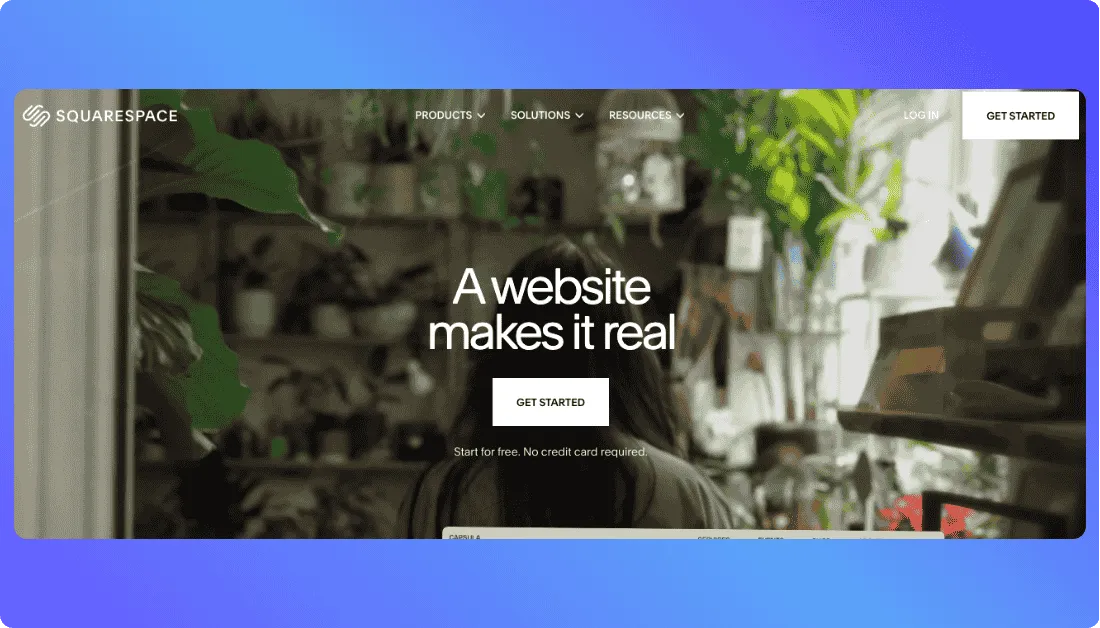
Some AI website builders create pages quickly, but the final result can feel a little generic. Squarespace takes a more curated approach. Blueprint AI asks questions about your business, brand, pages, and design preferences, then creates a personalized website draft with layouts, copy, images, and styling suggestions.
The result usually feels more polished than what you get from many basic AI store builders.
That makes Squarespace a good option for fashion brands, beauty stores, wellness products, artists, creators, photographers, handmade shops, and premium DTC brands. Basically, if your products need to look good before people trust them, Squarespace is worth considering.
The ecommerce side is simple but useful. You can sell products and services, create product pages, accept payments, use SEO features, and manage a clean online storefront. It also gives you mobile-friendly templates, which matters because many shoppers will find your store from Instagram, TikTok, Pinterest, or mobile search.
The tradeoff is flexibility.
Squarespace is great when you like its design system. But if you want deep layout control, highly custom store logic, or a more experimental ecommerce experience, it can feel more limited than Wix or Vitara.ai.
Still, for a beautiful AI-generated ecommerce website that feels professional fast, Squarespace Blueprint AI does a lot right.
Key Features
- Blueprint AI builder for creating personalized websites from guided inputs.
- AI-generated layouts, copy, images, and design suggestions.
- Clean templates with strong typography, spacing, and mobile responsiveness.
- Squarespace AI tools for product descriptions, page copy, blog posts, and email content.
- Good fit for creators and brands that want a polished storefront without design stress.
Pricing
- 14-day free trial available
- Paid plans start at $16/month
- Basic plan supports selling products but includes a 2% online store transaction fee
- Core, Plus, and Advanced plans remove the standard online store transaction fee
- Advanced plans unlock stronger ecommerce features like lower payment processing rates, advanced merchandising, and commerce APIs
Also Read:
Compare Squarespace with other leading app builders:
Top Squarespace Alternatives
Squarespace Pricing Explained
4. Hostinger AI
⭐Best For
Beginners, solopreneurs, and small business owners who want to launch an ecommerce website quickly without spending too much upfront.
Hostinger AI is one of the easiest tools to understand on this list.
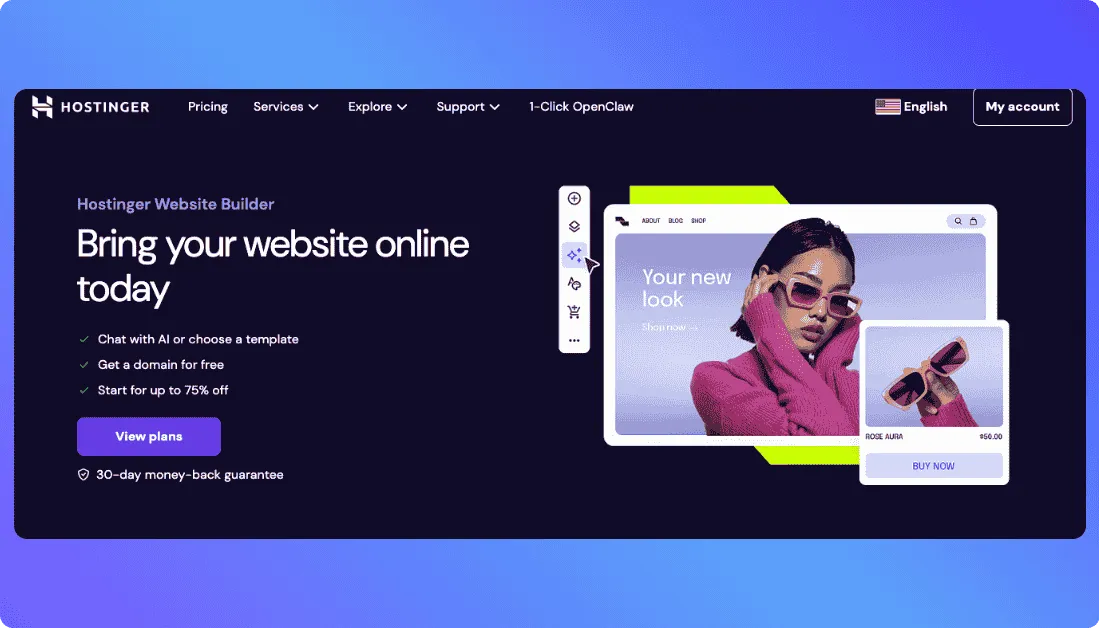
You describe the type of online store you want, choose a style, and the AI website builder helps create a ready-to-edit site. From there, you can change the copy, images, colors, pages, and product sections using its drag-and-drop editor.
The best part is that Hostinger does not try to make the process feel too technical.
If you are building your first online store, that matters. You do not want to spend three days figuring out where to add products, how to connect payments, or how to write basic product descriptions.
Hostinger gives you a simple ecommerce setup with hosting, AI tools, product selling features, email, SEO tools, and a custom domain included on longer plans. It also supports both physical and digital products, which is helpful if you sell things like ebooks, templates, courses, merch, handmade goods, or small product collections.
When I looked at Hostinger AI as an ecommerce website builder, the biggest strength was speed.
You can go from idea to a decent-looking online store much faster than you would with a more complex platform. The AI product generator is also useful if you hate writing product descriptions from scratch. You can upload product images, add the basic details, and let AI help with titles, descriptions, and visuals.
Where it falls short is advanced ecommerce flexibility.
Hostinger is great for simple stores, but it is not the tool I would pick for a complex catalog, advanced automation, custom checkout logic, or a store that needs a large app marketplace.
But if your goal is to launch a clean, affordable ecommerce website without coding, Hostinger AI is a strong budget-friendly choice.
Key Features
- AI website builder that creates a store from a short prompt.
- Drag-and-drop editor for changing sections, images, text, colors, and pages.
- Ecommerce support for physical products, digital products, shipping, taxes, and payments.
- AI product generator for creating product titles, descriptions, and images.
- AI Writer, AI image generator, AI logo maker, and AI SEO assistant included.
- Supports up to 1000 products on the Business Website Builder plan.
- Built-in SEO, analytics, email marketing, and marketing integrations.
Pricing
- 14-day free trial available
- Business Website Builder plan starts at $3.99/month on promotional 48-month pricing
- Plan renews at $16.99/month after the first term
- Includes ecommerce features, AI tools, hosting, free email, and a free domain for the first year
- Supports up to 1000 products, zero Hostinger transaction fees, and 100+ payment methods
- Prices are listed without VAT and may change based on region, term length, and promotions
5. Manus
⭐Best For
Founders, creators, and teams that want to build custom ecommerce experiences instead of editing a fixed store template.
Manus is not a typical ecommerce website builder.
It works more like an AI development assistant that can build full-stack websites and web apps from plain English prompts. That means you can ask it to create a product store, a customer dashboard, a booking flow, a subscription page, a quote calculator, or a more interactive buying experience.
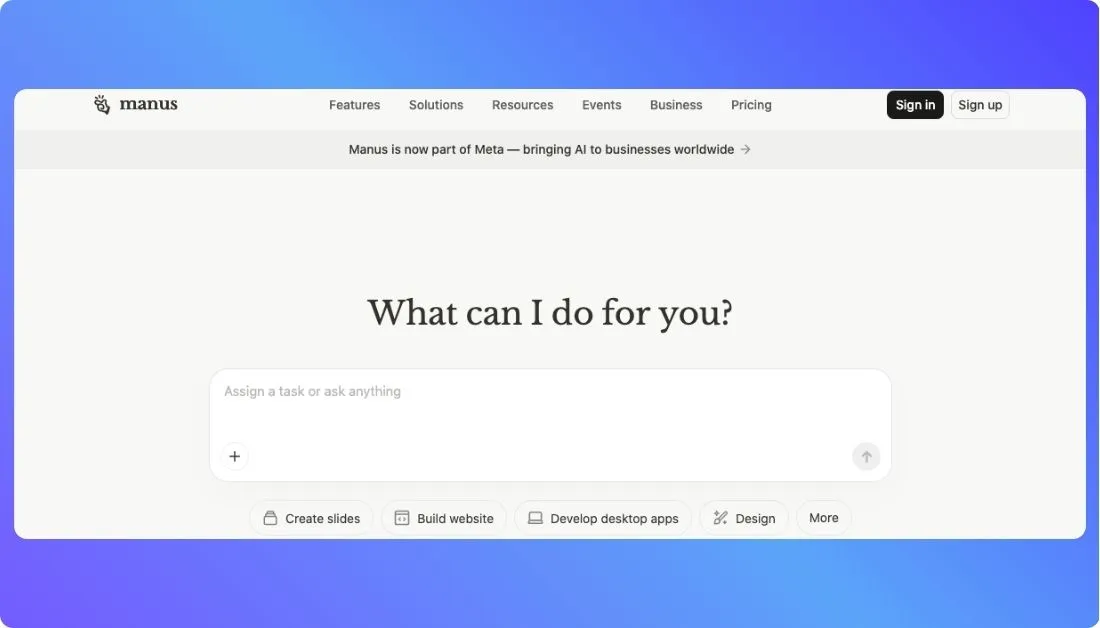
This makes Manus useful if your ecommerce idea does not fit neatly into a standard template.
For example, maybe you want a product configurator where customers choose size, color, material, and add-ons. Maybe you want a pricing calculator before checkout. Or maybe you need a store with login pages, user accounts, Stripe payments, lead capture, analytics, and a small backend database.
A normal AI website builder may struggle with that.
Manus is stronger when the website needs logic behind it. It can create the frontend, backend, database, authentication, and payment setup through a conversational build process. You describe what you need, and Manus works through the technical pieces for you.
The tradeoff is that you still need to review everything carefully.
If you are building a real ecommerce website, you should test the checkout flow, product logic, mobile layout, forms, analytics, SEO settings, and payment setup before sending traffic to it. AI can speed up the build, but it should not replace proper quality checks.
Manus is best for people who want more control than a standard ecommerce template can offer. If you just want a simple store with five products, Hostinger or Wix will probably feel easier. But if you want something custom and interactive, Manus is one of the more flexible options here.
Key Features
- Conversational AI website builder that creates full-stack web apps from prompts.
- Can generate frontend, backend, database, and user authentication.
- Supports ecommerce stores, dashboards, booking systems, membership sites, and custom web apps.
- Built-in Stripe integration for payments, products, subscriptions, and checkout flows.
- AI-powered SEO optimization with meta tags, structured data, semantic HTML, and SEO-friendly URLs.
- Full code export, custom domain support, version rollback, and design edit mode.
Pricing
- Free plan available with limited usage
- Free plan includes access to Chat Mode and Manus 1.6 Lite in Agent Mode
- Pro plan starts at $20/month with 4,000 monthly credits
- Higher Pro plan starts at $40/month with 8,000 monthly credits and a 7-day free trial
- Team plan starts at $20 per seat/month
- Website hosting and usage costs may apply separately after free monthly allowances
Side-by-Side Comparison: Which AI Ecommerce Builder Should You Choose?
Not every AI ecommerce website builder is made for the same type of store.
Some are better when you want a quick website that looks clean. Some are better when you care about design control. And some are better when your store needs custom logic, product flows, or something more advanced than a basic template.
Here’s the simple way to decide.
Choose Vitara.ai if:
You want an AI ecommerce website builder that can create more than a standard storefront.
Vitara.ai makes the most sense if your store idea needs custom features like product filters, dashboards, booking flows, quote forms, customer portals, or a more app-like shopping experience.
You may want to skip basic template builders if you already know your ecommerce website needs something more flexible.
Go beyond simple storefronts and build ecommerce experiences with custom logic and downloadable code.
Explore Vitara.ai →
Choose Wix AI if:
You want AI speed, design freedom, and an easy editor.
Wix AI is a strong choice if you want to generate your store quickly, then still have full control over the layout, colors, product sections, images, and pages.
It’s especially helpful for small businesses that want a good-looking online store without touching code.
Choose Squarespace Blueprint AI if:
You want the most polished design with minimal effort.
Squarespace Blueprint AI is best for brands where visuals matter a lot. Think fashion, beauty, wellness, creators, artists, photographers, and premium product stores.
It may not give you the deepest customization, but it helps you build a clean, professional-looking storefront without fighting the design.
Choose Hostinger AI if:
You want a low-cost store that can go live quickly.
Hostinger AI is a good fit if you’re a beginner, solopreneur, or small business owner who wants to launch fast without spending much upfront.
It gives you the basics: AI website creation, product selling, hosting, SEO tools, payments, and simple ecommerce features in one place.
Choose Manus if:
You need custom ecommerce logic, calculators, configurators, or guided selling experiences.
Manus is worth considering if your store needs more than product pages and a checkout button.
It can help create interactive ecommerce experiences, such as product configurators, pricing calculators, customer dashboards, guided shopping flows, or custom web app-style stores.
For a simple store, it may feel like more than you need. But for a custom ecommerce idea, it gives you room to build something different.
Best AI Ecommerce Website Builder by Use Case
Best for Beginners
Hostinger AI or Wix AI.
Hostinger AI is better for a low-cost launch, while Wix AI gives you more design control. Both are easy to use and do not require coding.
Best for Serious Ecommerce
Vitara.ai.
Vitara.ai is a better fit when your store needs more than a basic template. It can help build custom flows, product logic, dashboards, and app-like ecommerce experiences.
Best for Design-Led Brands
Squarespace Blueprint AI.
Squarespace is the strongest pick for stores where visuals matter. It works well for fashion, beauty, wellness, lifestyle, creator, and premium product brands.
Best for Existing Store Pages
Instant.
Instant is useful for teams that already have an ecommerce setup and want better landing pages, product pages, or campaign pages without rebuilding the full store.
Best for SEO-Focused Stores
Wix AI or Vitara.ai.
Wix AI is easier for built-in SEO basics like meta tags, page structure, and content editing. Vitara.ai is better when you need more control over custom site structure.
Best for Custom Product Experiences
Manus.
Manus is a good choice for calculators, configurators, guided selling flows, customer dashboards, and ecommerce ideas that need custom logic.
Best for Small Product Catalogs
Squarespace or Hostinger AI.
Squarespace is better for polished product presentation. Hostinger AI is better when price and speed matter more.
Best for Larger or More Custom Catalogs
Vitara.ai or Wix AI.
Wix AI works well for growing small businesses that want an easier editor. Vitara.ai is better when your catalog needs custom filters, flows, or backend logic.
AI Ecommerce Website Builder Features to Look For
1. AI Store Generation
The builder should create a usable store structure from your prompt, not just a homepage with random sections.
2. Product Description Generator
Good AI ecommerce tools help you write product descriptions faster, while still letting you edit the final copy.
3. SEO Controls
Look for editable page titles, meta descriptions, URLs, image alt text, sitemaps, blog tools, and clean page structure.
4. Checkout and Payments
A good-looking store is not enough. Customers should be able to pay easily, safely, and without confusion.
5. Inventory Management
The platform should support product variants, stock tracking, collections, and basic order management.
6. Mobile Responsiveness
Your store should look clean on phones because many shoppers will visit from mobile search, ads, Instagram, or TikTok.
7. Editing Flexibility
You should be able to change AI-generated layouts, copy, images, product sections, and navigation without starting over.
8. Marketing Tools
Look for email marketing, discounts, analytics, social selling, abandoned cart tools, and useful integrations.
9. Scalability
Choose a builder that can still support your store as you add more products, get more traffic, and process more orders.
Final Verdict: What Is the Best AI Ecommerce Website Builder?
If you want the best AI ecommerce website builder overall, Vitara.ai is my top pick.
It gives you more flexibility than a basic store template because it can help build custom ecommerce websites, product flows, dashboards, quote forms, customer portals, and app-like shopping experiences from prompts. That makes it a strong choice if you want AI to do more than just generate a homepage.
Here is the final ranked list:
1. Vitara.ai — Best overall for custom AI ecommerce websites
2. Wix AI — Best for design control and all-in-one ease
3. Squarespace Blueprint AI — Best for polished design
4. Hostinger AI — Best budget option
5. Manus — Best for custom interactive ecommerce experiences
For most users who want something more flexible than a standard store builder, Vitara.ai is the strongest option. For beginners who want more visual control, Wix AI is easier. For design-led brands, Squarespace Blueprint AI is excellent. For budget launches, Hostinger AI is hard to ignore. And for custom calculators, configurators, dashboards, and guided shopping tools, Manus is one of the most interesting options.
Compare more popular app builders and internal tool platforms:
Best 5 AI tools for building travel websites
Top 5 AI Platforms for Building a Fitness Website
Top 5 Enterprise Vibe Coding Tools
FAQs
What is the best AI ecommerce website builder?
Vitara.ai is the best overall choice if you want to build a custom AI-powered ecommerce website. Wix AI is better if you want an easier drag-and-drop editor with strong design control.
Can AI build a complete ecommerce website?
Yes, many AI ecommerce website builders can create a complete store structure. But you still need to edit product details, brand copy, images, pricing, shipping, taxes, and checkout settings before publishing.
Which AI ecommerce website builder is best for beginners?
Hostinger AI and Wix AI are the easiest options for beginners. Hostinger is better if you want a low-cost launch, while Wix AI gives you more control over the design.
Which AI ecommerce builder is best for custom stores?
Vitara.ai and Manus are the best options for custom ecommerce ideas. They are useful when your store needs product logic, customer dashboards, quote forms, calculators, configurators, or guided selling flows.
Which AI ecommerce builder is best for polished design?
Squarespace Blueprint AI is the best choice for polished design. It works especially well for fashion, beauty, wellness, lifestyle, creator, and premium product brands.
Which AI ecommerce builder is cheapest?
Hostinger AI is usually one of the most budget-friendly options for launching a simple online store. It is a good fit for beginners, solopreneurs, and small product catalogs.
Can I use AI to write product descriptions?
Yes. Many AI ecommerce website builders include product description generators. Just make sure you edit the final copy so it sounds accurate, specific, and natural for your brand.
Can I build an ecommerce website without coding?
Yes. Tools like Wix AI, Squarespace Blueprint AI, and Hostinger AI are built for no-code store creation. Vitara.ai and Manus are better if you want AI to help with more custom website or app-like functionality.
What is the best AI tool for building an online store fast?
Hostinger AI is one of the fastest options if you want to launch a simple store quickly. Wix AI is also fast, but gives you more room to customize the design after the AI creates the first version.
What is the best AI ecommerce builder for small businesses?
Wix AI is a strong choice for small businesses that want design freedom, ecommerce tools, SEO features, and an easy editor. Hostinger AI is better for smaller budgets, while Vitara.ai is better for more custom store ideas.
Can AI ecommerce builders connect payments?
Yes, most serious AI ecommerce website builders support payment setup in some form. Before launching, always test the checkout flow to make sure payments, taxes, shipping, and order confirmations work properly.
Are AI ecommerce website builders good for SEO?
They can be, but the tool alone will not guarantee rankings. Look for editable title tags, meta descriptions, clean URLs, alt text, mobile-friendly design, fast loading, and blog support. Wix AI and Squarespace are easier for basic SEO, while Vitara.ai can be better if you need more control over custom structure.
Is AI enough to run an ecommerce store?
No. AI can help you build the store, write copy, generate product descriptions, and speed up design work. But you still need a clear product strategy, good images, pricing, fulfillment, customer support, SEO, and marketing.
What’s New?