WeWeb Alternatives: 5 AI App Builders You Should Try
WeWeb is a no-code front-end builder designed to help you build custom web apps fast, without writing code. Its drag-and-drop editor gives you fine control over UI design while connecting smoothly to APIs, databases, and external tools.
But WeWeb isn’t the perfect fit for everyone.
Some users need something easier to learn. Others want built-in AI features, more backend flexibility, or self-hosting options. And with so many tools on the market, it’s hard to know what’s actually worth your time or money.

That’s why we created this guide.
In this article, you’ll discover five of the top WeWeb alternatives in 2026, each chosen for their strengths in areas like price, AI-powered workflows, database integration, and developer freedom.
Let’s dive in.
TL;DR: Which Weweb Alternatives Should You Pick
- Choose Vitara if: You want to go from idea to a full working app quickly without managing frontend and backend separately
- Choose Bolt.new if: You need fast prototyping directly in the browser, especially when speed matters more than deep customization
- Choose Cursor if: You want strong AI support inside a coding environment with full control over the build process
- Bottom line: Vitara focuses on end to end app building, Bolt.new is built for speed, and Cursor gives developers maximum control
Quick Comparison Table of WeWeb Alternatives
This table breaks things down so you can quickly see which tool fits your workflow.
| Tool | Category | Best For | Backend Support | Code Export | Pricing |
|---|---|---|---|---|---|
| Vitara | AI App Builder | Founders and teams who want to build full stack apps from prompts | Built in backend with full stack support | Yes | Free plan available, paid plans based on usage |
| Bolt.new | AI App Builder | Fast prototyping and building apps directly in the browser | Built in backend with integrations | Yes | Usage based pricing with tokens or credits |
| Codev | AI No code Builder | Users who want to create apps with minimal coding effort | Built in backend | Limited | Freemium with paid upgrades |
| Replit | Cloud Development Platform | Builders who want coding, hosting, and deployment in one place | Built in backend and database support | Yes | Free plan available, paid plans start monthly |
| Cursor | AI Coding IDE | Developers who want deep AI assistance inside their coding workflow | External backend required | Yes | Paid plans with premium AI usage |
Reasons Why Users Start Exploring WeWeb Alternatives
Reddit threads, G2 comparisons, and WeWeb’s own community forum show a consistent pattern. People usually like WeWeb’s frontend flexibility, but once they start building a real product, the friction becomes clearer. That is where alternatives start to look more appealing.
WeWeb feels more technical than many users expect
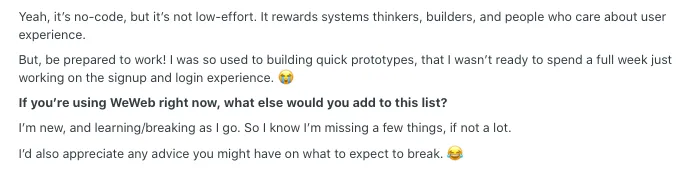
A recurring theme on Reddit is that WeWeb may be no-code, but it is not low-effort. Users talk about needing technical fluency for auth flows, permissions, responsive states, and debugging. For non-developers, that gap often becomes the first reason to look elsewhere.
Source of information:Reddit
Building a full app often means managing extra backend tools
Many users start exploring alternatives when they realize WeWeb is usually just one part of the stack. In Reddit discussions about MVP building, people recommend pairing it with Xano, which helps, but also means more setup time and more moving parts compared with tools that generate more of the stack in one flow.

Source of information:Reddit
Pricing becomes a pain point once basic access control enters the picture
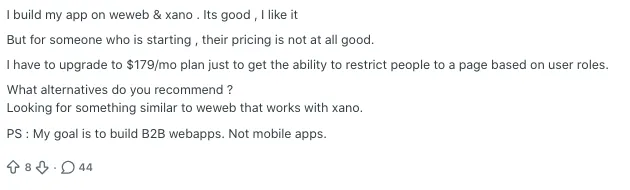
One Reddit thread sums up a frustration that shows up often in no-code communities. A user says they had to upgrade to a much more expensive plan just to restrict page access by user role. That kind of pricing friction pushes early-stage builders to compare other options quickly.
Source of information:Reddit
Some official tutorials and examples feel outdated
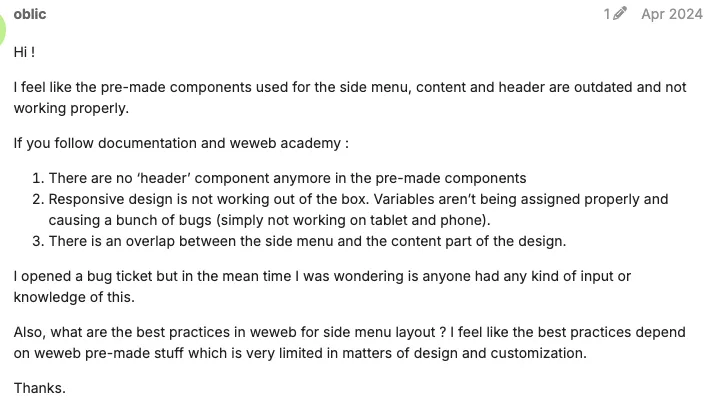
On WeWeb’s own forum, users explicitly say some pre-made components and docs feel outdated or do not work as expected anymore. When builders have to second-guess official guidance, they naturally begin checking whether another platform offers a smoother learning path.
Source of information:WeWeb Community
Debugging can become frustrating because problems span multiple layers
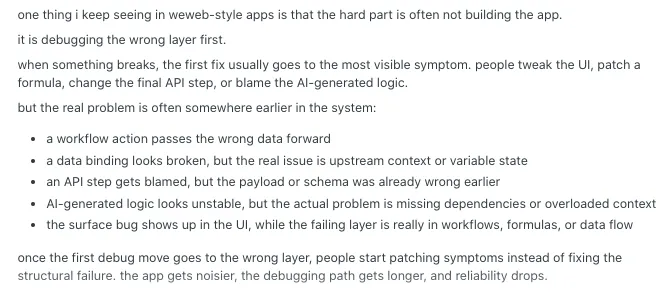
A newer post in the WeWeb subreddit highlights a common pain: when something breaks, users may waste time fixing the visible symptom while the real issue sits in workflows, data flow, or APIs. That kind of debugging experience makes some builders want a toolchain that feels easier to trace and control.
Source of information:Reddit
Our Criteria for Ranking the Top WeWeb AI Alternatives
Choosing the right alternative to WeWeb is about more than popularity. It’s about finding a platform that matches your goals, whether you want easier design, smarter AI tools, stronger backend support, or better pricing.
To create this list, we reviewed more than 25 leading no-code and low-code platforms. We analyzed user feedback, expert opinions, and verified ratings on G2, Capterra, GetApp, and Gartner. Then we applied a clear set of criteria to identify the best options.
Here’s what we focused on
- Ease of Use
Can non-developers build quickly without hitting a steep learning curve? - AI and Automation
Does the platform include intelligent tools such as AI-generated logic, layout assistance, or workflow automation? - Design Flexibility
How much creative control does it offer for UI and branding customization? - Backend and API Integrations
Does it connect easily with databases and third-party tools like Airtable, Xano, or Supabase? - Pricing and Scalability
Is it affordable for small teams yet powerful enough to scale with growth? - Self-Hosting and Export Options
Can users host their projects independently or export clean code for long-term control? - Community and Support
Is there strong documentation, an active community, and responsive technical support?
After reviewing these factors, we narrowed the list to five standout WeWeb alternatives. Each option was chosen for its reliability, innovation, and ability to solve real-world challenges in app building.
Up next, we’ll explore each platform in detail to help you choose the best fit for your workflow.
Top 5 WeWeb Alternatives and Competitors
1. Vitara

Vitara is a no-code platform built for teams who want fast, AI-assisted web app development without losing control over customization. What sets Vitara apart is its AI Visual Builder, which turns simple prompts into full page layouts with interactive components and workflows.
While WeWeb focuses heavily on manual design control, Vitara emphasizes speed and automation. You describe what you need, and Vitara drafts the UI and logic for you right in the editor. From there, you can edit visually or fine-tune the logic behind every component.
It also supports API integration, real-time previews, and built-in user authentication. This makes it a solid choice for building portals, dashboards, and internal tools.
Key features:
- AI-powered Visual Builder for rapid UI creation
- Built-in logic editor for custom workflows
- Role-based access control and user management
- API connections with REST, GraphQL, and third-party tools
- Real-time preview and testing environment
Best for:
Startup teams, product managers, and no-code builders who want to launch MVPs quickly with smart automation.
WeWeb alternative for:
Faster prototyping, AI workflows, and intuitive UI generation without steep learning curves.
Thought You Should Learn:
2. Bolt.New
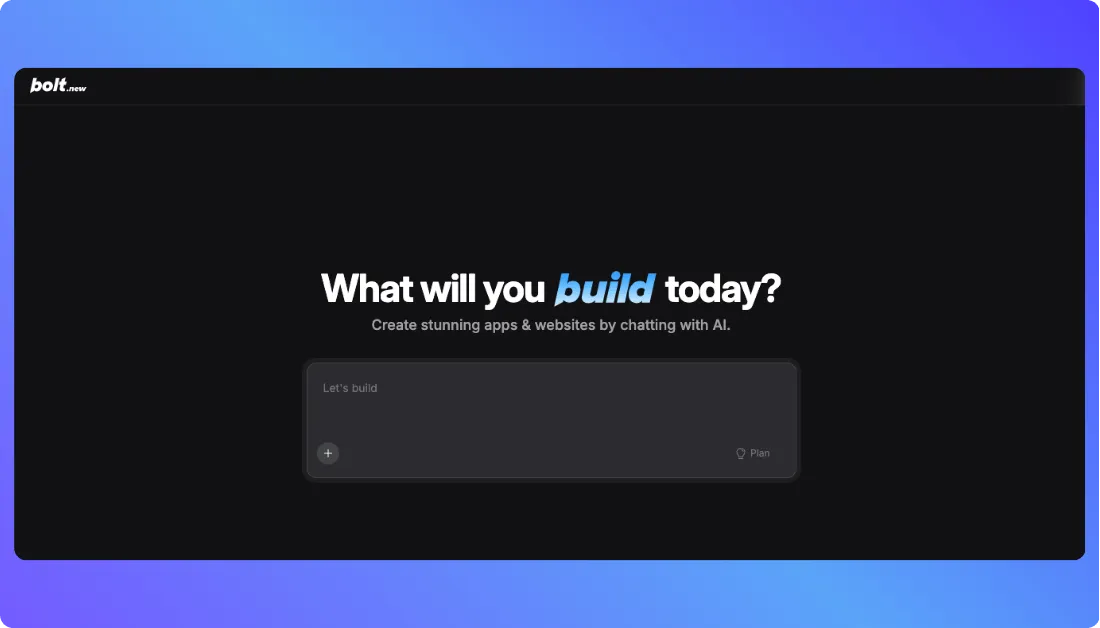
Bolt.New takes the concept of no-code further by offering full-stack app generation powered by AI. Unlike WeWeb, which primarily handles front-end building, Bolt gives you a working backend out of the box, including Node.js, Prisma ORM, and PostgreSQL.
Using natural language prompts, users can generate full apps with UI, backend logic, authentication, and database schemas. Bolt also supports GitHub syncing, code export, and flexible hosting options. This makes it ideal for startups and developers who want to move from idea to deployment quickly.
If you’re building something serious like a SaaS product, internal system, or data dashboard, Bolt gives you more technical power while keeping the creation process smooth and guided.
Key features:
- AI-powered app generator for frontend and backend
- Developer-friendly stack: React, Node.js, Prisma, PostgreSQL
- GitHub integration and code export
- Built-in user authentication, database, and API layers
- Scalable infrastructure for MVPs and live products
Best for:
Tech-savvy founders, indie hackers, and developers building full-stack apps with modern tooling.
WeWeb alternative for:
End-to-end app creation, backend support, and full deployment control.
Also Read:
3. Codev – Best WeWeb alternative for developer-style control in no-code
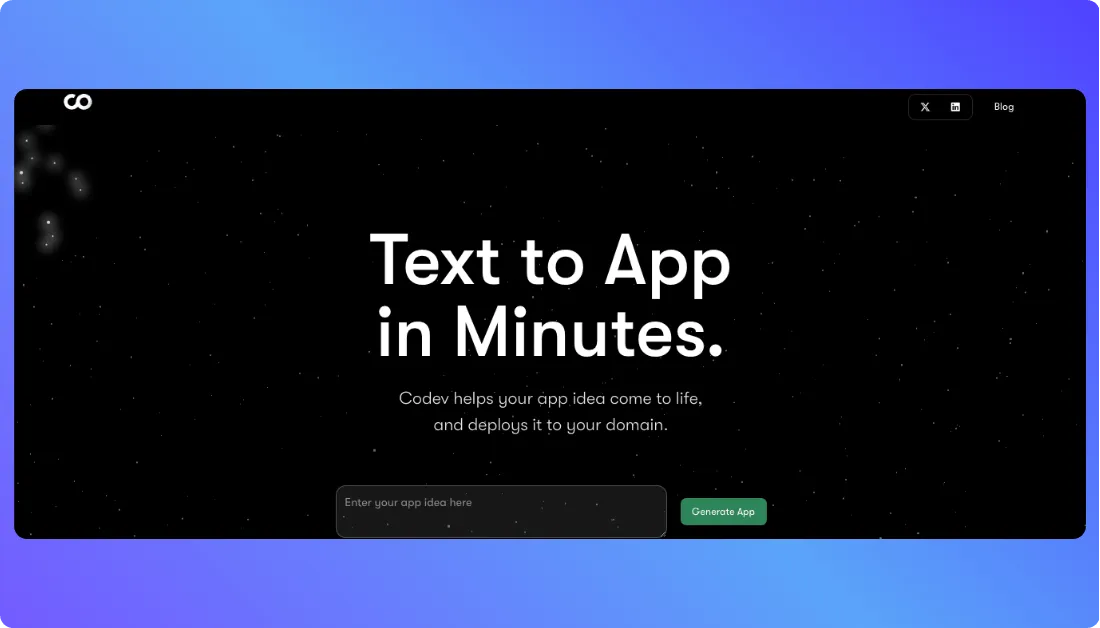
Codev is a powerful no-code platform tailored for users who want the flexibility of code without writing it. It blends a visual builder with developer-like tools, giving you control over logic, states, and API responses. Unlike WeWeb, which focuses on UI-first design, Codev allows you to build complex workflows and data-driven components from the ground up.
What sets Codev apart is its modular structure and real-time logic editor. You can define how data flows, connect to APIs, and even simulate backend behavior without setting up a server.
It’s a great fit for teams that want to build serious applications with custom flows but don’t want to start from scratch with traditional code.
Key features:
- Visual logic builder with advanced state management
- API and database integration with dynamic schema mapping
- Modular component system with reusable blocks
- Built-in version control and project collaboration
- Frontend preview synced with logic changes
Best for:
Product teams and advanced no-code users building feature-rich apps with dynamic behaviors.
WeWeb alternative for:
Greater control over app logic, workflows, and modular design without leaving the visual interface.
Also Read:
10 Best Codev Alternatives and Competitors
4. Replit – Best for cloud-based development and real-time collaboration
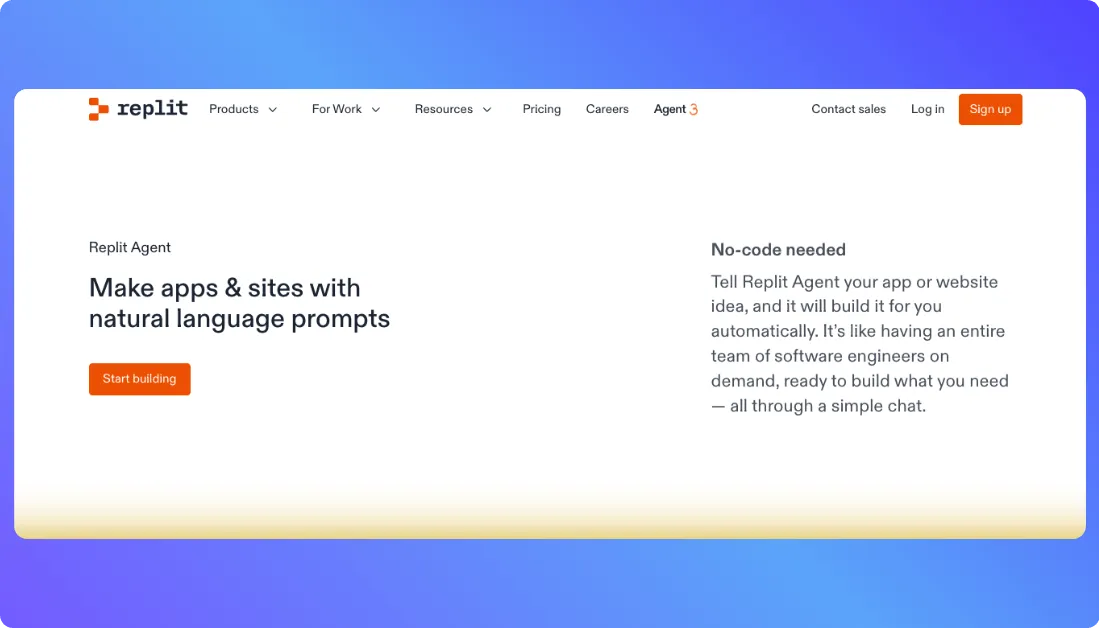
Replit is a cloud-based IDE built for teams that want to write, test, and deploy apps in one place. While WeWeb is a visual builder focused on front-end creation, Replit lets you code full-stack applications directly in the browser with AI-assisted support from its Ghostwriter feature.
What makes Replit stand out is its focus on developer productivity. You can build, run, and deploy apps with no setup. It supports over 50 programming languages, real-time multiplayer editing, and instant hosting.
For teams comfortable with writing code but looking for a fast, collaborative environment, Replit offers more flexibility than no-code tools while keeping the workflow simple and efficient.
Key features:
- Cloud IDE with full-stack support
- Ghostwriter AI assistant for coding help and suggestions
- Real-time team collaboration in a shared workspace
- One-click deployment and hosting
- Built-in database and environment configuration
Best for:
Developers and teams building real apps collaboratively in the cloud with coding flexibility.
WeWeb alternative for:
Live coding, backend logic, real-time collaboration, and full control over deployment.
Also Read:
5. Cursor – Best for AI-powered development inside your IDE
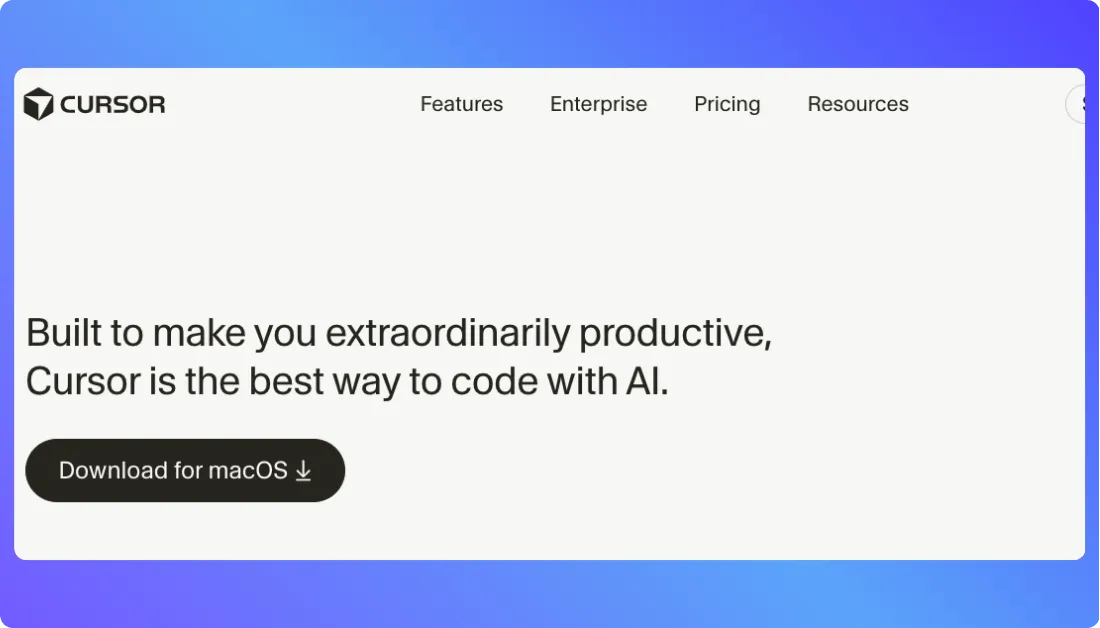
Cursor is an AI-enhanced code editor built on top of VS Code. It is designed for developers who want smart assistance while working on real projects. While WeWeb focuses on visual, no-code UI building, Cursor helps you work directly with code through intelligent features such as inline suggestions, contextual search, and quick error correction.
What makes Cursor a strong WeWeb alternative is its balance between automation and control. It does not replace coding; it enhances it. With deep codebase understanding, Cursor helps developers refactor logic, explore dependencies, and build faster without switching environments.
For developers who prefer to write code but still want AI speed and clarity, Cursor delivers both performance and comfort inside the editor.
Key features:
- Built-in AI assistant with deep context understanding
- Inline code explanations, autocompletion, and refactoring
- Forked from VS Code with a familiar interface
- Works locally to maintain data security
- Scales well for large projects and team workflows
Best for:
Developers working on complex or existing codebases who want AI to simplify writing, reviewing, and debugging.
WeWeb alternative for:
Hands-on development with AI assistance, efficient coding, and total project control.
Also Read:

WeWeb Alternatives Comparison Table
Before diving deeper into each platform, here’s a clear side-by-side comparison of the top WeWeb alternatives. Use this table to quickly see which platform fits your goals, technical needs, and workflow style. Each option excels in different areas, from visual automation to full-stack development and AI-powered vibe coding.
| Tool | Best For | Standout Features | WeWeb Alternative For |
|---|---|---|---|
| Vitara | AI-powered no-code apps with workflow automation | AI visual builder, built-in workflows, API integration, real-time previews | Faster prototyping, visual automation, and simplified app logic |
| Bolt.New | Full-stack AI app generation and rapid MVPs | Frontend and backend scaffolding, GitHub sync, code export, auth and database layers | End-to-end app development with backend support and developer flexibility |
| Codev | Developer-style control in visual no-code tools | Visual logic editor, reusable components, dynamic data mapping, version control | Granular control over logic and workflows without writing code |
| Replit | Cloud-based development and real-time collaboration | Browser-based IDE, Ghostwriter AI, one-click deployment, team collaboration | Live coding, backend integration, and team-based development in the cloud |
| Cursor | Smart code editing and AI-assisted programming | Inline AI suggestions, full project context, refactoring tools, local security | Code-first development with AI help for speed, clarity, and control |
Final Thoughts
WeWeb is a powerful choice for building responsive front-end applications with no-code speed and developer-grade control. But like any tool, it has its limits. If you’re running into constraints around backend flexibility, AI automation, self-hosting, or advanced team features, there are better options out there.
The WeWeb alternatives we’ve covered offer real value for every kind of builder. Whether you’re a solo founder launching your first MVP, a fast-moving startup building internal tools, or a product team working on complex client apps, there’s a platform here that fits your workflow.
Even better? Many of these tools offer generous free tiers or low-cost plans, so you can explore and build without upfront risk.
The no-code landscape is evolving fast. These WeWeb competitors are pushing boundaries in automation, scalability, and developer-friendliness. Try a few. Test what works. Choose the one that helps you build with speed and confidence.
Frequently Asked Questions
1. What is WeWeb best used for?
WeWeb is ideal for building custom front-end web apps without code. It works well for dashboards, client portals, and internal tools that need responsive design, API connections, and clean UI control. It's especially popular with teams that want visual freedom while connecting to external backends like Xano, Airtable, or Supabase.
2. Why would someone look for a WeWeb alternative?
People usually explore alternatives when they hit limitations in pricing, scalability, backend integration, or hosting flexibility. Some want AI features for faster prototyping. Others need full control over backend logic or prefer open-source or self-hosted solutions. The right alternative depends on your project’s needs and technical comfort level.
3. Is there a free version of WeWeb?
Yes, WeWeb offers a free plan, but it comes with restrictions. Key features like role-based access, full preview mode, and advanced logic tools may require a paid plan. If you're on a tight budget or want more backend support, some alternatives offer better free tiers.
4. Which WeWeb alternatives offer full-stack app building?
Tools like Vitara and Bolt.New support both front-end and back-end development. Vitara lets you generate full-stack apps using natural language prompts, while Bolt.New gives you a browser-based IDE for coding, deploying, and hosting everything in one place.
5. Can I self-host apps built with WeWeb?
WeWeb does allow for code export, but full self-hosting control can be limited depending on your plan. If you need full deployment freedom or want to host apps on your own infrastructure, consider alternatives like Vitara, Codev, Bolt.New, or Appsmith.
6. What’s the easiest WeWeb alternative for non-developers?
Vitara is a great choice for non-technical users. It uses AI prompts and a visual builder to generate apps quickly without needing to understand code. Softr and Glide are also beginner-friendly options for creating simple apps powered by Airtable or Google Sheets.
What’s New?