Top 10 Cursor Alternatives in 2026

Quick Snapshot:
- Cursor AI helps developers write code faster using GPT-4.
- It integrates directly with Visual Studio Code.
- It is ideal for inline suggestions, refactoring, and debugging.
- But what if you need more than just autocomplete?
If you’ve used Cursor for a while, you already know it makes coding faster with AI autocomplete, codebase chat, and agent-style edits. But the moment you need more than an AI code editor, things can start feeling limiting.
- Full-stack app generation? Cursor helps you write the code, but you still handle most of the setup.
- Built-in deployment? You’ll usually need another platform for hosting, databases, and production workflows.
- Non-technical team access? Cursor is still mainly built for developers, not founders, PMs, or business teams.
For teams that want idea-to-app building, AI coding, frontend, backend, database setup, and deployment working together without jumping between five different tools, that’s a real problem.
And if you’re also feeling these limitations and looking for the best Cursor alternative, this guide is for you.
I tested the best AI coding tools and app builders against Cursor across coding support, agent features, full-stack development, pricing, ease of use, deployment, and team workflows so you don’t just get what Cursor offers, but more, without the same limitations.
Let’s get into this!
Quick Overview of Cursor Competitors and Alternatives
| Cursor Alternative | Best For | Key Strength | Best Suited For |
|---|---|---|---|
| Vitara.AI | Full app generation via prompts | Turns natural language prompts into full stack apps with frontend, backend, and database logic | Startups, founders, product managers, small businesses, and development teams |
| Replit Agent | Browser based AI app development | Lets users build, edit, collaborate, and deploy apps directly from the browser | Beginners, educators, remote teams, and developers wanting a cloud IDE |
| Mutable.AI | Code refactoring and documentation | Automates refactoring, documentation, and test generation | Developers and teams maintaining large or complex codebases |
| Hostinger Horizons | No code web app creation | Combines AI app building, hosting, and domain management in one platform | Entrepreneurs, non technical users, startups, and small businesses |
| Windsurf | Agentic AI powered development | Provides a Cursor like AI IDE with strong agent workflows and codebase awareness | Professional developers, engineering teams, and privacy conscious teams |
| GitHub Copilot | IDE based AI coding assistance | Works inside VS Code, JetBrains, Neovim, and other popular IDEs | Developers and enterprises already using GitHub workflows |
| Anima / Locofy / TeleportHQ | UI to code conversion | Converts Figma and design files into responsive frontend code | Designers, frontend developers, agencies, and product teams |
| Void | Open source, privacy first AI coding | Offers a VS Code like open source editor with flexible AI model support | Developers focused on privacy, local control, and open source tooling |
| Lovable | Prompt based app and website building | Helps users create apps and websites through conversational AI prompts | Founders, non technical teams, indie hackers, and product builders |
Top Cursor Alternatives in 2026
As AI-assisted development tools continue to evolve, developers and teams are seeking alternatives to Cursor AI that offer enhanced capabilities, broader integrations, and more intuitive interfaces. Whether it’s for full-stack development, collaborative coding, or AI-driven prototyping, the following tools have emerged as leading options for Cursor AI in 2026.
Vitara.AI – Best for Full App Generation via Prompts
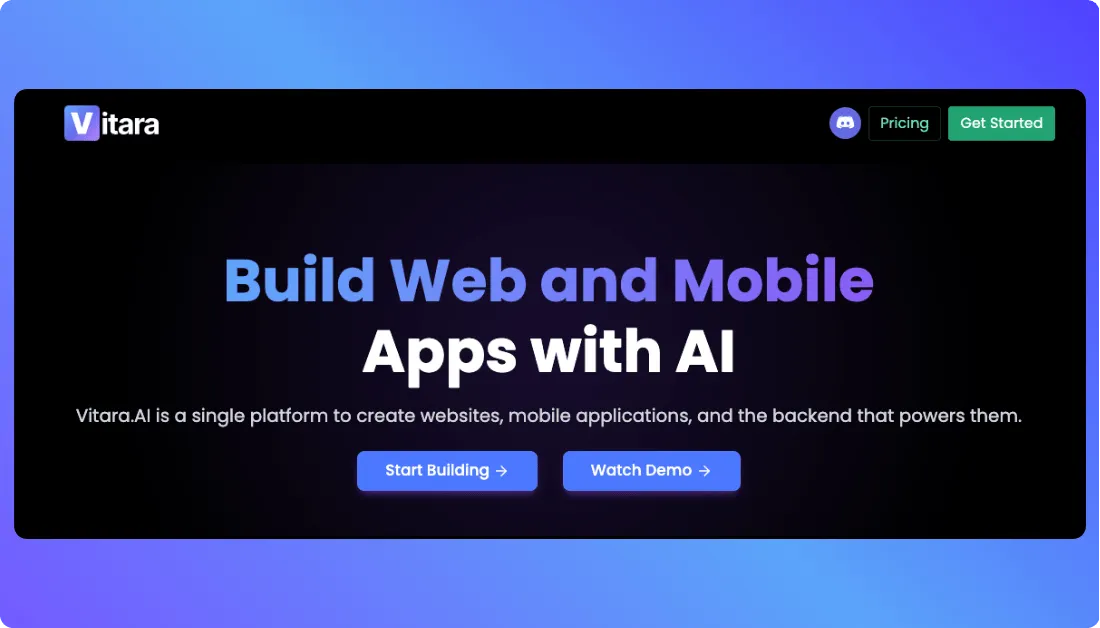
Vitara.AI is an AI-powered development platform designed to transform natural language prompts into full-stack applications. It caters to a wide range of users, from startups and small businesses to enterprises and product managers, aiming to streamline the software development process.
Key Strengths
- Natural Language to Code: Allows users to describe application requirements in plain English, which the AI then converts into functional code, covering both frontend and backend components.
- Full-Stack Development: Supports the generation of complete applications, including user interfaces, business logic, and database integrations, reducing the need for multiple tools.
- Browser-Based IDE: Provides a web-based integrated development environment, eliminating the need for local setup and enabling development from any device with internet access.
- Team Collaboration: Facilitates collaborative development with features that allow multiple users to work on the same project simultaneously, enhancing productivity and communication.
- Cost-Effective: Offers competitive pricing plans suitable for various team sizes and budgets, making it accessible for startups and larger organizations alike.
Pricing
Vitara.AI offers a tiered pricing model:
- Starter: Free plan designed for beginners exploring AI-powered development.
- Build: $20/month, aimed at users seeking more freedom to create and deploy applications.
- Elevate: Custom pricing for teams requiring advanced features and support.
Best Suited For
- Startups and Small Businesses: Looking to rapidly develop and deploy applications without extensive coding resources.
- Enterprises: Seeking to streamline their development processes and reduce time-to-market for new applications.
- Product Managers: Who need to prototype and iterate on application ideas quickly, without deep technical involvement.
- Developers: Aiming to enhance productivity by leveraging AI for routine coding tasks and focusing on complex problem-solving.
You Might Like:
Replit Ghostwriter – Ideal for Collaborative and Browser-Based Development
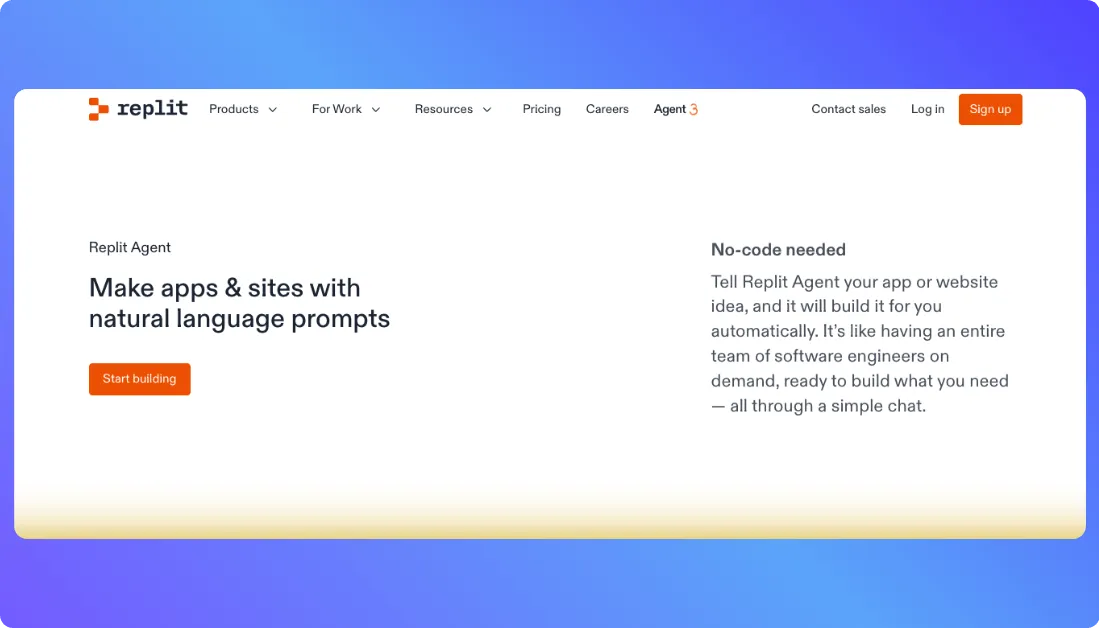
Replit Ghostwriter is an AI-powered coding assistant integrated into Replit’s cloud-based development environment. It offers real-time code suggestions, debugging assistance, and seamless collaboration features, making it a suitable choice for developers seeking an accessible and collaborative coding platform.
Key Strengths
- Browser-Based IDE: Enables coding directly in the browser without the need for local setup, facilitating quick project initiation.
- Real-Time Collaboration: Supports simultaneous coding by multiple users, enhancing team productivity and communication.
- AI-Powered Assistance: Provides context-aware code suggestions and debugging help, streamlining the development process.
- Instant Deployment: Allows for immediate deployment of applications, reducing time-to-market.
Pricing
Replit offers several pricing tiers:
- Free Plan: Access to basic features suitable for beginners and hobbyists.
- Hacker Plan: $7/month, includes private Repls and increased resource limits.
- Teams for Education: Custom pricing for educational institutions, providing collaborative tools for classrooms.
- Teams Pro: Custom pricing for professional teams requiring advanced collaboration and resource features.
Best Suited For
- Educators and Students: Ideal for teaching and learning programming in a collaborative environment.
- Remote Development Teams: Facilitates real-time collaboration without the need for complex setups.
- Beginner Developers: Provides an accessible platform for those new to coding.
Also Read:
Mutable.AI – Best for Automated Code Refactoring and Documentation
Mutable.AI is an AI-driven development tool designed to automate code refactoring, documentation, and testing. It integrates with popular IDEs and platforms, aiming to enhance code quality and developer efficiency.
Key Strengths
- Automated Refactoring: Simplifies the process of improving code structure without altering its functionality.
- Documentation Generation: Automatically creates comprehensive documentation, aiding in code maintainability.
- Unit Test Creation: Generates unit tests to ensure code reliability and facilitate testing processes.
- IDE Integration: Compatible with Visual Studio Code, Jupyter, and GitHub, allowing seamless incorporation into existing workflows.
Pricing
- Free Plan: Basic features suitable for individual developers exploring the platform.
- Codebase Pro: $25/month, includes advanced features for professional developers.
- Enterprise Plan: Custom pricing tailored for organizations requiring extensive support and features.
Best Suited For
- Professional Developers: Seeking to automate routine coding tasks and enhance code quality.
- Development Teams: Aiming to maintain consistent coding standards and improve documentation practices.
- Organizations: Looking to integrate AI tools into their development processes for increased efficiency.
Hostinger Horizons – Best for No-Code Web App Creation
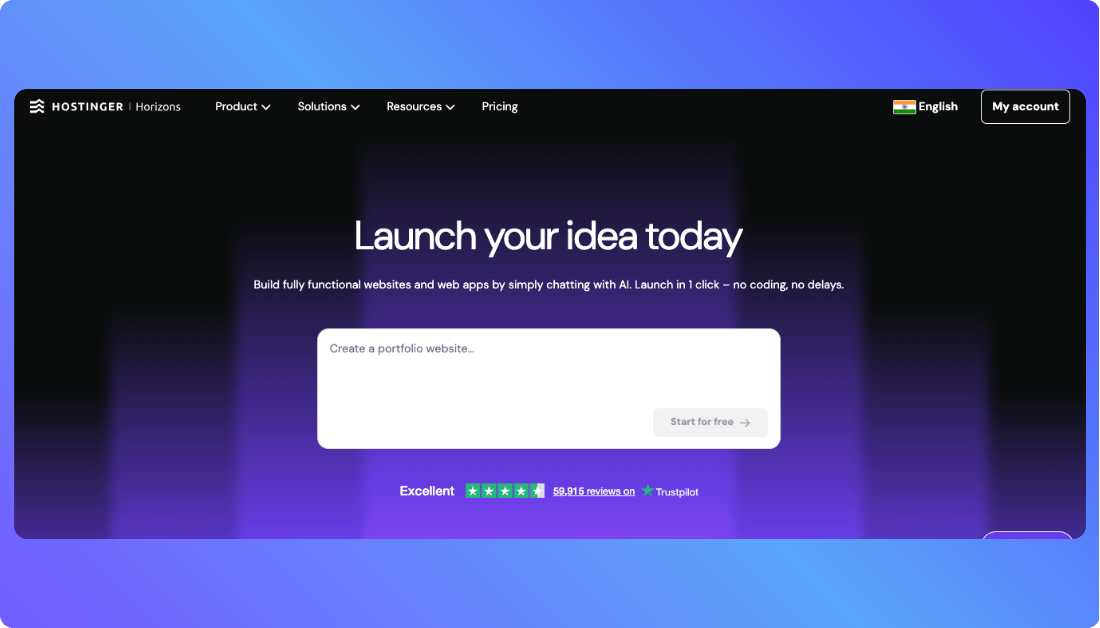
Hostinger Horizons is an AI-powered, no-code web app builder designed to simplify the process of creating and deploying web applications. It integrates development, hosting, and domain management into a single platform, enabling users to build functional web apps without writing any code.
Key Strengths
- AI-Powered Development: Transforms natural language prompts into fully functional web applications, streamlining the development process.
- Integrated Hosting and Domain Management: Offers built-in hosting and domain services, eliminating the need for third-party integrations.
- Multilingual Support: Supports over 80 languages, making it accessible to a global user base.
- Voice and Image-Based Inputs: Allows users to provide instructions through voice commands and image uploads, enhancing usability.
- Real-Time Editing and Deployment: Enables instant modifications and one-click deployment, reducing time-to-market.
Pricing
Hostinger Horizons offers several pricing tiers:
- Starter: $19.99/month – Suitable for personal projects.
- Hobbyist: $49.99/month – Designed for small businesses.
- Hustler: $99.99/month – Ideal for growing websites requiring more resources.
- Pro: $199.99/month – Tailored for high-performance sites and businesses.
Best Suited For
- Entrepreneurs and Small Businesses: Looking to develop web applications without investing in technical resources.
- Non-Technical Users: Seeking an intuitive platform to bring their app ideas to life.
- Startups: Aiming to quickly prototype and deploy applications to validate business concepts.
Also Read:
10 Best Hostinger Horizons Alternatives and Competitors
Windsurf – Best for Agentic AI-Powered Development
Windsurf is an AI-driven integrated development environment (IDE) that offers advanced features for code generation, debugging, and deployment. It emphasizes a “vibe coding” approach, allowing developers to interact with the AI in a conversational manner to build and manage applications.
Key Strengths
- Agentic AI Integration: Provides an AI assistant capable of understanding and executing complex development tasks through natural language prompts.
- Cascade Flow System: Maintains context across development sessions, enhancing the continuity and relevance of AI assistance.
- Privacy-Focused: Emphasizes user data privacy with features like zero-day data retention and encryption in transit
- Multi-Model Support: Integrates with various AI models, including GPT-4 and Claude 3.5, offering flexibility in AI assistance.
- Cross-Platform Compatibility: Supports integration with popular IDEs and tools, facilitating seamless adoption into existing workflows.
Pricing
Windsurf offers a free tier with access to core features and premium plans for advanced functionalities.
- Free Plan: Access to basic features suitable for individual developers.
- Pro Plan: $15/month: Includes advanced AI capabilities and increased resource limits.
- Pro Ultimate Plan: $60/month – Offers comprehensive features for professional development teams.
Best Suited For
- Professional Developers: Seeking an AI-enhanced development environment to boost productivity.
- Development Teams: Looking for collaborative tools that integrate AI assistance into their workflows.
- Privacy-Conscious Organizations: Requiring development tools that prioritize data security and user privacy.
Also Read:
5 Best Windsurf AI Alternatives
GitHub Copilot – Best for IDE Integration

GitHub Copilot is an AI-powered code completion tool developed by GitHub in collaboration with OpenAI. It integrates seamlessly into popular integrated development environments (IDEs) like Visual Studio Code, JetBrains, and Neovim, providing real-time code suggestions and assistance.
Key Strengths
- IDE Integration: Works within popular IDEs, offering in-context code suggestions without disrupting the development workflow.
- AI-Powered Suggestions: Utilizes advanced language models to provide context-aware code completions, enhancing developer productivity.
- Multi-Language Support: Supports a wide range of programming languages, catering to diverse development needs.
- Copilot Chat: Offers an interactive chat feature that allows developers to ask questions and receive code explanations within the IDE.
Pricing
GitHub Copilot offers several pricing tiers:
- Free Plan: Provides limited access to code completions and chat interactions.
- Pro Plan: $10/month or $100/year – Includes unlimited code completions and access to additional models.
- Pro+ Plan: $39/month or $390/year – Offers maximum flexibility with access to all available models and increased premium request limits.
Best Suited For
Professional Developers: Seeking seamless AI assistance within their existing IDEs.
Development Teams: Looking to enhance productivity through real-time code suggestions and explanations.
Organizations: Requiring scalable AI coding assistance integrated into their development workflows.
Anima / Locofy / TeleportHQ – Great for UI to Code Conversions
Anima, Locofy, and TeleportHQ are AI-powered design-to-code tools that bridge the gap between design and development. They enable designers and developers to convert design files into production-ready code, streamlining the development process.
Key Strengths
- Design Integration: Seamlessly integrate with design tools like Figma, allowing for direct conversion of designs into code.
- Responsive Code Generation: Produce clean, responsive code compatible with various frameworks such as React, Vue.js, and HTML/CSS.
- Component-Based Structure: Generate reusable components, facilitating maintainable and scalable codebases.
- Live Preview and Collaboration: Offer live previews of the generated code and support collaborative workflows between designers and developers.
Pricing
This vibe coding tools offer various pricing models:
- Free Plans: Provide basic features suitable for individual users exploring the platform.
- Pro Plans: Starting from $18/month, offering advanced features and increased export options.
Best Suited For
- Designers and Developers: Collaborating to streamline the transition from design to code.
- Product Teams: Aiming to accelerate the development of user interfaces with consistent design implementation.
- Businesses: Looking to enhance efficiency in the design-to-development workflow.
Void – Best for Open-Source, Privacy-First AI Coding
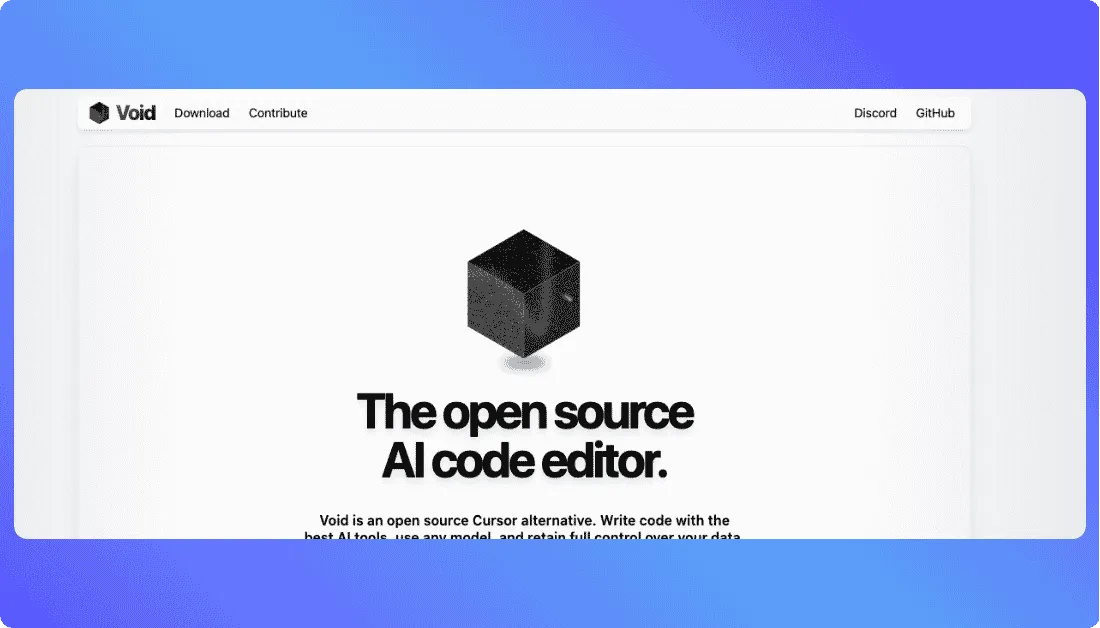
Void is an open-source AI-powered code editor designed as an alternative to proprietary tools like Cursor AI. Built as a fork of Visual Studio Code, Void offers developers the flexibility to integrate various large language models (LLMs) while maintaining complete control over their data.
Key Strengths
- Open-Source and Privacy-Focused: Allows software developers to host their own AI models locally or connect directly to external models without routing data through third-party servers, ensuring data privacy.
- Multi-Model Support: Compatible with various LLMs, including OpenAI, Claude, Gemini, and open-source models like Llama and DeepSeek, providing flexibility in AI integration.
- VS Code Compatibility: Being a fork of VS Code, Void enables easy migration of themes, keybindings, and settings, offering a familiar environment for developers.
- Advanced AI Features: Includes AI-powered code completion, inline editing, contextual chat assistance, and intelligent file indexing for efficient code navigation.
- Agent and Gather Modes: Agent mode allows for comprehensive codebase interaction, including file creation and editing, while Gather mode offers read-only access for safer exploration.
Pricing
Void is completely free and open-source, with no subscription fees. Developers can download and use it without any cost, and contribute to its development through the community.
Best Suited For
- Developers Seeking Privacy: Ideal for those who prioritize data security and wish to avoid sending code to external servers.
- Open-Source Enthusiasts: Suitable for developers who prefer open-source tools and wish to contribute to community-driven projects.
- Teams Requiring Custom AI Integration: Perfect for teams that need to integrate specific AI models into their development workflow without relying on proprietary platforms.
Void stands out as a robust, privacy-centric alternative to Cursor AI, offering developers the freedom to customize their AI coding environment while maintaining control over their data.
Lovable – Best for AI Pair Programming with a Personal Touch
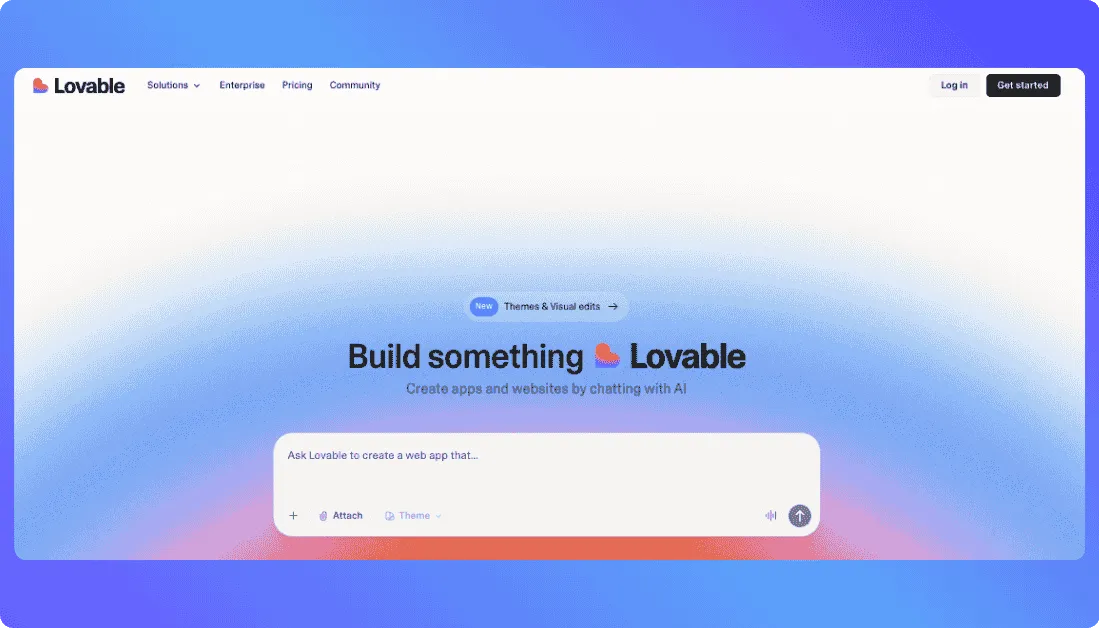
Lovable is an AI coding assistant built for developers who value a more interactive and context-aware development experience. It focuses on delivering high-quality code suggestions, debugging support, and code review assistance through a conversational, pair-programming-like interface. Lovable emphasizes building a “relationship” between the developer and the AI assistant by tailoring interactions to individual coding styles and preferences.
Key Strengths
- Personalized AI Assistant: Lovable adapts to your coding patterns and style over time, offering suggestions that feel more human and contextual.
- Pair Programming Feel: Designed to simulate a helpful coding partner, Lovable enables back-and-forth dialogue for refining logic, writing tests, and brainstorming implementation approaches.
- Multi-Model Support: Offers flexibility in choosing between different AI models, such as GPT-4 and Claude, based on user preferences and performance needs.
- Inline Comments and Reviews: Acts like a collaborative reviewer, adding feedback in the form of suggestions and inline comments to improve code clarity and performance.
- Version-Aware Context: Remembers previous conversations and changes within a session, maintaining development context for ongoing projects.
Pricing
Lovable offers subscription-based pricing:
- Free Plan: Includes basic conversational AI support and limited usage per day.
- Pro Plan: $29/month – Includes unlimited messages, access to multiple models, and saved context.
- Team Plan: Custom pricing – Adds collaboration features, shared AI memory, and priority support.
Best Suited For
- Independent Developers: Who want an AI partner that feels more interactive and adaptive.
- Freelancers and Solo Developers: Looking to improve focus and speed with a responsive AI teammate.
- Teams Focused on Code Quality: Who need conversational debugging, reviews, and iterative brainstorming support in real time.
With Lovable, developers can enjoy a uniquely personal and adaptive AI experience, combining code assistance with conversation-driven development. It presents a modern approach to AI pair programming, making it a notable alternative to Cursor AI for developers who value deeper interaction with their tools.
More on the Future of AI
Top Lovable Alternatives
What to Look for in a Cursor Alternative?
When considering alternatives to Cursor AI, it’s essential to identify features that align with your team’s development needs and workflows. While Cursor offers robust capabilities, other vibe coding tools may provide functionalities better suited for specific requirements. Here are key factors to consider:
Natural Language to Code Conversion
An effective alternative should allow developers to translate plain English instructions into functional code. This feature enhances productivity by enabling quick prototyping and reducing the need for manual coding, especially beneficial for teams aiming to accelerate development process.
Full-Stack Development Capabilities
Beyond frontend assistance, a comprehensive tool should support backend development, database integration, and API management. Full-stack capabilities ensure that developers can build and manage entire applications within a single environment, streamlining the development process.
User-Friendly Interface for Non-Engineers
AI code assistants that offer intuitive interfaces enable product managers, designers, and other non-engineering team members to contribute to the development process. Features like drag-and-drop components or simplified scripting can democratize application development across diverse teams.
Collaboration and Security Features
In today’s collaborative work environments, it’s crucial for tools to support real-time collaboration, version control integration, and secure data handling. Features that facilitate team collaboration while ensuring code security are vital for maintaining project integrity and compliance.
Deployment and Scalability Options
An ideal alternative to Cursor should offer seamless deployment processes and scalability to accommodate growing user bases. Integration with cloud services, containerization support, and automated deployment pipelines can significantly reduce time-to-market and operational overhead.
By evaluating these aspects, you can select a Cursor alternative that not only matches but potentially exceeds your current development tool’s capabilities, aligning with your project’s specific goals and team dynamics.
Why Vitara.AI is the Best Alternative to Cursor – The AI Code Editor
Changing Needs in AI Development Tools
AI-assisted development has moved beyond simply completing code inside an integrated development environment. While AI coding tools like Cursor AI excel at line-level suggestions and smart refactoring, many teams now need solutions that can handle more than just incremental edits. There is growing demand for platforms that support natural language prompts, build entire application flows, and streamline the development lifecycle for both technical and non-technical users. This shift marks the rise of a new generation of development tools built for flexibility, speed, and accessibility.
How Vitara.AI Solves Real-World Gaps Cursor Doesn’t
Cursor AI is deeply integrated into IDE workflows and serves experienced developers well. However, it requires a technical foundation, project setup, and familiarity with structured environments. For teams looking to build applications quickly—especially without writing all the code themselves—this can become a barrier.
Vitara.AI addresses this challenge by translating plain language prompts into working, full-stack code. Instead of focusing on individual lines, it generates entire components, flows, and backend logic. It reduces technical overhead while still providing clean, developer-friendly output that can scale with a project.
In addition, Vitara.AI offers a browser-based development experience, eliminating the need for local installations or complex configurations. It allows teams to work faster without sacrificing quality or security.
Built for the Full Team – Not Just Developers
One of Vitara.AI’s key advantages is its accessibility across different roles. While Cursor AI is designed primarily for professional developers, Vitara.AI is usable by startup founders, product managers, and designers who want to turn ideas into working software. It empowers users who may not write code regularly but are central to product development.
By enabling these team members to generate prototypes or iterate on application logic independently, Vitara.AI reduces reliance on development cycles and speeds up early-stage decision-making. This makes it especially valuable in agile or startup environments where rapid validation is essential.
Ideal Use Cases for Vitara.AI
- Startup Founders building MVPs without full engineering teams
- Product Managers prototyping features or user flows independently
- Developers avoiding boilerplate setup and accelerating frontend development
- Small Businesses needing internal tools or customer-facing applications quickly
These scenarios highlight Vitara.AI’s practical value as a Cursor alternative when development needs extend beyond inline suggestions.
Why Vitara.AI Is Future-Proof
Vitara.AI aligns with a broader shift toward conversational, full-stack, AI-powered development. Its roadmap includes deeper backend automation, expanded framework support, and enhanced collaboration features—all aimed at supporting modern product teams.
As development processes evolve, the ability to move from prompt to production quickly and securely will become more important. Vitara.AI is built with this future in mind. It supports flexible workflows, integrates emerging AI capabilities, and remains accessible to both individual builders and growing teams.
Conclusion – Choose Based on Your Workflow
The landscape of AI-assisted development tools has expanded significantly, offering a variety of options tailored to diverse workflows and team dynamics. While Cursor AI remains a robust choice for developers seeking deep IDE integration and advanced codebase navigation, alternatives like Vitara.AI provide a more accessible, prompt-driven approach suitable for rapid prototyping and frontend development.
For teams emphasizing collaboration and real-time coding, Replit Ghostwriter offers a browser-based environment conducive to pair programming and educational settings. Meanwhile, Mutable.AI focuses on automating code refactoring and documentation, enhancing code quality and maintainability.
The emergence of vibe coding tools reflects a shift towards more intuitive and conversational coding experiences, enabling developers to interact with code through natural language prompts and AI-driven suggestions. This trend underscores the importance of selecting vibe coding tools that align with your team’s expertise, project requirements, and desired level of AI integration.
In 2026, the key to effective software development lies in choosing AI-assisted vibe coding tools that complement your workflow, enhance productivity, and support your project’s goals. By evaluating the strengths and focus areas of each tool, you can assemble a development environment that fosters innovation, efficiency, and adaptability in an ever-evolving technological landscape.
Frequently Asked Questions (FAQs)
What exactly does Cursor AI offer and what does it not do?
Cursor AI functions as an AI-powered code editor designed to improve developer productivity within environments like Visual Studio Code. It provides GPT-based code suggestions, natural-language editing, project-wide search, and smart refactoring.
However, it is not intended for full-stack application generation, no-code development, or end-to-end deployment. Teams looking for broader workflow coverage often explore alternatives that offer these capabilities.
How do I choose a good alternative to Cursor AI?
To choose the right tool, consider:
- Natural-language to code generation capabilities
- Full-stack development support
- Browser-based or low-setup environments
- Collaboration and version-control tools
- Security, privacy, and data-handling features
- Deployment and scalability options
Are there free or open-source alternatives to Cursor AI?
Yes, several Cursor AI alternatives offer free or open-source options. Tools like Vitara.AI, Replit Ghostwriter, Mutable.AI, Hostinger Horizons, Windsurf, GitHub Copilot, Anima/Locofy/TeleportHQ, Void, and Lovable provide either free tiers or fully open-source access.
What are the limitations or risks of using AI coding assistants like Cursor or its alternatives?
Key limitations include:
- Potential for incorrect, insecure, or overly-verbose code
- Reduced effectiveness in messy, undocumented, or legacy codebases
- Learning curve for teams adapting to AI-driven workflows
- Possible slowdown for experienced developers on familiar tasks
- Varying levels of data privacy and policy transparency
Can non-developers use alternatives to Cursor AI?
Yes, many Cursor AI alternatives are designed to be accessible for non-developers. Platforms like Vitara.AI, Hostinger Horizons, Replit Ghostwriter, and design-to-code tools such as Anima, Locofy, and TeleportHQ allow users to build or prototype applications using natural-language prompts, visual editors, or design files. These tools remove the need for deep coding knowledge, enabling product managers, designers, and founders to contribute directly to development.
Will I lose language or framework support when using an alternative?
You may or may not lose language or framework support, depending on the alternative you choose. Tools like Vitara.AI, Replit Ghostwriter, Windsurf, GitHub Copilot, Void, Mutable.AI, and Lovable generally support a wide range of languages through AI-assisted coding. In contrast, tools such as Hostinger Horizons or Anima/Locofy/TeleportHQ focus more on web and UI-based frameworks. It’s important to ensure the alternative you select matches the languages and frameworks your team already works with.
How future-proof are Cursor AI alternatives?
Cursor AI alternatives can be very future-proof, depending on the platform.
- Many tools like Vitara.AI, Windsurf, Void, and Lovable support multiple AI models, making them adaptable as new models emerge.
- Full-stack and browser-based platforms evolve quickly, updating frameworks and workflows to match modern development trends.
- Tools that support non-developers future-proof teams by enabling cross-functional collaboration.
- Actively updated ecosystems ensure long-term usability as AI-assisted development continues to grow.
What’s New?