Lovable vs Retool: The Only Comparison You’ll Actually Want to Read (2026)
Lovable and Retool are two of the most talked-about app-building platforms today.
While Retool is widely known for building internal tools, dashboards, and business apps on top of existing data, Lovable has become popular as an AI app builder that can turn simple prompts into full-stack web apps.
But now, both platforms are moving closer to each other.
Retool has added more AI-powered app generation features, and Lovable is adding stronger integrations, database support, and team features.
So, if you had to pick just one, which should it be? Or, is there another way to use both tools without choosing the wrong one?
Well… you’ll have to read on to find out. 😉
I’ve studied both platforms closely, looking at how they handle app generation, internal tools, databases, security, pricing, and real-world use cases.
In this post, I’ll break down how Lovable and Retool compare across ease of use, features, flexibility, integrations, and long-term value.
Let’s start with a quick look at what each platform is built for.
Quick Verdict: Should You Choose Lovable or Retool?
Choose Lovable if you’re starting from a blank page and want to build something new quickly.
It works best when you need an MVP, SaaS prototype, client portal, AI-powered web app, or customer-facing product without building everything manually from scratch. You describe what you want, and Lovable helps generate the app structure, interface, database setup, and core functionality.
Choose Retool if your company already has databases, APIs, internal systems, and team workflows that need a better interface.
Retool is better suited for internal tools, admin panels, dashboards, approval flows, support tools, and SQL-heavy business apps where security, permissions, audit logs, and data access control matter.
So the simple answer is this:
Lovable is better when you want to create a new app fast.
Retool is better when you want to build a secure internal tool on top of existing business data.

Generate web and mobile apps with AI, connected backend, modern UI, and downloadable production-ready code.
Build Faster with Vitara.ai →
TL;DR: Lovable vs Retool in One Minute
| Best For | Winner |
|---|---|
| Founders and MVPs | Lovable |
| Internal tools | Retool |
| Existing databases | Retool |
| Blank-slate app generation | Lovable |
| Enterprise governance | Retool |
| Code ownership and export | Lovable |
| Highly structured operations workflows | Retool |
| Fast visual product prototypes | Lovable |
| SQL-heavy admin panels | Retool |
| Hybrid setup | Lovable for customer-facing products, Retool for internal operations |
Here’s the easiest way to think about it.
If you’re a founder, product manager, designer, or non-technical builder trying to turn an idea into a working app, Lovable will probably feel more natural. It’s closer to a prompt-to-app builder where you explain what you want and keep refining the result.
If you’re part of an operations, data, support, or engineering team that needs to manage real company data, Retool is usually the safer choice. It gives you more control over databases, permissions, workflows, and internal business processes.
Quick Comparison Table
| Category | Lovable | Retool | Winner |
|---|---|---|---|
| Core approach | AI-generated full-stack apps | Low-code internal app platform with AI generation | Depends |
| Best use case | MVPs, SaaS prototypes, customer-facing apps | Internal tools, admin panels, dashboards, workflows | Depends |
| Starting point | Blank slate | Existing databases and APIs | Depends |
| Builder profile | Founders, product managers, designers, non-technical builders, and developers | Developers, ops teams, data teams, and engineering-adjacent teams | Depends |
| Data model | Usually generated or Supabase-based | Connects to existing business data | Retool |
| UI flexibility | Better for polished, product-like interfaces | Better for structured internal UIs | Lovable for external apps, Retool for internal apps |
| Security and governance | Improving, stronger on higher tiers | Mature governance-first platform | Retool |
| Code ownership | GitHub sync and export | Platform-based app model | Lovable |
| Maintenance | Requires managing generated code and app architecture | Managed, standardized platform model | Retool |
| Pricing model | Credit or plan-based, often shared across users | Builder and internal-user pricing | Depends on team size |
| Learning curve | Lower starting curve | Requires more SQL, API, and platform knowledge | Lovable |
| Production readiness | Possible, but needs careful architecture and review | Designed for production internal tools | Retool |
The biggest difference is not just “AI vs low-code.”
Lovable helps you build a new app from an idea. Retool helps you build a controlled interface around systems your business already uses.
That’s why the winner depends less on which tool is more popular and more on what you’re actually trying to build.
Lovable Vs Retool Feature Comparison
I’m not here to throw a lazy “Lovable is better” or “Retool is better” answer at you.
Because honestly, both tools can work really well.
It just depends on what you’re trying to build.
Lovable is great when you want to start with an idea and quickly turn it into a working app. Retool is great when you already have data, APIs, internal workflows, and you need a reliable way to build tools around them.
So, let’s walk through each feature one by one and see how Lovable and Retool compare in real-world use cases.
- App Generation Comparison: Lovable or Retool?
- Internal Tools Comparison
- Database and Backend Comparison
- UI Design and Frontend Flexibility Comparison
- AI Workflow Comparison
- Integrations Comparison
- Security and Governance Comparison
- Code Ownership Comparison
- Pricing Comparison
- Ease of Use Comparison
- Customer Support and Learning Resources Comparison
App Generation Comparison: Lovable or Retool?
When people compare Lovable and Retool, this is usually where the conversation starts.
Because both platforms now talk about AI app generation.
But they don’t approach it in the same way.
Lovable feels more like a true prompt-to-app builder. You describe what you want to build, and it creates the starting point for your app. That can include the interface, pages, database structure, authentication, and app logic.
For example, you can ask Lovable to build a SaaS dashboard, a client portal, a booking app, a marketplace, or a simple CRM-style tool.
And within a short time, you’ll have something visual and usable on the screen.
That’s why founders, product managers, designers, and non-technical builders like it. You don’t need to start by setting up a frontend, backend, database, and deployment flow manually.
Lovable gives you the first version fast.
Retool also has AI-powered app generation, but it’s not trying to be the same kind of vibe coding tool.
Retool’s AI features are more focused on helping you build internal apps faster inside a controlled environment.
So instead of saying, “Build me a new SaaS app from scratch,” Retool is stronger when you say something like:
“Create an admin panel for this customer database.”
Or:
“Build a dashboard where our operations team can review orders and update statuses.”
That difference matters.
Lovable starts with the product idea.
Retool starts with your business data.
So, if you’re building a new AI app, MVP, SaaS prototype, or customer-facing product, Lovable feels more natural.
But if you’re building an internal tool that needs to connect with your database, API, or existing business system, Retool gives you a more structured foundation.
Verdict
Lovable wins for blank-slate app generation.
It’s better when you want to turn an idea into a working app quickly.
Retool wins when AI app generation needs to happen inside a secure internal tool environment.
If you want to build a new product, start with Lovable.
If you want to build a tool around existing company data, Retool is the better fit.
Internal Tools Comparison
This is where Retool really starts to show its strength.
Retool was built for internal tools from the beginning.
That means admin panels, CRUD apps, dashboards, support tools, operations portals, approval systems, finance tools, and database interfaces.
If your team already has a Postgres database, MySQL database, MongoDB collection, REST API, GraphQL endpoint, or internal system, Retool helps you build a usable interface on top of it.
You can drag in tables, forms, charts, buttons, filters, and modals.
Then you can connect those components to queries and business logic.
So your support team can update customer records.
Your ops team can approve orders.
Your finance team can review transactions.
Your data team can create dashboards.
Your engineering team can avoid building every internal admin panel from scratch.
That’s the main reason Retool is popular with technical teams.
It saves developer time without completely removing developer control.
Lovable can also build internal tools, especially simple ones.
You can ask it to create an admin dashboard, user management app, CRM, or reporting tool.
And for early-stage teams, that can be enough.
But when the internal tool needs deep permissions, production database access, audit logs, environment controls, and complex role-based workflows, Retool feels more mature.
Lovable is more flexible visually.
Retool is more reliable operationally.
That’s the real difference.
Lovable can create an internal tool.
Retool is designed to manage internal tools at scale.
Verdict
Retool wins for internal tools.
It’s better for admin panels, dashboards, approval workflows, CRUD apps, and internal business software connected to real company data.
Lovable is useful if you want to quickly prototype an internal tool or build a simple dashboard from scratch.
But if the tool will be used by real teams every day, Retool is usually the safer choice.
Also Read:
Looking for more alternatives before choosing a tool? Start here:
Top Lovable Alternatives
Best Retool Alternatives
Database and Backend Comparison
A lot of people miss this part.
They compare Lovable and Retool like both tools start from the same place.
They don’t.
Lovable usually helps you create the app and the backend together.
That means it can help generate the database structure, connect authentication, create app logic, and build the frontend experience around it.
This is helpful if you don’t already have a backend.
Let’s say you want to build a marketplace for local service providers.
Or a habit tracking app.
Or a lightweight SaaS tool for freelancers.
Lovable can help you create the app structure from zero.
It often works well with Supabase-style setups, where your app has a database, user authentication, storage, and backend logic without you manually wiring every piece from the beginning.
For non-technical founders, that’s a big deal.
Because “build an app” doesn’t just mean creating pretty screens.
You also need user accounts, saved data, permissions, database tables, and deployment.
Lovable helps make that process feel less scary.
Retool works differently.
Retool is strongest when the data already exists.
If your company already has a customer database, order system, inventory table, internal API, analytics warehouse, or support system, Retool can connect to it and help you build an interface.
So instead of creating a new backend from scratch, Retool helps you use the backend your business already depends on.
That’s why it’s loved by operations and engineering teams.
You don’t need to move your data into Retool.
You connect Retool to your existing data sources and build tools around them.
This makes Retool much better for companies with real internal systems already running.
But for a founder starting with only an idea, Retool may feel like it’s asking too much too early.
You need a database.
You need tables.
You need APIs.
You need to understand how the data should move.
Lovable is more beginner-friendly in that situation.
Verdict
Lovable wins if you need to create a backend from scratch.
It’s better for new apps, MVPs, and SaaS prototypes where the database is part of the building process.
Retool wins if you already have databases and APIs.
It’s better for building tools on top of existing business data without rebuilding your backend.
UI Design and Frontend Flexibility Comparison
This is one of the biggest differences between Lovable and Retool.
Lovable gives you more freedom to create something that feels like a real product.
You can build landing pages, dashboards, onboarding flows, settings pages, user portals, pricing pages, and customer-facing interfaces that don’t feel like traditional admin software.
That makes Lovable a better fit for apps where design matters.
For example:
- SaaS MVPs
- Customer portals
- AI tools
- Booking apps
- Marketplaces
- Creator tools
- Web apps for public users
- Startup product demos
Lovable’s generated UI can feel more modern and product-like.
You can ask for layout changes, design updates, new sections, different user flows, and better copy.
That’s useful when your app needs to impress users, investors, customers, or early beta testers.
Retool is more practical.
Its UI system is built around internal work.
Tables, filters, forms, charts, buttons, side panels, modals, search bars, and data views.
That may not sound exciting, but for internal tools, it’s exactly what teams need.
A support agent doesn’t need a beautiful landing page.
They need a fast way to search customers, update records, process refunds, and see account history.
An operations manager doesn’t need fancy animations.
They need a reliable dashboard that shows what needs attention today.
This is where Retool is strong.
But if you’re trying to create a polished customer-facing product, Retool can feel limiting.
It can look and feel like internal software.
Lovable gives you more space to create a real product experience.
Verdict
Lovable wins for frontend flexibility and product-like UI.
It’s better for customer-facing apps, SaaS prototypes, landing pages, and polished web app experiences.
Retool wins for practical internal interfaces.
It’s better when the goal is speed, clarity, and data handling for internal teams.
AI Workflow Comparison
Both platforms use AI, but the experience feels different.
Lovable’s AI workflow is more conversational.
You describe what you want.
It builds.
You ask for changes.
It updates the app.
You test it.
Then you keep refining.
This makes Lovable feel closer to vibe coding.
You’re not always thinking in components, queries, and backend architecture.
You’re thinking in outcomes.
For example:
“Add a login page.”
“Create a dashboard for project tracking.”
“Add a pricing page with three plans.”
“Connect this form to the database.”
“Make the design cleaner and more modern.”
That’s a natural workflow for founders and beginners.
You can build by describing your intent.
Retool’s AI workflow is more structured.
It helps you generate internal apps, queries, and workflows faster, but you’re still working inside Retool’s app-building model.
You’re connecting resources.
You’re using components.
You’re writing or editing queries.
You’re setting permissions.
You’re building around data.
This is better for technical teams because it keeps things controlled.
But for beginners, it can feel less magical.
Lovable gives you speed and creative flow.
Retool gives you structure and operational control.
That’s why the right choice depends on what you need from AI.
Do you want AI to help you create a new app?
Lovable is stronger.
Do you want AI to help your team build safer internal tools faster?
Retool is stronger.
Verdict
Lovable wins for beginner-friendly AI app creation.
It feels more natural if you want to build by prompting and iterating.
Retool wins for AI-assisted internal software development.
It’s better when your AI-generated app still needs governance, database access, permissions, and production controls.
Integrations Comparison
Integrations are a major part of this comparison.
Because most apps don’t live alone.
They need to connect with databases, APIs, authentication tools, payment systems, CRMs, analytics tools, email services, and internal workflows.
Lovable gives you a good starting point for modern app-building integrations.
It works well when you’re building a new app and need common pieces like a database, authentication, storage, GitHub sync, and app deployment.
For many MVPs, that’s enough.
You can build the product, connect the core backend, test the idea, and keep improving.
But when your app needs to connect deeply with lots of existing company systems, Retool is usually stronger.
Retool is built for connecting to business data.
That includes SQL databases, APIs, SaaS tools, internal services, and enterprise systems.
This is why operations, data, and engineering teams like it.
They can build internal tools without waiting months for a custom engineering project.
For example, Retool can sit on top of:
- Customer databases
- Order systems
- Inventory tools
- Support workflows
- Payment records
- Data warehouses
- Internal APIs
- Third-party SaaS tools
This makes it very useful for companies that already have a tech stack.
Lovable is better when you’re creating the app ecosystem.
Retool is better when you’re connecting to an existing ecosystem.
That’s the simplest way to look at it.
Verdict
Retool wins for integrations with existing databases, APIs, and internal business systems.
Lovable is strong for startup-style app building, especially when you’re creating a new full-stack app with modern tools.
If your project depends on many existing systems, Retool is the better choice.
If your project is a new app with a simpler stack, Lovable may be faster.
Security and Governance Comparison
This is where the comparison becomes more serious.
Because building an app is one thing.
Letting real users access real company data is another.
Lovable has improved a lot in this area.
It now offers more team and enterprise-focused features than many people realize. For the right project and the right plan, Lovable can support more serious app-building needs.
But the important question is not just:
“Does Lovable have security features?”
The better question is:
“Is this the right security model for the kind of app I’m building?”
If you’re building a public-facing MVP, client portal, or early SaaS product, Lovable can be a practical choice.
You can build fast, test quickly, and improve the app over time.
But if you’re building an internal tool that touches sensitive customer records, financial data, employee data, production databases, or operational workflows, Retool is usually the safer default.
Retool is built around governance.
That means teams can manage access, permissions, authentication, audit logs, environments, and controls in a more structured way.
This matters a lot for companies where IT, security, compliance, or engineering leadership needs visibility.
For example:
- Who accessed the tool?
- Who changed a record?
- Which query was run?
- Which team member has permission?
- Can access be revoked centrally?
- Can production and staging be separated?
- Can sensitive actions be tracked?
Retool is better prepared for those questions.
Lovable is moving in that direction, especially for business and enterprise users.
But Retool has a stronger reputation as a governance-first internal tool platform.
Verdict
Retool wins for security and governance.
It’s better for internal tools that need RBAC, SSO, audit logs, permissions, and controlled access to business data.
Lovable can still work for serious projects, but you need to review the app architecture, data model, user permissions, and plan features carefully.
If security approval is part of the buying process, Retool will usually be easier to justify.
Code Ownership Comparison
This is one area where Lovable has a clear advantage.
Lovable is more appealing if you care about owning the code behind your app.
You can build with AI, sync with GitHub, and continue working on the code outside Lovable if needed.
That matters for founders and startups.
Because if your MVP starts working, you may eventually want a developer to clean up the code, add custom features, improve performance, or move the project into a more traditional development workflow.
Lovable gives you that path.
It doesn’t mean the generated code will always be perfect.
You may still need engineering review.
You may still need refactoring.
You may still need to improve the architecture before scaling.
But at least you have code you can take with you.
Retool is different.
Retool apps are built inside the Retool platform.
That’s not necessarily bad.
For internal tools, it can actually be a benefit.
Your team gets a standardized place to build, manage, secure, and update internal apps.
You don’t have to maintain every tool as a separate codebase.
You don’t need every internal dashboard to become a custom engineering project.
But if your priority is full code portability, Retool is not as flexible as Lovable.
This is the trade-off.
Lovable gives you more ownership and portability.
Retool gives you more platform-managed structure.
Verdict
Lovable wins for code ownership and export.
It’s better if you want to build an AI-generated app and keep the option to edit, host, or scale the code outside the platform.
Retool wins if you prefer a managed internal app platform where governance, maintenance, and team access are handled in one place.
Pricing Comparison
Pricing is tricky because these tools charge differently.
Lovable usually makes more sense for small teams, founders, and early-stage builders who want to create apps quickly without paying for every internal user in the same way.
Its pricing is more tied to plans and usage, which can feel easier when you’re experimenting with MVPs or building multiple ideas.
That’s helpful if you’re a solo founder, freelancer, agency, or product team testing concepts.
You can build, iterate, and validate without needing a large internal software budget.
Retool’s pricing is more team and user-based.
That can make sense for companies where multiple builders and internal users need access to operational tools.
But as your team grows, you need to think carefully about how many people are building apps, how many people are using them, and which governance features you need.
The cheaper option depends on your situation.
For example:
Lovable may be cheaper if you’re building a SaaS MVP with a small team.
Retool may be worth the cost if your internal tool saves your operations team hours every week.
Lovable may feel more affordable at the start.
Retool may deliver more value when the tool becomes central to daily business operations.
So don’t compare pricing only by looking at the monthly plan.
Look at the full cost.
Ask:
- How many people will build the app?
- How many people will use it?
- Do you need security features?
- Do you need external users?
- Do you need workflow automation?
- Will you need a developer to clean up generated code?
- Will the platform reduce manual work for your team?
- What happens when the app becomes business-critical?
That’s how you get a more realistic answer.
Verdict
Lovable is usually more attractive for founders, MVPs, and small teams.
Retool can be more valuable for companies that need secure internal tools used by real teams every day.
If you’re testing an idea, Lovable may give you a faster and cheaper start.
If you’re replacing manual internal workflows, Retool may justify the cost more easily.
Ease of Use Comparison
Lovable is easier to start with.
That’s one of its biggest strengths.
You don’t need to think like a backend engineer on day one.
You can explain what you want in plain language and watch the app take shape.
For beginners, this feels exciting.
You can move from idea to prototype without getting stuck in setup.
This is why Lovable works well for:
- Non-technical founders
- Product managers
- Designers
- Indie hackers
- Startup teams
- Freelancers
- People testing app ideas
- Agencies creating quick prototypes
But ease of use has two stages.
The first stage is starting.
The second stage is fixing things when the app becomes more complex.
Lovable is very easy at the start.
But once your app has many user roles, complex logic, edge cases, integrations, payments, permissions, and database rules, you may still need technical help.
That’s not a Lovable-only problem.
It’s a normal app-building problem.
Retool has a steeper learning curve at the beginning.
You need to understand components, queries, resources, permissions, and how your data works.
If you’ve never worked with databases or APIs, it may feel more technical.
But for developers, data teams, and operations teams, Retool can feel very efficient.
Once the setup clicks, building internal tools becomes fast.
You drag in components, connect queries, set actions, and ship the tool.
So Lovable is easier for beginners.
Retool is easier for technical teams building around existing data.
Verdict
Lovable wins for beginner friendliness.
It’s better if you want to build by describing your idea instead of learning a full internal tool platform first.
Retool wins for technical efficiency.
It’s better if your team understands databases, APIs, and business workflows.
Customer Support and Learning Resources Comparison
Support matters more than people think.
Because with AI app builders and low-code platforms, you’ll eventually hit questions like:
“Why isn’t this database connection working?”
“Why did this generated feature break?”
“Why can’t this user access the right page?”
“How do I connect this API?”
“How do I deploy this properly?”
“Why is this query slow?”
Lovable’s learning experience is more beginner-friendly.
Because the platform itself is built around natural language, a lot of the learning happens through prompting, testing, and asking the AI to make changes.
This is helpful for non-technical users.
You don’t always need to read long documentation before trying something.
You can just ask the tool to build, fix, or explain.
That said, when a Lovable app becomes more advanced, you may still need to understand how the underlying app works.
Generated apps are still apps.
They have databases, authentication, frontend logic, backend behavior, and deployment decisions.
So learning resources and community examples become important.
Retool has a more traditional learning curve.
Its documentation, templates, tutorials, and community resources are useful, especially for technical users.
But because Retool can connect to many different systems, troubleshooting can sometimes depend on your exact setup.
A Retool issue might be about the platform.
Or it might be about your database.
Or your API.
Or permissions.
Or query logic.
That can make support questions more technical.
The good news is that Retool has been around longer in the internal tools space, so there are more mature resources for common internal software patterns.
Lovable feels easier to explore.
Retool feels better documented for structured internal app development.
Verdict
Lovable is better for hands-on, beginner-friendly experimentation.
Retool is better for teams that want deeper documentation, structured learning, and mature internal tool patterns.
If you’re a founder building your first MVP, Lovable will feel easier to learn.
If you’re an engineering or operations team building internal tools at scale, Retool’s resources may be more useful long-term.
Other AI App Builders Worth Trying Besides Lovable and Retool
Lovable and Retool are strong options, but they’re not the only AI app builders worth checking out.
Here are a few more tools you may want to explore.
Vitara.ai

Vitara.ai is a vibe coding tool for building web and mobile apps using prompts.
It’s useful if you want to describe an idea in simple language and turn it into a working full-stack app without starting from code.
Vitara.ai is worth trying if you want something closer to an AI-powered development assistant for fast app creation.
Vitara helps you build full-stack apps with AI prompts, React frontend, Supabase backend, and code ownership.
Start Building on Vitara.ai →
Emergent

Emergent is another AI app builder focused on building apps through conversation.
Instead of only helping with one part of development, it tries to handle the full flow: planning, coding, testing, and deployment.
It’s a good option if you want an AI app builder that feels more agent-driven and hands-on.
Also Read:
Before you choose Emergent, make sure you’ve seen this:
Top Emergent Alternative
Emergent pricing Explained
Base44
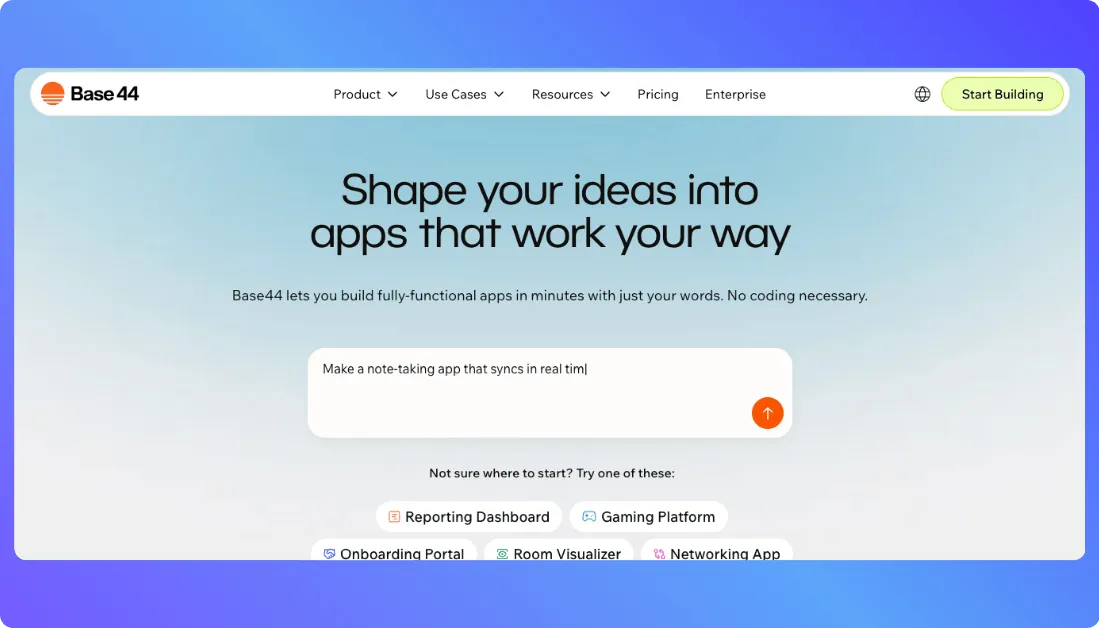
Base44 is built for creating functional apps from natural language prompts.
It’s a good fit for productivity apps, internal tools, customer portals, and simple business apps.
Base44 is worth exploring if you want a no-code AI app builder that helps you move from idea to usable app quickly.
Also Read:
Thinking about using Base44? These will help:
Best Base44 Alternatives
Base44 pricing Explained
Quick Take
If Lovable feels too product-focused and Retool feels too internal-tool focused, tools like Vitara.ai, Emergent, and Base44 give you more options in the middle.
They’re especially useful for founders, creators, agencies, and small teams testing new app ideas fast.
My Final Verdict: Which One Should You Choose, Lovable or Retool?
Choose Lovable if you want to build a new app from scratch.
It’s better for founders, startups, product managers, and non-technical builders who want to create MVPs, SaaS prototypes, client portals, AI tools, or customer-facing apps quickly.
Choose Retool if you already have databases, APIs, or internal systems and need to build tools for your team.
It’s better for admin panels, dashboards, CRUD apps, approval workflows, support tools, and internal operations where security, permissions, and data control matter.
So, here’s the simple answer:
If you’re building a new product, go with Lovable.
If you’re building an internal business tool, go with Retool.
And for many growing teams, the best setup may be both: use Lovable for the customer-facing app and Retool for the internal admin panel or operations dashboard.
Still comparing platforms? These guides can help:
FAQs About Lovable vs Retool
Is Lovable better than Retool?
Lovable is better if you want to build a new app from scratch, especially an MVP, SaaS prototype, client portal, or customer-facing product.
Retool is better if you want to build internal tools on top of existing databases, APIs, and business systems.
Is Retool better than Lovable for internal tools?
Yes, Retool is usually the better choice for internal tools.
It’s built for admin panels, dashboards, CRUD apps, support tools, approval workflows, and operational apps that need strong data access, permissions, and governance.
Can Lovable build internal tools?
Yes, Lovable can build internal tools, especially simple dashboards, admin panels, and lightweight business apps.
But if your internal tool needs complex permissions, audit logs, production database access, or enterprise-level governance, Retool is usually the safer option.
Can Retool build customer-facing apps?
Retool can be used for some external apps and portals, but it’s not usually the first choice for polished customer-facing products.
Lovable is generally better if you want a more flexible, product-like interface for public users.
Which tool is easier for beginners?
Lovable is easier for beginners because you can build by describing what you want in plain language.
Retool has a steeper learning curve because it works more closely with databases, APIs, queries, permissions, and internal workflows.
Which one is better for developers?
Retool is better for developers who want to build internal tools quickly without creating every admin panel from scratch.
Lovable is useful for developers too, especially when they want to prototype ideas faster and then refine the generated code.
Which is better for SaaS MVPs?
Lovable is usually better for SaaS MVPs.
It helps you create the app interface, user flows, backend structure, and early product experience faster than starting from scratch.
Which is better for existing databases?
Retool is better if you already have databases like PostgreSQL, MySQL, MongoDB, or internal APIs.
It’s designed to connect to existing data and turn it into usable internal apps.
Does Lovable give you code ownership?
Yes, Lovable is stronger if you care about code ownership, GitHub sync, and the option to continue development outside the platform.
That makes it useful for startups that may want to turn an AI-generated MVP into a more custom product later.
Which one should I choose?
Choose Lovable if you’re building a new app, MVP, or customer-facing product.
Choose Retool if you’re building internal tools, dashboards, admin panels, or workflows around existing business data.
For some teams, the best setup is using both: Lovable for the product side and Retool for internal operations.
What’s New?