10 Best Hostinger Horizons Alternatives and Competitors in 2026
Are you looking for low-code/no-code platforms that are better than Hostinger Horizons when it comes to flexibility? Are you struggling to scale your applications because of its limitations? Or do you want to switch from Hostinger Horizons to a solution that fits your requirements?
If yes, you need to explore Hostinger Horizons alternatives that provide advanced features, stronger customer support, and a wide range of integrations with third-party services, APIs, and data sources, all at a competitive price point. Exploring different options can help you improve your vibe coding balance to match your project’s needs.
Hostinger Horizons is a popular no-code platform that helps entrepreneurs, startups, and businesses create applications without traditional coding. However, as your project scales, you may find the need for a platform that offers smoother scalability, an easier learning curve, richer integrations, and better overall value.
In this blog post, we share the top Hostinger Horizons competitors, giving you detailed descriptions, standout features, and the pros and cons of each platform. Our goal is to help you choose the perfect no-code or low-code platform for your application development needs.
Our Criteria for Ranking the Top Hostinger Horizons AI Alternatives
We want this list to be genuinely helpful, not just a random collection of tools. That’s why we followed a clear and simple process to choose the best alternatives to Hostinger Horizons.
Here’s how we did it:
1. Collected trusted options
We started with recommendations from well-known review sites like G2, Capterra, Gartner, and GetApp. These platforms share real feedback from users, so we knew we were looking at tools people actually use.
2. Checked what matters most
Each platform was reviewed against key points, such as:
- User feedback and ratings
- Pricing and value for money
- Integrations with third-party tools and APIs
- Customization and flexibility
- How well it scales as your app grows
- How easy it is to learn and use
3. Shortlisted the best 10
After analyzing more than 30 platforms, we narrowed it down to the top 10 alternatives. These stood out because they offer better scalability, stronger integrations, easier customization, and overall better value compared to Hostinger Horizons.
Our goal is simple: to save you time and guide you toward the platforms that can actually replace or improve on Hostinger Horizons.
10 Best Hostinger Horizons AI Alternatives for AI App Development in 2026
Here is the list of top competitors of Hostinger Horizons:
1. Vitara – best Hostinger Horizons alternative for enterprise-grade scalability
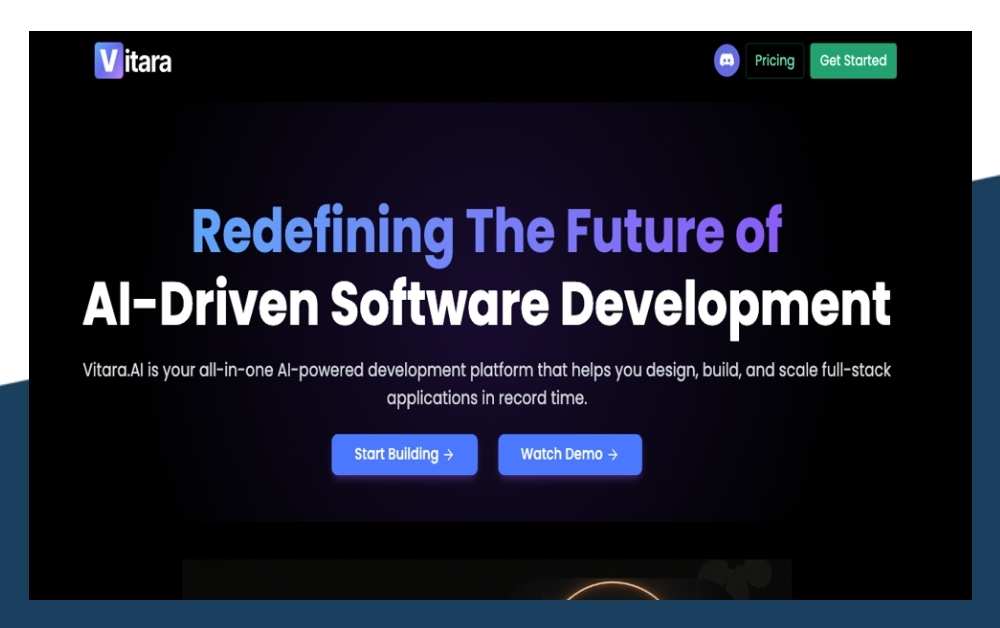
Vitara is a rising low-code platform built for teams that need power, performance, and scalability in one place. Unlike Hostinger Horizons, which is more beginner-focused, Vitara is designed to handle complex business apps with advanced data management and enterprise-level security.
With its AI-assisted builder, teams can describe what they want, and Vitara creates ready-to-use app structures with backend logic, integrations, and user roles. Developers can then refine everything using its visual editor or custom code.
Key features:
- AI-driven app scaffolding for faster builds
- Advanced role management and security settings
- API-first architecture for seamless integrations
- SQL and NoSQL database support
- Options for on-premise or cloud deployment
Best for: Enterprises and mid-size businesses that need secure, scalable applications.
Hostinger Horizons alternative for: Robust scalability, security, and enterprise-level customization.
You Might Like to Read This:
2. Windsurf – best Hostinger Horizons competitor for AI-powered code generation
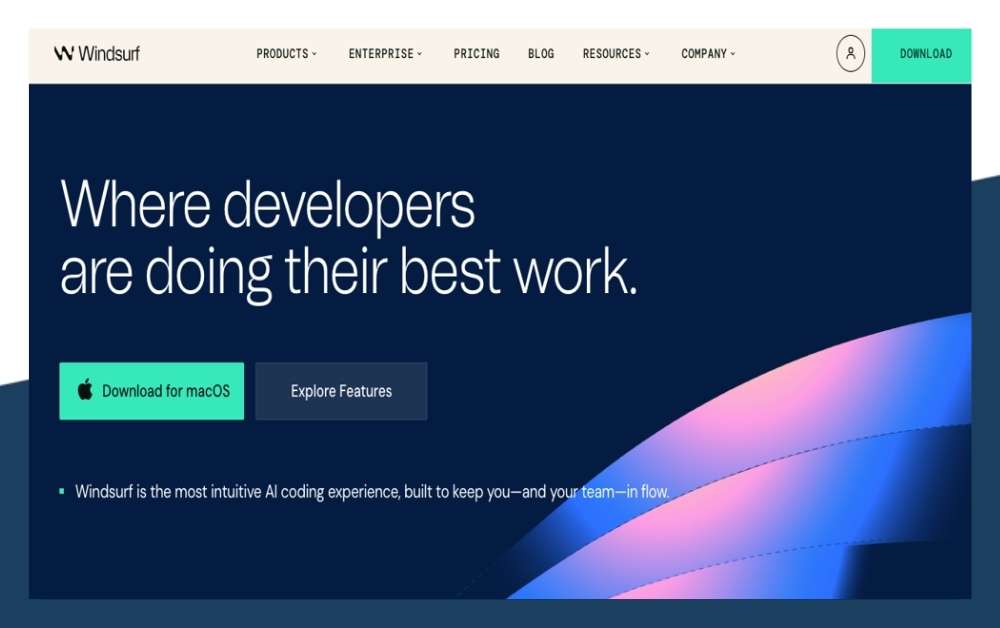 Windsurf is an AI development platform built to feel like a smart assistant inside your IDE. While Hostinger Horizons helps with no-code web apps, Windsurf focuses on helping developers write, debug, and scale production-ready code with AI.
Its deep integration with coding environments makes it a great choice for dev teams that want AI to supercharge their workflow, not just help with app scaffolding.
Key features:
- AI-assisted coding directly inside VS Code
- Semantic search across large codebases
- Inline error detection and fixes
- Local-first security with no forced cloud uploads
- Collaboration features for dev teams
Best for: Development teams managing complex or legacy applications.
Hostinger Horizons alternative for: AI coding support, debugging, and intelligent project scaling.
Also Read:
5 Best Windsurf AI Alternatives for Different Use-Cases
3. Bolt.new – best full-stack Hostinger Horizons replacement
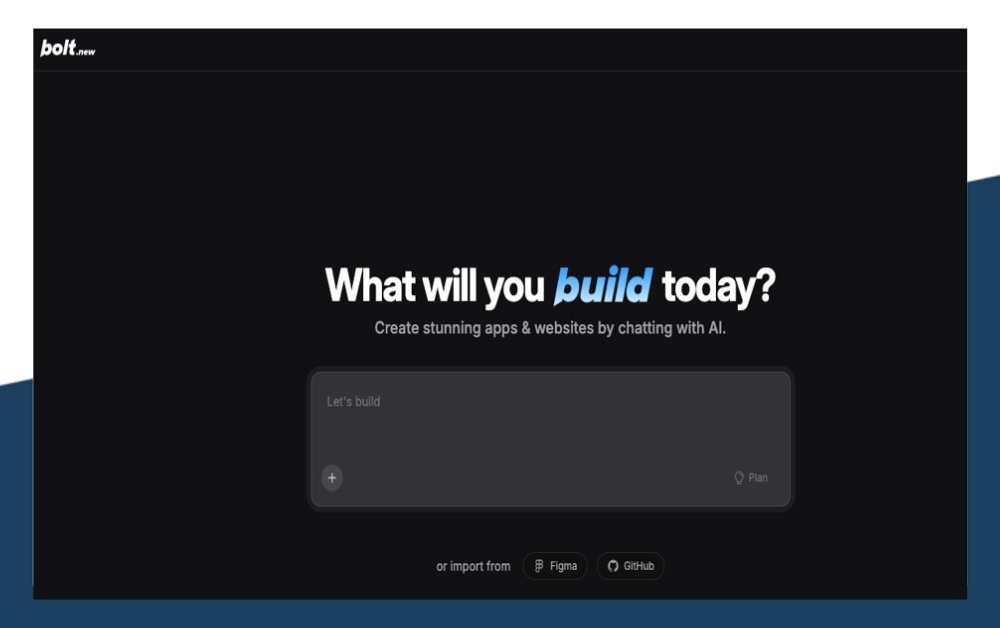
Bolt.new takes AI-generated development a step further by offering a complete full-stack environment. Unlike Hostinger Horizons, which mainly focuses on no-code interfaces, Bolt.new builds both frontend and backend codebases ready for deployment.
Startups and product teams love it because you can describe an idea in natural language and instantly get a production-ready app with React, Node.js, Prisma, and PostgreSQL. From there, everything syncs with GitHub for team collaboration.
Key features:
- AI-powered prompt-to-app generation
- Full-stack output: React frontend + Node.js backend
- Built-in authentication, database, and APIs
- GitHub sync for collaboration and version control
- Exportable code you can extend further
Best for: Startups, small teams, and builders creating MVPs and production-ready apps.
Hostinger Horizons alternative for: Full-stack app development with exportable, production-grade code.
Also Read: Best Bolt Alternatives and Competitors
4. Appsmith – Best for Open-Source Flexibility
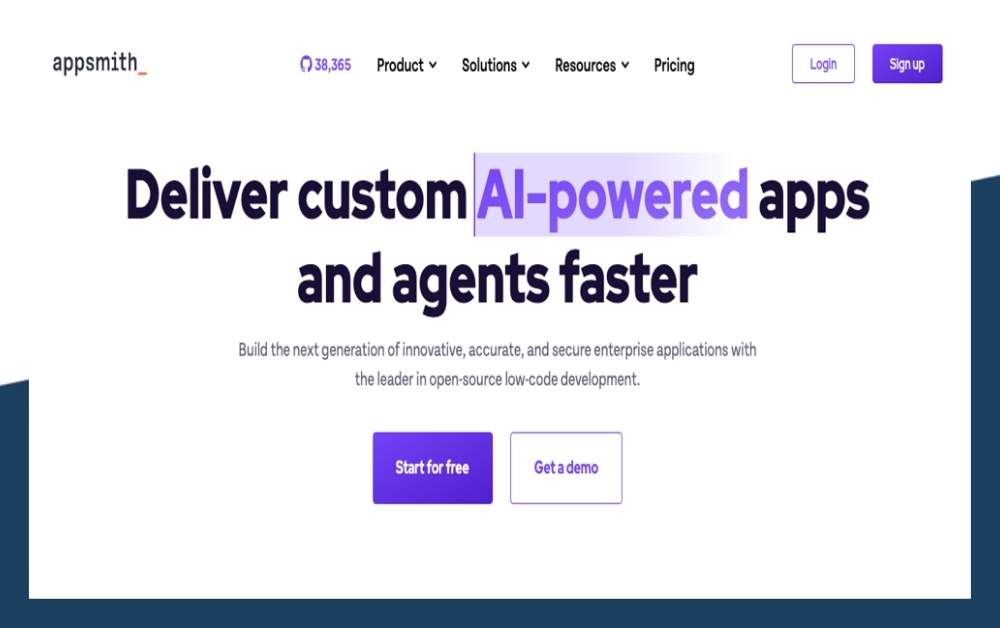
Appsmith is a popular open-source low-code platform that lets teams build internal tools with speed and freedom. Unlike Hostinger Horizons, which is more closed and template-driven, Appsmith thrives on customization. Developers can extend apps with JavaScript, connect to almost any API, and deploy on their own servers for complete control.
Key features:
- Open-source with active global community support
- Drag-and-drop UI builder with JS customization
- Wide integration support: REST, GraphQL, gRPC, and databases
- Self-hosting or cloud deployment options
- Role-based access control for secure apps
Best for: Engineering teams and businesses that want full transparency, flexibility, and control over their tools.
Hostinger Horizons alternative for: Open-source customization, wide integrations, and enterprise-level data security.
Also Read: Top Appsmith Alternatives for AI App Building
Appsmith Pricing Explained: Which Plan Fits Your Team
Appsmith vs Hostinger Horizons
5. Mendix – Best for Enterprise-Grade Low-Code Development

Mendix is a heavyweight in the low-code arena, built for enterprises scaling mission-critical apps. It goes far beyond what Hostinger Horizons offers by combining drag-and-drop simplicity with advanced DevOps, cloud support, and AI-assisted development. Global enterprises trust it for reliability and compliance.
Key features:
- End-to-end app lifecycle management
- AI-powered assistance for building and testing
- Supports multi-cloud and hybrid deployments
- Large ecosystem of reusable components
- Enterprise security and compliance standards
Best for: Large enterprises building complex apps with strict performance, compliance, and scalability needs.
Hostinger Horizons alternative for: Enterprise-grade scalability, cloud flexibility, and advanced security compliance.
6. Bubble – Best No-Code Platform for Startups and MVPs

Bubble is one of the most well-known no-code platforms in the world. Startups love it because it balances speed with power, letting non-technical founders turn ideas into real web apps. Compared to Hostinger Horizons, Bubble offers richer integrations, advanced workflows, and a massive plugin ecosystem.
Key features:
- Visual editor with powerful workflow automation
- Large plugin marketplace for extended functionality
- Responsive design for mobile and desktop apps
- Built-in database and API integrations
- Strong community and third-party learning resources
Best for: Startups, solo founders, and small teams creating MVPs and scaling into production apps.
Hostinger Horizons alternative for: Quick MVP creation, strong integrations, and community-driven growth.
7. OutSystems – Best for Full-Scale Digital Transformation
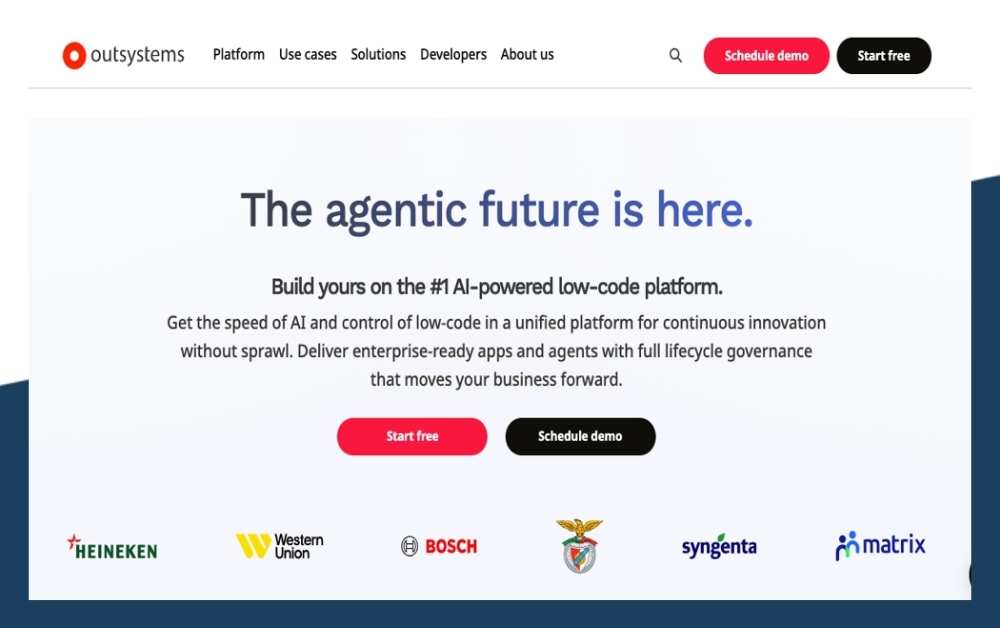
OutSystems is a leading low-code platform built for enterprises that want speed and scale. Unlike Hostinger Horizons, which focuses more on entry-level app building, OutSystems supports enterprise-grade applications with advanced workflows, AI features, and robust DevOps integration.
Key features:
- Visual development with advanced automation
- Built-in AI to optimize code and performance
- Multi-experience support: web, mobile, and desktop
- Scalable cloud and on-premise deployment
- End-to-end lifecycle management with DevOps tools
Best for: Enterprises managing complex digital transformation projects across multiple platforms.
Hostinger Horizons alternative for: Enterprise digital transformation, multi-platform support, and powerful automation.
8. Retool – Best for Internal Business Tools
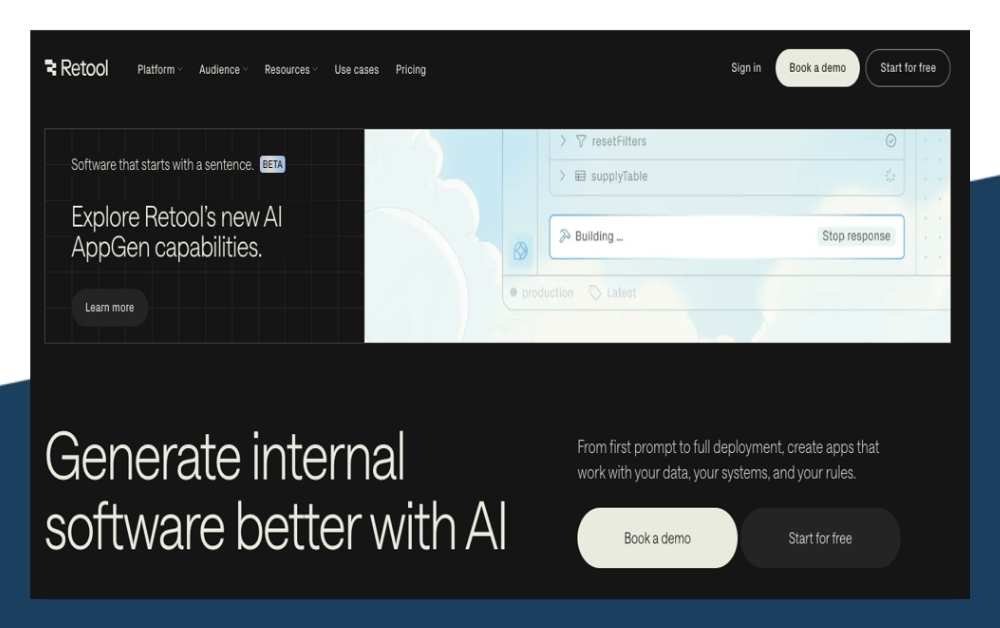
Retool is another vibe coding tool that made it to our list. It is all about speed and efficiency in building internal tools. While Hostinger Horizons helps you create customer-facing apps, Retool specializes in dashboards, admin panels, and internal systems that teams use every day. With its drag-and-drop components and instant API/database integrations, you can launch tools in hours, not weeks.
Key features:
- Pre-built UI components like tables, charts, and forms
- Instant connections to databases and APIs
- JavaScript support for advanced customization
- Enterprise-ready with SSO, permissions, and audit logs
- Cloud or self-hosted deployment options
Best for: Startups and enterprises that need fast, reliable internal apps without wasting dev cycles.
Hostinger Horizons alternative for: Internal dashboards, admin tools, and business process automation.
9. Lovable – Best for AI-Powered App Generation
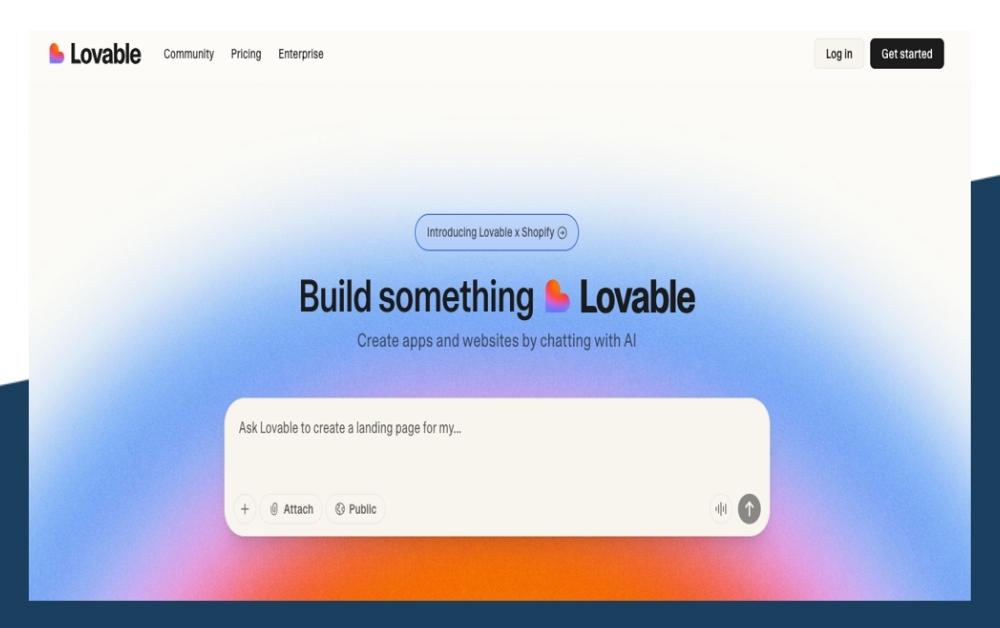
Lovable is a new-wave AI development tool designed to turn natural language ideas into functional apps. Unlike Hostinger Horizons, which is more template-based, Lovable relies on powerful AI to generate production-ready apps instantly. This makes it ideal for founders and small teams that want to skip the steep learning curve.
Key features:
- AI prompt-to-app generation with clean code output
- Modern tech stack: React, Node.js, Prisma, and PostgreSQL
- Automatic authentication, APIs, and database setup
- GitHub integration for version control and collaboration
- Exportable code for full customization
Best for: Startups, solopreneurs, and innovators who want to build fast and refine later.
Hostinger Horizons alternative for: Rapid AI app generation with a modern full-stack foundation.
Also Read: Top Lovable Alternatives for Vibe Coding
10. Replit – Best for Collaborative AI Coding and Prototyping
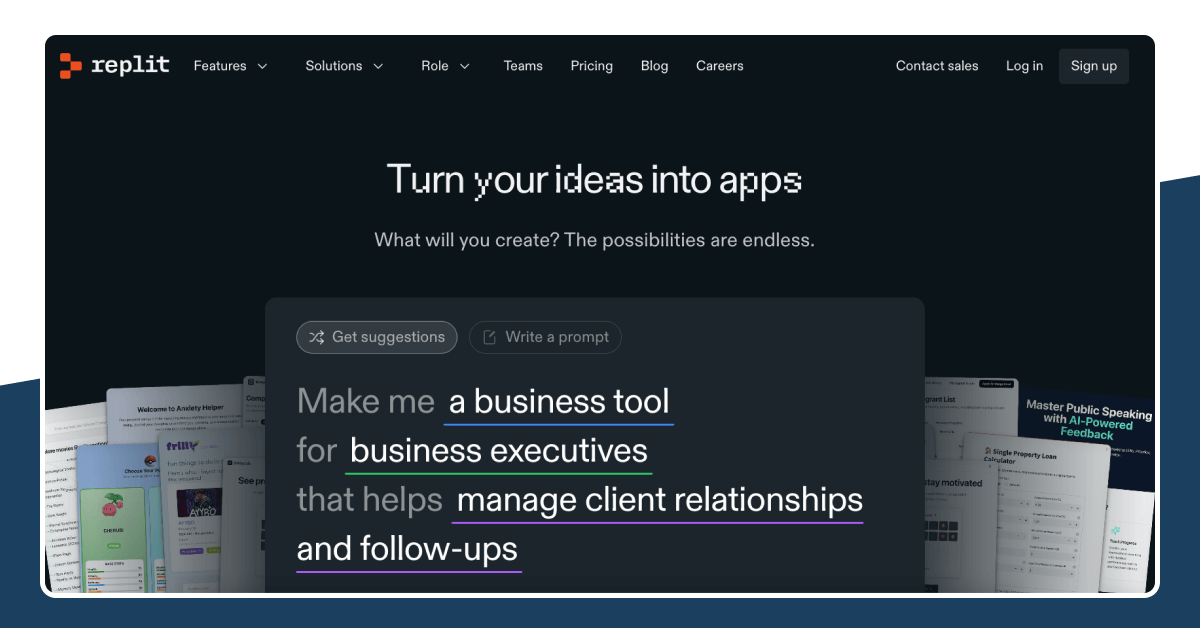
Replit is a developer-first platform that blends coding, AI, and collaboration. While Hostinger Horizons is built for non-technical creators, Replit empowers teams to code together in real time, with AI tools that boost productivity and learning. Its in-browser IDE makes building and sharing apps seamless.
Key features:
- AI-powered code suggestions and debugging
- Real-time collaboration like Google Docs for code
- Support for 50+ programming languages
- Instant cloud deployment with built-in hosting
- Templates and community projects for faster starts
Best for: Developers, educators, and teams that value collaboration and rapid prototyping.
Hostinger Horizons alternative for: Collaborative coding, AI-assisted development, and quick deployment.
Also Read: Top Replit Alternatives and Competitors
Comparison of Top 10 Hostinger Horizons Alternatives and Competitors
Here is a quick features and pricing comparison:
| Hostinger Horizons Alternatives | Stand Out Features | Pricing Plans |
|---|---|---|
| Vitara | AI-driven scaffolding, API-first architecture, Enterprise-grade security | Free trial, Business $49/user/month, Enterprise custom quote |
| Windsurf | AI coding in VS Code, semantic search, local-first security | Free, Pro $20/month, Team $99/month, Enterprise custom |
| Bolt.new | Full-stack AI app generation, GitHub sync, built-in APIs & DB | Free, Pro $29/month, Team $79/month, Enterprise custom |
| Appsmith | Open-source, drag-and-drop + JS customization, self-hosting/cloud | Free community, Cloud $0.4/hr, Business $20/user/month, Enterprise custom |
| Mendix | AI-assisted lifecycle management, multi-cloud deployments, enterprise compliance | Free, Standard $50/month, Enterprise custom |
| Bubble | Visual editor, plugin marketplace, built-in DB & APIs | Free, Starter $29/month, Growth $119/month, Team $349/month, Enterprise custom |
| OutSystems | Visual dev with AI, multi-platform support, full DevOps integration | Free, Standard $1,513/month, Enterprise custom |
| Retool | Pre-built UI components, instant API connections, enterprise-ready security | Free, Team $12/user/month, Business $50/user/month, Enterprise custom |
| Lovable | AI prompt-to-app generation, modern full-stack output, GitHub integration | Free, Pro $39/month, Team $99/month, Enterprise custom |
| Replit | AI coding suggestions, real-time collab, supports 50+ languages | Free, Hacker $7/month, Pro $20/month, Enterprise custom |
How to Choose the Right Hostinger Horizons Alternatives?
Choosing the right no-code or low-code platform can feel overwhelming with so many options available. The key is to stay focused on your project’s needs rather than the hype. Here are some practical guidelines to help you make the right decision:
1. Define Your Use Case
Think about what you’re building. Is it a customer-facing app, an internal dashboard, or a full-scale enterprise system? Clarity here will narrow down your choices and prevent feature overload.
2. Evaluate Scalability
Your app may start small, but it should have the ability to grow as your business grows. Consider user load, data complexity, and long-term maintenance. A platform that handles growth smoothly will save you from costly rebuilds later.
3. Check Integration Capabilities
Most modern apps rely on other tools—databases, payment systems, CRMs, and APIs. Ensure the platform you choose can connect with the services you already use or may adopt in the future.
4. Understand Pricing Models
Pricing structures vary widely for all of the tools. Some charge per user, others per project, or based on usage hours. A plan that looks affordable at first may become costly as your app scales. Transparency in pricing is critical.
You Should Know:
5. Consider Ease of Use
A platform is only valuable if your team can work with it comfortably. Look for clear documentation, community support, and user-friendly interfaces. Complex tools may offer more flexibility, but they can also slow down adoption.
✨ Final Tip: Don’t rush. Invest time in testing and evaluating before making a commitment. The right platform should balance usability, scalability, integrations, and cost in a way that fits your unique goals.
Final Thoughts
Exploring alternatives to Hostinger Horizons isn’t just about finding a shinier tool. It’s about matching your unique goals with the right balance of usability, scalability, and cost. The no-code and low-code landscape is evolving fast, and businesses now have more choices than ever before.
The key is not to get lost in endless features or flashy marketing. Instead, focus on what matters most to you—whether that’s speed, flexibility, integrations, or long-term growth potential. Every project has different needs, and the best choice will be the one that aligns with your vision and resources.
Many teams also find it helpful to collaborate with specialists, like a vibe coding agency, to evaluate platforms and set up development processes more efficiently. Working with experts can help you avoid costly mistakes and speed up your project’s success.
At the end of the day, choosing the right platform is an investment in your future. Take the time to evaluate carefully, experiment with free trials, and think long term. The right decision today can save you countless hours, unexpected costs, and technical headaches tomorrow.
Frequently Asked Questions
What is Hostinger horizons best used for?
Hostinger Horizons is best for people who want to build and launch websites or apps fast and code-free. Whether you're a freelancer, startup founder, or solo creator, it turns your idea into a working product. No developers needed.
Why would someone look for alternatives to Hostinger Horizons?
Hostinger Horizons Isn’t for Everyone. While Hostinger Horizons offers speed and simplicity, it’s not a perfect fit for every project. Many users look for alternatives when they hit certain limits or need more control.
Which alternative is best for building full-stack web apps without coding?
If you want a no‑code platform to build full‑stack web applications with frontend + backend logic the top choice is Vitara.
Are there free alternatives to Hostinger Horizons that offer similar features?
Yes, there are free alternatives to Hostinger Horizons that offer no‑code or low‑code features similar to it.
Do these alternatives support integrations like Stripe, Supabase, or Firebase?
Yes, many of the leading no‑code/low‑code alternatives do support integrations with Stripe, Supabase and Firebase. But support varies by platform and plan.
What are the pros and cons of using AI-powered app builders?
While AI-powered app builders offer impressive speed and simplicity, they also come with trade-offs that are worth considering. So, before choosing one, let’s explore how beginner-friendly these platforms really are.
Pros of AI-Powered App Builders
- Faster Development
- No Coding Required
- Lower Development Costs
- AI Suggestions & Automation
- Integrated Tools
- Easier Prototyping
- Streamlined Workflows
Cons of AI-Powered App Builders
- Limited Customization
- Platform Lock-In
- Generic Output
- Data Privacy Concerns
- Integration Gaps
- Scalability Issues
- Hidden Costs
Are these alternatives beginner-friendly for non-technical users?
Yes, many no‑code and AI‑powered app builders are designed with beginners in mind. But each platform varies in how beginner‑friendly it actually is.
What’s New?