Lovable vs Base44: Comparing the Two Popular AI App Coding Tools
TL;DR: Lovable vs Base44
- Lovable turns prompts into real React + TypeScript apps with Supabase, GitHub sync, and code you fully own and can scale.
- Base44 is a no-code AI builder on Wix that makes full apps from prompts, with UI, workflows, and data wired for fast launch.
- In a fitness site test, Lovable built a structured multi-section app; Base44 generated a polished, marketing-style landing page.
- Pick Lovable for code ownership, unique logic, and long-term products; pick Base44 for speed, workflows, and no-code editing.
Choosing the right AI app builder can feel overwhelming. With tools like Lovable and Base44 leading the charge, it’s hard to tell which one truly fits your goals. Whether you’re a solo founder, a product team, or just curious about building with AI, this guide will give you the clarity you need.
In this comparison, the tools are not only described on paper, they are used in practice. The same detailed fitness website prompt was run in both Lovable and Base44, then each step of the build was reviewed: setup, structure, editing, speed, and how far the project can grow.

You will see what each platform does best, where it falls short, and which project types it actually suits in real life. No fluff. Just a clear, practical look at two AI app builders that promise to turn your ideas into fully functional apps.
What is Lovable AI?
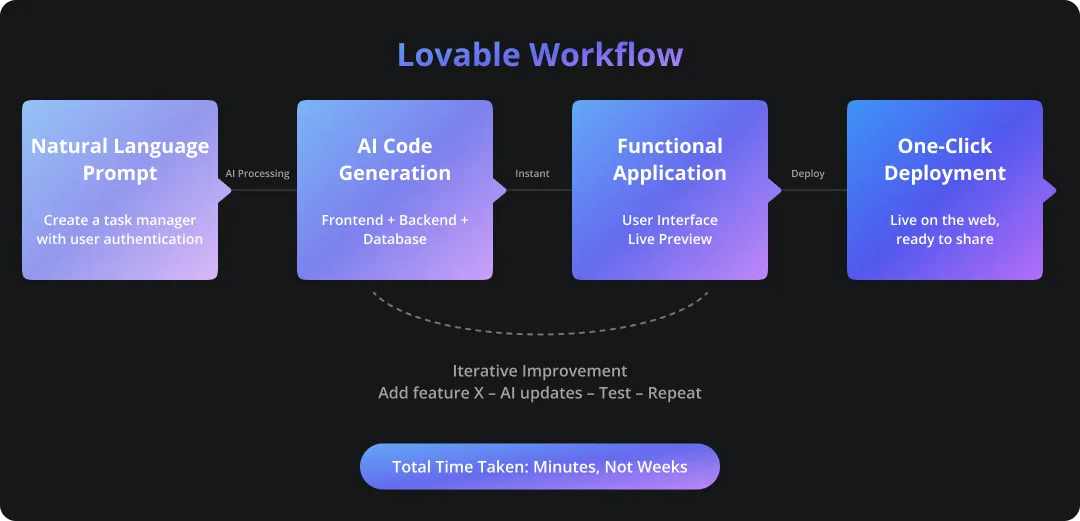
Lovable is an AI-powered app builder that turns natural language prompts into full-stack web applications using React, TypeScript, and a managed backend. It generates real, editable code rather than locking you into a visual canvas, so developers can inspect, refactor, and extend everything inside GitHub or the built-in editor. Lovable connects tightly with services like Supabase for auth, database, and storage, which makes it easier to go from idea to production without stitching multiple tools together. In practice, it feels like an AI teammate that scaffolds dashboards, internal tools, and SaaS-style MVPs while you stay in control of the final codebase.
Strengths
- Generates production-ready React and TypeScript code that you can export and own.
- Uses natural language prompts to build both frontend and backend in one flow.
- Integrates natively with Supabase for database, authentication, and APIs.
- Supports GitHub sync for version control, reviews, and team workflows.
- Speeds up prototyping while still allowing deep customization through direct code edits.
Ideal for
- Developers who want AI to handle scaffolding while they refine the code.
- Teams building internal dashboards, admin tools, and lightweight internal systems.
- Startups shipping SaaS MVPs quickly but planning to scale on a real codebase.
- Product teams that value fast iteration, modern stacks, and long-term code ownership.
What is Base44 AI?
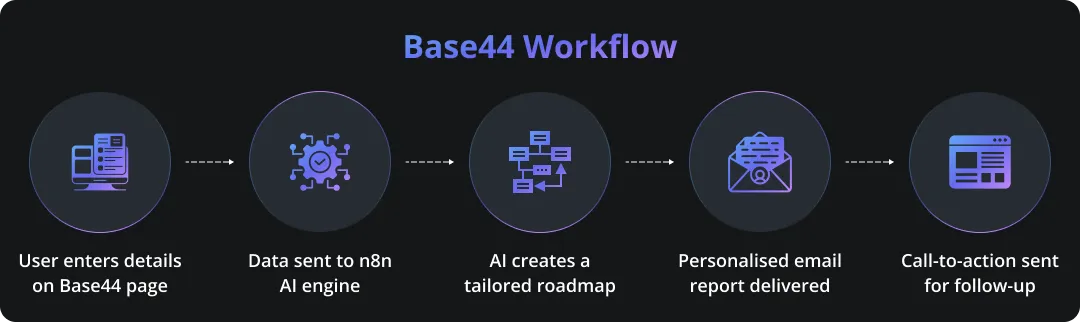
Base44 is an AI-powered no-code app builder that turns natural-language prompts into production-ready web applications. You describe the app, and Base44 plans screens, generates the interface, wires backend logic, and sets up databases and workflows for you. It focuses on “vibe coding” style development, where you collaborate with an AI inside a chat-like interface instead of writing boilerplate code. After rapid growth, Base44 was acquired by Wix.com and now sits inside its ecosystem as a batteries-included AI app builder for internal tools, customer portals, and more.
Strengths
- Turns natural-language prompts into complete apps, including UI, workflows, and data models.
- Supports full-stack generation with database schema, backend logic, and built-in cloud deployment.
- Designed for structured, AI-guided product building, not just one-off screen generation.
- Reduces boilerplate and manual wiring, which speeds up serious internal tools and operations apps.
- Benefits from Wix infrastructure and investment, giving stronger long-term hosting and scalability.
Ideal for
- Teams building complex internal tools, admin panels, and back-office systems that must scale.
- Startups that want to prototype full apps quickly without hand-coding every layer.
- Non-technical or semi-technical founders who prefer prompt-driven workflows over traditional coding.
- Product teams in larger businesses that want an AI app builder aligned with the Wix product stack.
Lovable vs Base44: In-Depth Comparison
Choosing between Lovable and Base44 means looking past the “AI builds your app” promise. What really matters is how each platform handles logic, data, scale, and long-term ownership of what you build. If your team treats internal tools and MVPs as real products, these differences become important.
Ease of use
Lovable feels familiar to anyone who has touched modern web stacks. You describe the app, and it scaffolds React, TypeScript, and Supabase, then lets you refine things with prompts or code edits. Non-technical users can still ship something, but the experience clearly tilts toward developer-friendly workflows.
Base44 leans harder into pure “vibe coding.” You stay inside a guided builder, describe screens and flows, and let the platform assemble UI, data models, and logic without exposing much code. For mixed teams with limited engineering support, that can feel more approachable at the start.
Bottom line: Lovable is easier if your team is at least somewhat technical. Base44 is easier if you want prompt-driven building with minimal exposure to code.
Workflow automation and rules
Lovable generates standard application code, so automation often lives in TypeScript and Supabase functions. That makes simple triggers easy and keeps complex flows possible, but someone still needs to think like a developer when business rules get dense.
Base44 is built with internal tools and operations in mind. It emphasizes multi-step flows, approvals, notifications, and rule-based branching that you configure through prompts and settings. Many common internal patterns feel almost “pre-wired” compared to writing everything as custom logic.
Bottom line: Base44 usually wins if you care most about rich, preconfigured workflow automation. Lovable wins when you want automation expressed as code that you can fully control.
Data integration
Lovable pairs natively with Supabase, so you get a PostgreSQL database, auth, and APIs from day one. That setup works well if you expect to plug in external services and keep tight control over schemas, queries, and migrations inside a standard stack.
Base44 leans on a managed data layer inside its ecosystem. It can connect to multiple sources through built-in connectors and APIs, but the core storage and orchestration stay on the platform’s side. This is convenient early on, yet it can make deep, custom migrations more involved later.
Bottom line: Lovable is stronger if you want direct database ownership and classic data engineering patterns. Base44 fits teams that prefer managed data with ready-made integrations.
Scalability
Lovable scales through your code. You can sync everything to GitHub, adjust architecture, and move hosting to whatever stack your team prefers as usage grows. That path suits teams that expect to harden a successful internal tool or MVP into a long-term system.
Base44 scales through its managed environment. As your app grows, the platform continues to handle infrastructure, performance, and security within the Wix ecosystem. That’s ideal if you want to avoid infrastructure decisions, but it also means your scaling story stays tied to the vendor’s roadmap.
Bottom line: Lovable offers more architectural freedom as you scale. Base44 offers more convenience, as long as you are comfortable staying in its ecosystem.
Custom logic and business rules
Lovable exposes everything as readable React and TypeScript. If your product team or engineers need unusual flows, strict compliance checks, or niche algorithms, they can encode that logic directly in the generated code and keep refining it.
Base44 shines for “standard” internal patterns: approvals, handoffs, status changes, scheduled jobs, and similar flows that many businesses share. You describe the rules, and the platform wires them into its orchestration layer without asking you to design the underlying architecture.
Bottom line: Lovable is better when your logic is unique, regulated, or security-sensitive. Base44 is better when your workflows look a lot like classic internal operations and you want them running quickly with minimal custom code.
Key Features: Lovable vs Base44
When it comes to building AI-powered apps, both Lovable and Base44 offer impressive tool sets, but they serve slightly different needs. Let’s break down their core features and how they compare.
Lovable focuses on giving developers deep control and high-quality output. It supports full-stack app generation across frontend, backend, and database, and lets you export or sync code via GitHub for complete ownership. It integrates with services like Supabase for database and authentication, and includes live preview along with prompt-based editing so you can iterate quickly.
Base44, on the other hand, shines when speed and simplicity matter most. It uses natural-language prompts to generate an entire app with UI, data model, backend logic, authentication, and deployment. It also includes built-in hosting, responsive design, and a visual editor with a conversational interface to make quick edits.
Side-by-Side comparison:
| Feature Category | Lovable | Base44 |
|---|---|---|
| Full-stack code export | Yes, you own and edit the generated code | Yes (on paid plans) |
| Backend and auth integration | Supabase plus prompt control | Backend and auth built in with no extra setup |
| Prompt-to-app generation | Yes, focused on developer-friendly prompts | Yes, using natural language from idea to app |
| Visual editor and styling | Has live preview and some visual editing | Strong visual editor with styling controls |
| Deployment and hosting | External hosting or built-in options | Hosting included with one-click deployment |
| Ideal use case | Developers and startups wanting full control | Non-technical founders and rapid MVPs |
You Might Also Like To Read This:
Emergent vs Base44: Which AI App Builder Is Right for You?
Lovable vs Base44: Developer Use Cases
Every project has different needs. The right platform depends on what you’re building, how fast you need it, and how much control you want. Below is a breakdown of common developer use cases and which platform fits best.
| Developer Use Case | Best Platform |
|---|---|
| Building internal tools for operations teams | Lovable |
| Connecting GPT with Slack and Notion | Base44 |
| Customer support chatbot dashboard | Lovable |
| Scalable AI-powered microservices | Base44 |
| MVP with polished UI for investor pitch | Bolt |
| Lightweight CRM with AI-driven automations | Base44 |
| Rapid UI + backend flow builder for testing | Bolt |
| Workflow tool that integrates with Supabase | Lovable |
| Internal knowledge base with AI search | Lovable |
| Landing page builder with AI-driven logic | Base44 |
Lovable works well when you need deeper customization, full control over your code, and long-term maintainability. It’s a great fit for developers building serious tools or dashboards that integrate tightly with business data.
Base44 stands out in speed and simplicity. It’s ideal for quick prototypes, GPT-integrated apps, and lightweight tools where setup time matters more than code ownership.
Lovable vs Base44 for Different Project Types
| Project type | Better tool | Why this tool fits best | When to consider the other tool |
|---|---|---|---|
| Internal tools and dashboards | Base44 | Designed for structured internal workflows, approvals, and data views with minimal setup. | Choose Lovable if your team wants full control in code and plans to extend the tool heavily. |
| Marketing and brochure websites | Base44 | Faster to produce polished, brand ready pages with strong visual focus and quick edits. | Choose Lovable if the site may later evolve into a web app or product with more complex logic. |
| SaaS MVPs and web apps | Lovable | Generates a real React codebase with Supabase so the MVP can grow into a long term product. | Choose Base44 if you only need a fast visual MVP to test messaging and flows with low technical risk. |
| Client portals and admin panels | Lovable | Better for role based access, custom rules, and integrations that must be expressed cleanly in code. | Choose Base44 if you want a functional portal quickly and can accept platform level constraints. |
| Data heavy workflows and reporting | Lovable | Easier to tune queries, performance, and data structures directly in a standard codebase. | Choose Base44 if you mainly need pre wired views and simple reports on top of existing data. |
| Experiments and side projects | Base44 | Great for spinning up usable interfaces in minutes with minimal effort or technical setup. | Choose Lovable if you treat side projects as potential products and may scale them later. |
| Non technical team initiatives | Base44 | Fits product, operations, and marketing teams who prefer prompts and visual editing instead of code. | Choose Lovable if there is at least one developer who will own and maintain the project long term. |
How Lovable and Base44 Performed in Real Projects
To really understand how these tools behave, we used this exact prompt in both Lovable and Base44 to see how they perform and the results are here:
The fitness prompt I used
“Create a modern, responsive fitness website with a clean and energetic design. Include sections for Home, About, Workout Plans, Nutrition Tips, BMI Calculator, and Contact, with strong call-to-action buttons like ‘Start Your Fitness Journey.’ Use bold typography, motivating images, and a black, white, and neon green color theme.”
That single brief went into both tools without any extra hints or tweaks.
Quick setup experience
Lovable
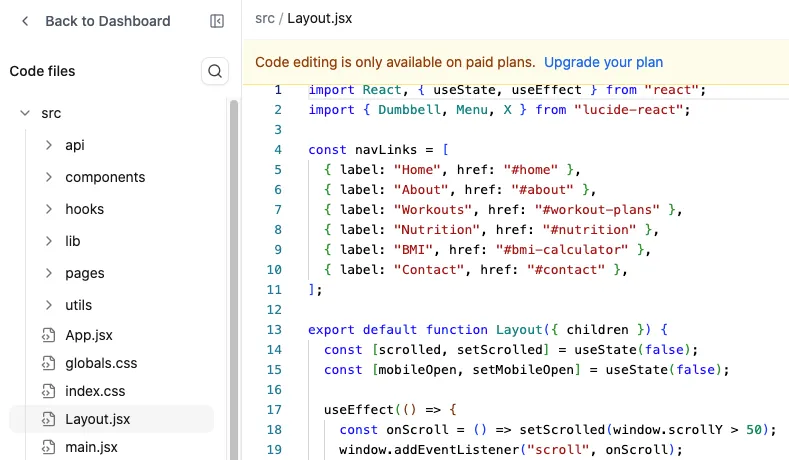
When this prompt was dropped into Lovable, it paused for a moment like it was planning the whole project first. It did not rush to show a flashy screen. Instead, it spun up a proper app skeleton and prepared a working preview with a clear structure behind it.
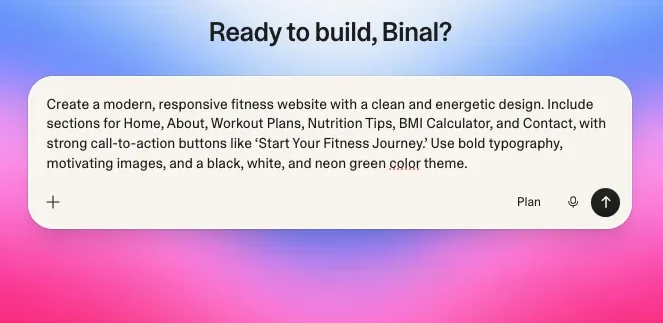
The flow felt like working with a serious dev tool. It gives the impression that Lovable wants the foundation to be solid and organized before anything else. It behaves more like an AI assisted IDE than a pure visual site builder.
Base44
Base44 reacted in a much more instant way. As soon as the prompt was submitted, the fitness site started forming directly in the visual builder. A branded experience appeared on screen, already shaped like a modern marketing site for a fitness brand.
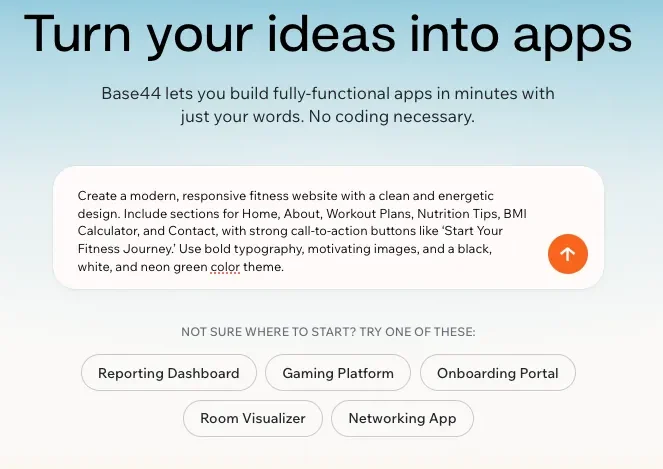
There was no sense of setup steps or visible project scaffolding. Base44 wanted to show something usable immediately, so the experience leaned strongly toward design first and fast visual feedback.
How each platform interpreted the prompt
Lovable
Lovable treated the fitness brief like a real multi-section website project. The generated app followed the requested structure with clear sections for the main pages and a layout that felt ready to extend. Navigation and page flow were handled like a conventional web project, not just a long single scroll.
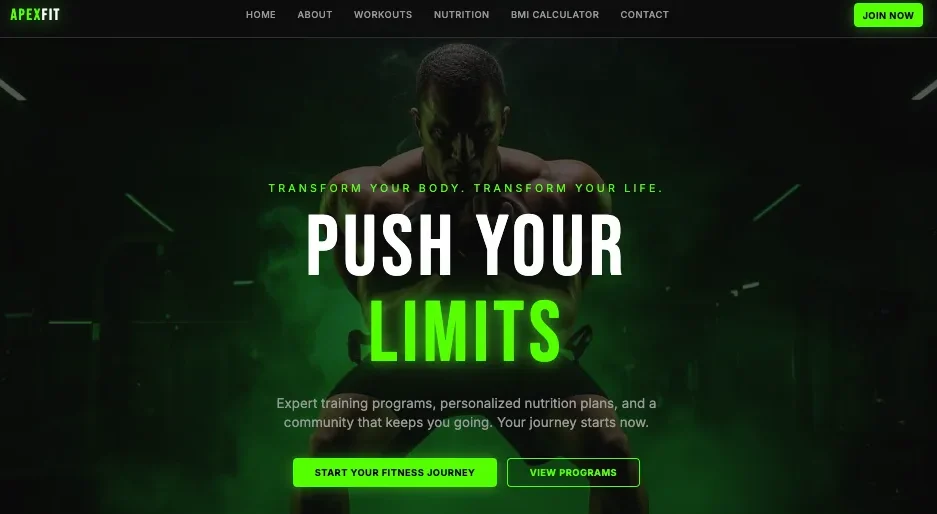
The black, white, and neon green theme came through as a high-contrast, modern look that would fit a fitness or coaching brand. It felt like a base you could now wire up to real user data, memberships, or workout libraries without fighting the structure.
Base44
Base44 read the same prompt through a more visual and branding-focused lens. Instead of thinking in “files and routes,” it leaned into a strong landing-page style flow under the PushFit identity. Everything sat in a cohesive, scrollable experience with sections that lined up with the brief.
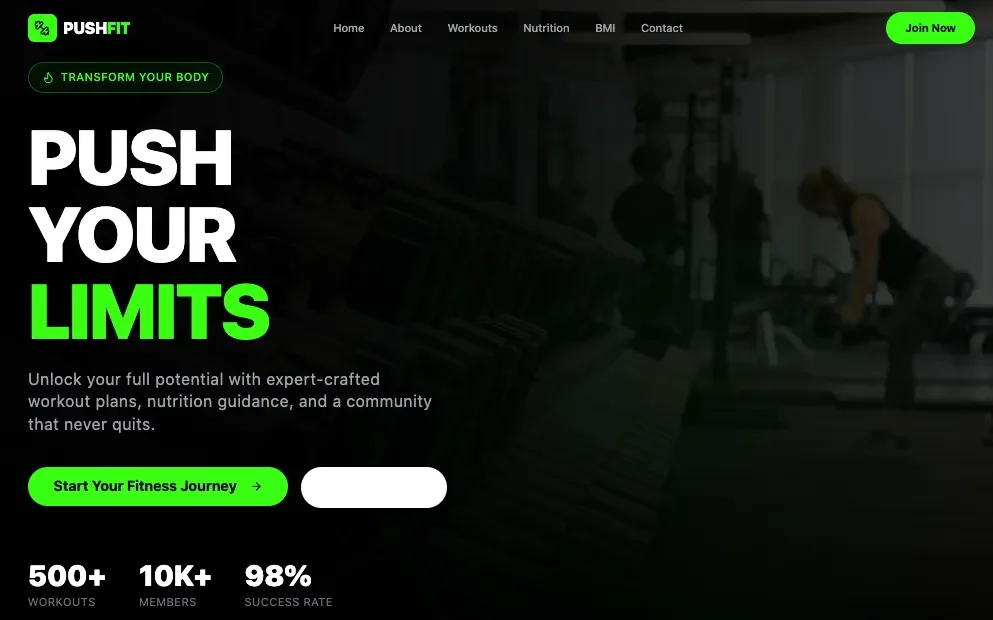
The energy of the brand came more from the layout and pacing of sections than from technical structure. It felt like something a marketing team could launch quickly, then refine with more prompts and minor edits as needed.
Editing the fitness website
Lovable
Editing inside Lovable feels like working with a real app. Changes can be requested via prompts, but there is always a clear codebase behind them. That makes it easier to lock in precise behavior, adjust layout details, or add more logic later.
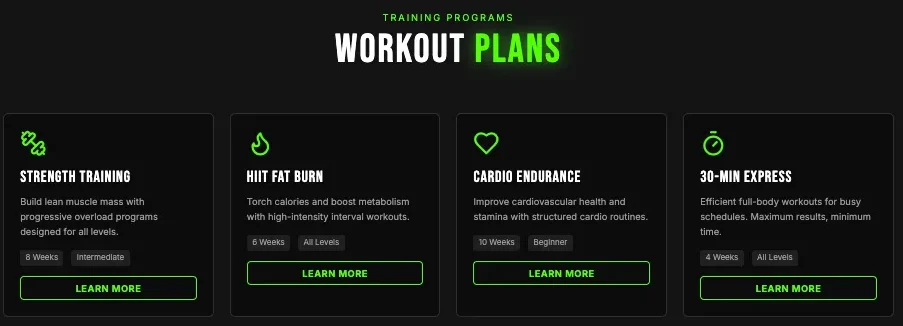
For this fitness build, that means things like refining the BMI calculator, changing how workout plans are grouped, or adjusting navigation feel natural to handle in code. The benefit is long-term control. The trade-off is that someone on the team should be comfortable looking at what the AI changed.
Base44
Base44 makes simple edits feel almost effortless. You stay inside its visual environment, adjust sections, wording, spacing, and calls-to-action with prompt-style instructions or configuration. For the fitness site, quick changes like “make the hero more bold,” “add another CTA section,” or “space out the workout cards” feel very fast.
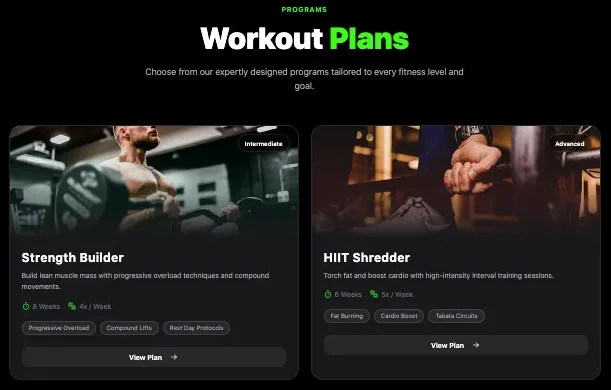
Once you go beyond layout and basic interactions, you start to feel the platform’s guardrails. Deep logic or custom flows are possible only within what Base44 exposes, so highly specific behavior takes more careful prompting or workarounds.
Speed of the build
Lovable
Lovable was not the fastest in terms of instant visuals, but it was fast in a different way. It spent a bit more time upfront creating a structured, deployable project rather than a quick single-page mock. For a long-term fitness site or app, that initial extra thinking time pays off in a stronger foundation.
Base44
Base44 felt almost instant. A presentable fitness site appeared within moments of submitting the prompt. If the priority is seeing something on screen now and worrying about structure later, Base44 clearly wins this round. It delivers that “wow, I already have a site” feeling very quickly.
Backend logic, BMI calculator, and future growth
Lovable
Because Lovable works with real app patterns, it is easier to turn elements like the BMI calculator into something more serious over time. You can plug in more complex logic, connect user accounts, or store past BMI entries if needed. The structure is already friendly to that kind of growth.
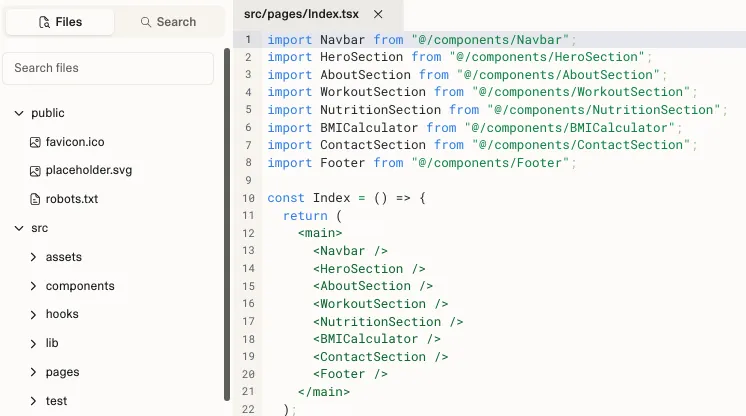
For a fitness brand that might later add member dashboards, progress tracking, or paid plans, this approach feels like a natural runway.
Base44
Base44 keeps a lot of backend concerns behind the curtain. For this kind of fitness site, that is not a problem at all if the goal is mainly marketing plus basic interactivity. What you gain is speed and simplicity. What you give up is some freedom to push the project into deeper application territory without working within the platform’s boundaries.
Overall lesson from this real-world test
Using one shared prompt, Lovable behaved like an AI assistant for real app development.
Base44 behaved like an AI website builder focused on fast, polished output.
Both hit the brief for a modern fitness site.
The right choice depends on whether the project is a quick, brand-forward presence or a foundation for a fitness product that will keep evolving.
Pricing: Base44 vs Lovable
Here’s a clear comparison of the pricing models for Base44 and Lovable, so you can decide which aligns best with your budget and needs.
Base44 Pricing Overview
- Free tier: $0/month with 25 message credits and limited integration credits.
- Starter tier: Around $20 to $40 per month for 100 to 250 messages and several thousand integration credits.
- Builder / Pro tiers: Roughly $50 to $100 per month for higher message-credit volumes (250–500), plus custom domains and GitHub integration.
- Elite / Enterprise: Around $160 to $200 per month or custom pricing. Includes 1,200+ messages, expanded integration limits, and premium support.
You’ll Want to Read This:
Lovable Pricing Overview
- Free plan: $0/month. Includes daily or monthly credit limits and unlimited public projects.
- Pro plan: About $25/month for around 100 credits, private projects, custom domains, and removal of branding.
- Business plan: Approximately $50/month, with added features like SSO, design templates, and internal publishing.
- Enterprise / Custom: Tailored pricing for larger teams needing advanced controls and support.
Thought You Might Like This:
Side-by-Side Comparision
| Platform | Free Tier | Entry Paid Tier | Mid Paid Tier | Top Tier / Enterprise |
|---|---|---|---|---|
| Base44 | $0 | ~$20–$40/month | ~$50–$100/month | ~$160–$200+/month or custom |
| Lovable | $0 | ~$25/month | ~$50/month | Custom pricing for enterprise |
Things you should keep in mind when it comes to pricing
- Estimate how many “messages” or “credits” your project will consume per month.
- If you need a quick app or prototype on a budget, start with the free plan of either platform and upgrade only when needed.
- If you plan long-term control, code export, team collaboration, and versioning, Lovable’s paid tiers likely offer more value.
- If you value rapid deployment, minimal setup, and are comfortable with less code flexibility, Base44’s pricing is attractive.
Recommend To Also Read This:

Conclusion
Both Lovable and Base44 are powerful vibe coding AI app builders, but they serve different needs. If you want speed, simplicity, and quick deployment, Base44 is the smarter choice. If you need full control, clean code, and long-term scalability, Lovable gives you the tools to build with confidence. Choose based on your team, timeline, and how much ownership you need over your product.
Frequently Asked Questions
Does Base44 or Lovable offer free plans?
Yes, both Base44 and Lovable offer free plans to help you get started.
Which platform performs better for teams, Base44 or Lovable?
Base44 is great for teams that want fast deployment with built-in backend and minimal setup. Lovable is better for teams needing design flexibility, code access, and enterprise controls. Choose based on whether your team prioritizes speed or customization.
Which platform is better for beginners?
If you're a beginner, Base44 is likely the smoother starting point. it takes care of the backend, hosting, and setup, so you can focus on building without technical hurdles.
Lovable is also approachable, especially for visual thinkers, but may require a bit more effort when connecting services or customizing deeper logic.
What are the main differences between Lovable and Base44?
While both tools help you build AI-powered apps, they take very different approaches. Here’s how they compare at a glance:
Base44
- All-in-one setup with backend, auth, database, and hosting included
- Great for fast launches with minimal configuration
- Ideal for non-technical users or teams who want to move quickly
Lovable
- Offers more flexibility and control over design, backend, and integrations
- Lets you plug in external tools and export or edit code
- Better suited for technical users or teams who want full customization
How do the pricing models compare?
Base44 pricing typically focuses on usage and scale, with flexible options for individuals and teams. Lovable pricing is based on seats and projects, with both monthly and annual plans available. While both are cost-effective no-code platforms, your choice depends on whether you're prioritizing app scalability or collaborative design workflows.
Can I use my own AI models with these platforms?
If you want to plug in your own AI models, Lovable gives you more room to do that; it's built for flexibility and external integrations. Base44 comes with built-in AI tools to speed things up, but it's not designed for swapping in your own models. So if custom AI workflows are part of your plan, Lovable is the better fit.
What’s New?