Softr Alternatives in 2026: 7 Best Tools to Build Apps Faster
If you’re searching for Softr alternatives, there’s a good chance you’ve already tried Softr or at least looked at it seriously. And to be fair, it does a lot well. It’s simple, clean, and beginner friendly. You can turn Airtable data into a client portal, internal tool, or basic web app without getting stuck in a complicated setup. That’s exactly why so many people start there.
But here’s where things usually change. Once the project gets more specific, the limitations start to show. Maybe the design feels too restricted. Maybe the workflows are not flexible enough. Maybe the app needs deeper database control, stronger customization, or room to scale as the business grows. That’s usually the moment people stop searching for an easy builder and start searching for the right builder. That’s also why interest in tools like Softr keeps growing, especially among founders, agencies, operations teams, and people building MVPs without a full Software development team.
In this article we will explore the best Softr alternatives for different needs, not just the most popular names. We dont believe one tool would be the answer, so this article will help narrow down which Softr alternative actually makes sense for what you want to build.

Build stunning websites with AI prompts, responsive design, integrated databases, and exportable source code.
Launch Your Website Today →
Quick Comparison Table of the Best Softr Alternatives
If you are comparing Softr alternatives, this table gives a quick first filter. Some tools are better for visual no code building. Some are stronger for AI led app generation. Some feel closer to a real product workflow with code, GitHub, and iteration built in.
| Tool | Category | Best for | Can start from an existing repo | Review or workflow style | Pricing model |
|---|---|---|---|---|---|
| Bubble | Visual no code app builder | Custom web apps, marketplaces, SaaS MVPs, and apps that need deeper workflows than Softr | No, not a repository first workflow based on public Bubble pricing and product documentation | Visual builder with built in database, workflows, and usage based scaling | Free plan available, then usage based paid plans built around workload |
| Vitara | AI first full stack app builder | Builders who want fast AI app creation with more code freedom and GitHub style workflow | Yes, GitHub integration is part of the platform experience | Prompt to product workflow with editable and downloadable code, faster for iterative building | Free tier, then Build at $20 per month and Scale at $50 per month, plus custom plans |
| Glide | No code business app builder | Internal tools, operational apps, and spreadsheet driven business software | No, Glide is data source first rather than repository first | Spreadsheet and business workflow style with fast app generation and AI features | Free plan, individual plans, and business plans with user based pricing |
| Emergent | AI powered full stack app builder | Startups and teams that want production ready app building through conversation | GitHub version control is supported, but public documentation is less explicit about importing an existing repository from day one | Conversational build workflow with AI agents, testing, live preview, deployment, and GitHub version control | Free plan plus paid plans including Standard and Pro tiers |
| WeWeb | Frontend low code builder | Teams that want more frontend control with APIs, Supabase, Xano, or custom backends | Partly. It supports code export and GitHub publishing, but is not positioned publicly as a repository first builder | Visual frontend workflow with backend connections and more technical deployment flexibility | Free plan, then seat based plans and separate hosting plans from paid tiers onward |
| Hostinger Horizons | AI web app builder | Founders, beginners, small businesses, and creators who want to build web apps by chatting with AI | No, Hostinger Horizons is prompt first rather than repository first, but paid users can download the generated code | Prompt based web app building with hosting, user accounts, logins, data storage, AI credits, and launch support included | Paid plans start at $6.99 per month, with higher plans offering more AI credits, websites, collaboration, code editor access, and early feature access |
| Webflow | Visual website and CMS builder | Designers, agencies, marketers, and businesses that need polished websites, CMS pages, ecommerce, and strong design control | No, Webflow is not a repository first app builder, though it supports custom code and code components on selected plans | Visual design first workflow with CMS, hosting, SEO, AEO, ecommerce, Webflow AI, and advanced site control | Free Starter plan, then Basic at $15 per month and Premium at $25 per month on yearly billing, with Team, Enterprise, and Ecommerce plans available |
Why Are Users Looking for Softr Alternatives?
Softr makes it easy to build apps quickly. That’s why many founders, solo builders, and teams start with it. But as the product grows, expectations change. Many users begin exploring Softr alternatives for better flexibility, control, and long term fit.
Here are the most common reasons:
- They need more control over how the app works
Softr feels simple at the start, but growing products often need custom logic, deeper workflows, and more control over app behavior. That’s when users start comparing stronger Softr competitors. Source: G2 - They want stronger customization
Many users want more freedom to shape the design and user experience. Softr’s block based structure helps with speed, but it can feel limiting when building something more unique. - They need better scalability
A tool that works for early stage projects may not always support long term growth. As usage increases, teams look for the best Softr alternatives that can handle scale more smoothly. Source: Reddit - They want stronger backend and data control
As apps become more complex, users need better database handling, API flexibility, and deeper integrations. This often leads them to explore a Softr alternative with stronger backend support. Source: Reddit - They are moving beyond a simple prototype
Softr is great for quick MVPs. But once the idea proves itself, users often switch to tools that support more production ready applications. Source: Reddit - They need a better fit for their use case
Different goals need different tools. Whether it’s SaaS products, internal tools, or client portals, users look for apps like Softr that match their specific needs more closely. Source: G2 - They want more freedom for future updates
Builders want a platform they can keep improving over time without feeling restricted. Flexibility becomes more important as the product evolves. - They are thinking about long term value
As feature needs and users grow, pricing can change. Many teams compare Softr alternatives to find better flexibility and value for long term use.
Top 7 Softr Alternatives in 2026
Not every Softr user is looking for the same replacement. Some want more visual control. Some want a faster AI driven workflow. Others want stronger scalability, better backend flexibility, or a path that feels closer to real product building. That is why the best Softr alternatives are not all trying to solve the same problem.
The five tools below stand out for different reasons. A few are better for non technical builders. A few are better for teams that want more code freedom, GitHub workflows, or full stack app generation. The right choice depends on what you want to build and how you want to build it.
1. Bubble
2. Vitara
3. Glide
4. Emergent
5. WeWeb
6. Hostinger Horizons
7. Webflow
1. Bubble
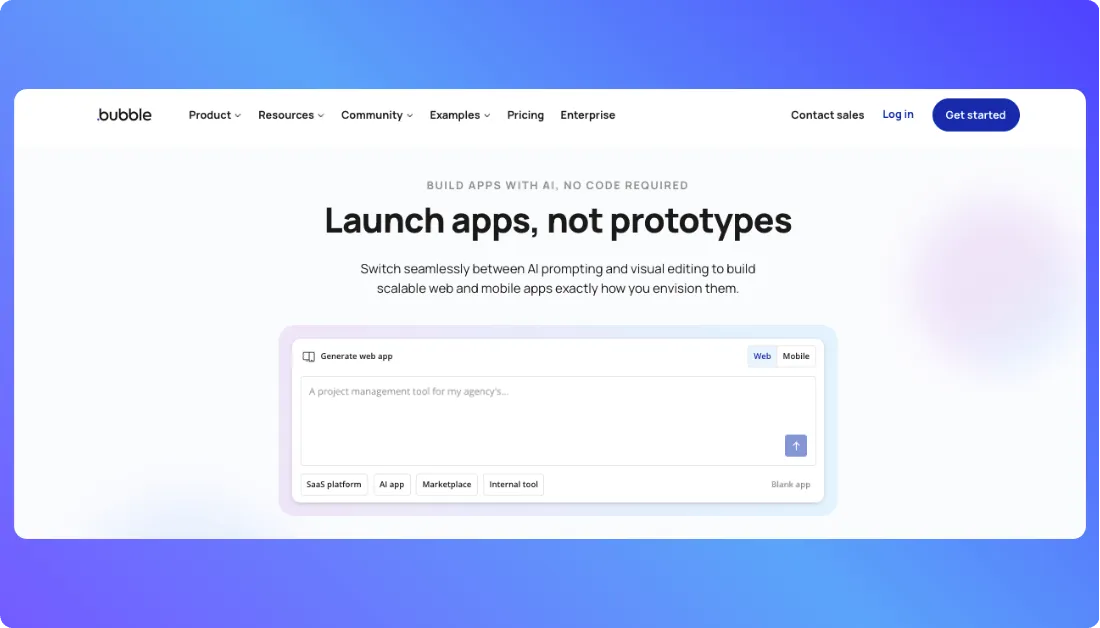
Bubble is one of the most well known Softr alternatives for people who want to build more than a simple portal or internal tool. It gives users a visual way to build full web and mobile apps, while still offering deeper control over workflows, data, privacy, and product structure than Softr usually does. That makes it a strong next step for teams that feel Softr is easy to start with but too limiting as the product grows.
Key features
- Visual editor for building full stack web and mobile apps without traditional coding.
- Built in database and workflow system for handling app logic inside the platform.
- Privacy rules that let teams control who can view or edit data.
- Built in hosting, security, and performance features for launching live products.
- Support for web, iOS, and Android apps under the same project structure.
Pros
- Gives much more flexibility than Softr for workflows, logic, and app structure.
- Works well for SaaS MVPs, marketplaces, dashboards, and custom business apps. This is an inference based on Bubble’s full stack positioning and workflow features.
- Lets non technical builders create more advanced products without moving fully into code.
- Has a free plan, so it is easy to test before committing.
Cons
- Has a steeper learning curve than Softr because it offers more depth and more moving parts. This is an inference from Bubble’s broader feature set and workflow system.
- Pricing can become harder to predict because usage depends on workload, not just a simple flat plan.
- May feel too complex for users who only want a basic client portal or internal app with very light setup. This is an inference based on its positioning as a full stack builder.
Pricing
- Free: $0/month
Includes Bubble’s core builder for learning, testing, and early app creation before launch. Bubble’s official pricing page confirms a free plan is available. - Starter: $59/month
Includes the features needed to launch an app, with Bubble’s January 2026 blog stating the Starter plan costs $59 per month on annual billing. Bubble also notes that one project plan covers shared web and mobile infrastructure. - Growth and Team: higher tier paid plans
Bubble offers Growth and Team plans above Starter, with pricing available on its official pricing page. These plans are designed for apps that need more capacity, collaboration, and scaling support. - Enterprise: Custom pricing
Bubble also offers an enterprise option for businesses that need more advanced scale, control, and support. - Important note on pricing
Bubble uses workload based pricing, so the total cost can increase depending on app activity, workflows, and usage.
Best for
Bubble is best for founders, startups, product teams, and non technical builders who want deeper control over app behavior, data, and workflows without switching to traditional Software development.
Softr alternative for
Bubble is a strong Softr alternative for users who want more workflow depth, stronger database control, better scalability, and more freedom to build custom SaaS products or complex business apps.
Also Read: Best Bubble Alternatives
2. Vitara
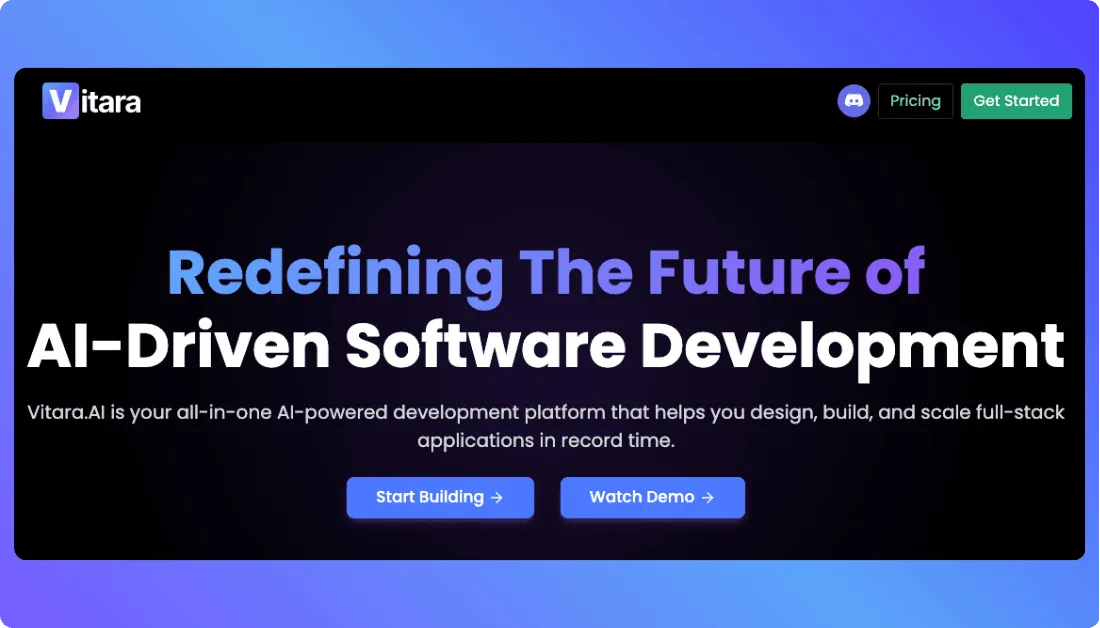
Vitara is a strong option for people who like the speed of Softr but want a more AI driven way to build products. Instead of relying mostly on fixed blocks and simple visual setup, Vitara focuses on prompt based app building through a chat interface. Its official site says users can build web and mobile applications using natural language, and also keep ownership of their code with the ability to download and deploy it.
Key features
- AI powered app building through a chat based interface for web and mobile products.
- Code editing and code download on paid plans, which gives users more flexibility than a closed no code builder.
- Custom domain support on paid plans for launching branded products.
- GitHub integration is listed as part of higher usage plans in public pricing references and comparison pages tied to Vitara.
Pros
- Faster path from idea to working product for people who prefer prompting over manual visual building. This is an inference based on Vitara’s chat based workflow and product positioning.
- More code freedom than Softr, since paid plans include editing and downloading code.
- Good fit for founders, solo builders, and small teams experimenting with vibe coding style workflows. This is an inference based on Vitara’s positioning around natural language product building and scalable paid plans.
- Accessible entry point with a free plan and relatively low starting paid price.
Cons
- Public documentation is clearer on pricing than on deep enterprise level workflow details, so some advanced teams may want to test the platform directly before committing. This is an inference based on the currently visible public pages.
- It is a different building style from Softr, so users who prefer a classic visual no code interface may face a learning adjustment. This is an inference based on its chat first workflow.
Pricing
- Free: $0/month
Includes a free tier with limited daily and monthly prompt credits and essential core features to get started. Vitara’s official site confirms a free tier is available. - Build: $20/month
Includes everything in Free, plus extended usage limits with 100 monthly credits, code editing and download, custom domain support, and faster AI processing. - Elevate: $50/month
Public pricing references list an Elevate plan at $50 per month above Build, positioned for users who need higher usage and fewer limits. - Custom Solutions: Custom pricing
Vitara also offers custom pricing for teams that need a more tailored setup.
Best for
Vitara is best for founders, solo builders, startups, and product teams that want an AI first way to build apps faster without staying locked inside a simple block based no code system.
Generate frontend, backend, APIs, and database structures while retaining complete control of your source code.
Build With AI Today →
Softr competitoe for
Vitara is a strong Softr alternative for users who want more freedom, editable code, AI assisted product creation, and a workflow that feels closer to modern vibe coding than traditional no code assembly.
3. Glide
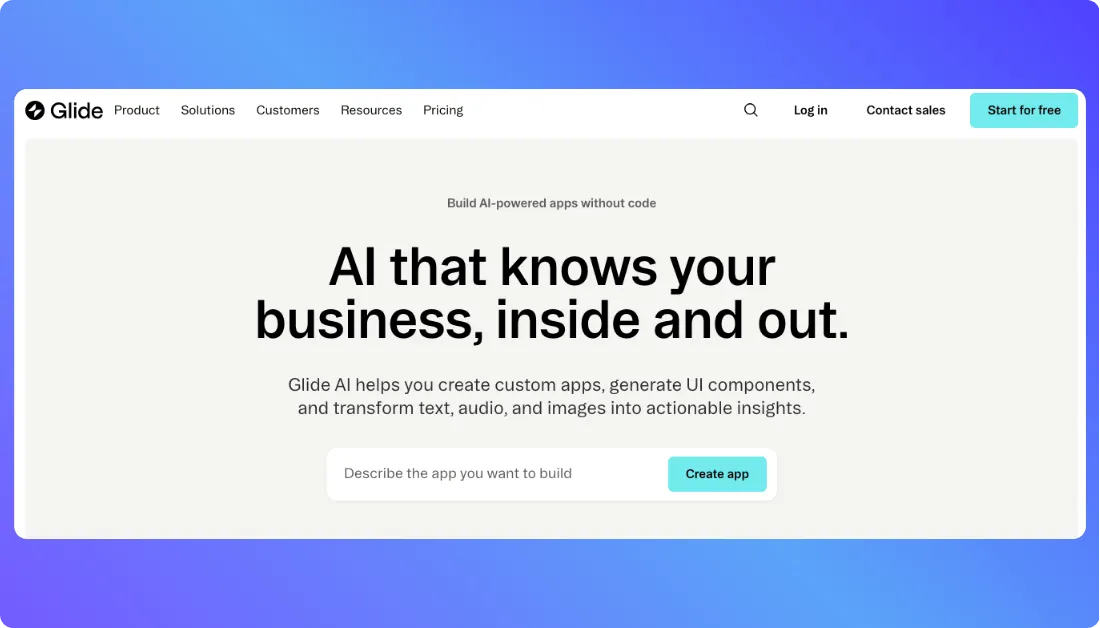
Glide is one of the best Softr alternatives for teams that want to turn structured data into useful business apps without making the build process feel heavy. It is especially strong for internal tools, client operations apps, dashboards, and workflow driven software. Glide’s official site positions it as a no code app builder for custom, AI powered apps, and its pricing page shows strong support for business use cases with features like workflows, API actions, and data source connections.
Key features
- No code app builder designed for teams and businesses creating custom apps.
- Supports multiple data sources including Glide Tables, Google Sheets, Airtable, and Excel on business plans.
- Includes workflows, Call API, and Glide API on Business plans.
- Offers 40 plus components, 90 plus column types, user specific data, and custom domains on higher plans.
Pros
- Easier than many advanced builders when the goal is to create practical business apps fast. This is an inference based on Glide’s no code, team focused positioning and spreadsheet friendly setup.
- Strong fit for internal tools, approval workflows, dashboards, and operational apps tied to structured data. This is an inference based on its business plan features and supported data sources.
- Offers useful business features like workflows, API actions, and Airtable or Excel sync without forcing users into a fully code driven workflow.
Cons
- It is not the best fit for highly custom SaaS products that need deep frontend uniqueness or complex product logic from the start. This is an inference based on Glide’s stronger emphasis on business apps and structured data workflows.
- Some of the more advanced features, integrations, and scale related capabilities sit behind Business or Enterprise plans.
- Teams looking for a repo first or developer first workflow may prefer a more code centric platform. This is an inference based on Glide’s no code app builder model.
Pricing
- Free: $0/month
Includes unlimited drafts, 1 editor, up to 25,000 rows, 40 plus components, and community support. - Business: starts at $199/month
Includes everything in Free, plus unlimited apps, 30 users included, 5,000 updates, up to 100,000 rows, Airtable sync, Excel sync, workflows, Call API, Glide API, custom branding, and custom domains. Glide’s pricing page shows this starting price on annual billing. - Enterprise: Custom pricing
Includes everything in Business, plus custom users, custom updates, custom rows, PostgreSQL and other enterprise data sources, SSO, data backups, enterprise integrations, an account manager, and priority support.
Best for
Glide is best for operations teams, business users, agencies, and founders who want to build internal tools, dashboards, or structured business apps quickly without dealing with the complexity of a more advanced full stack builder. This is an inference based on Glide’s product and pricing positioning.
Softr alternative for
Glide is a strong Softr alternative for users who want a smoother way to build data driven business apps, internal tools, and workflow based software with better operational features and team friendly app building. This is an inference based on its business oriented feature set.
Also Read: Top Glide Alternatives
4. Emergent
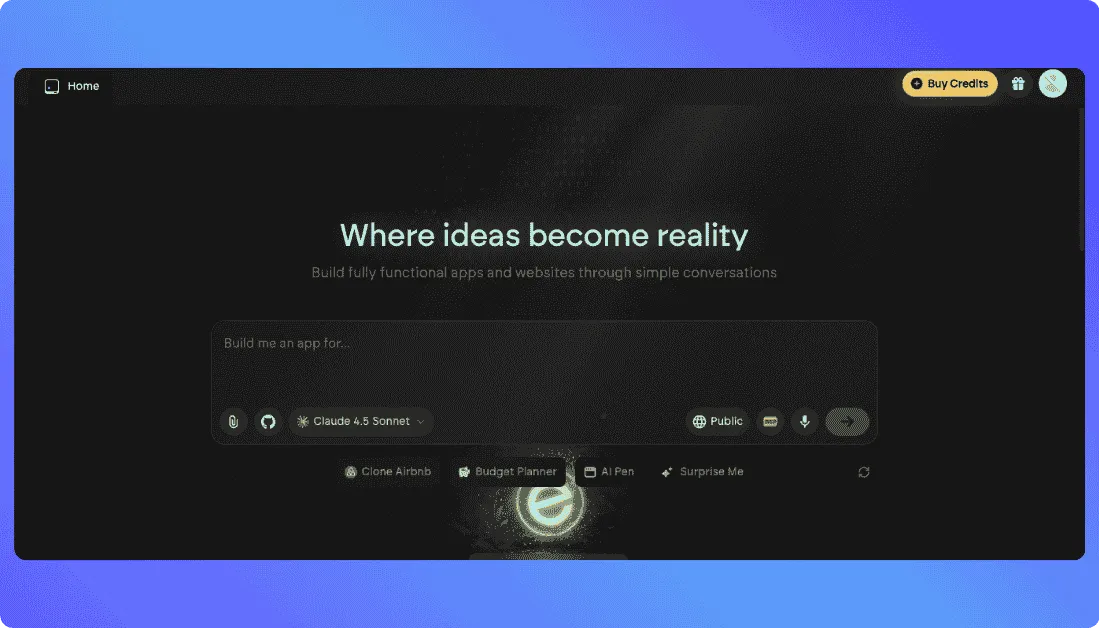
Emergent is a good fit for people who want something more modern and AI led than Softr. Instead of building mostly through blocks and manual setup, Emergent lets users build apps through conversation. Its official site says the platform helps users create production ready apps with AI agents that design, code, and deploy the product from start to finish.
Key features
- AI agents that help design, code, and deploy apps through conversation.
- Support for building web and mobile experiences.
- GitHub integration on paid plans.
- Fork tasks and private project hosting on Standard and above.
Pros
- Faster way to move from idea to working product if you like prompt based building instead of manual visual setup. This is an inference based on Emergent’s conversational workflow and app building model.
- Better fit than Softr for users who want a full stack, AI first workflow. This is an inference based on Emergent’s product positioning.
Cons
- It may feel like too much for users who only want a simple client portal or lightweight internal tool. This is an inference based on Emergent’s stronger focus on production ready app building.
- The workflow is very different from Softr, so users who prefer a traditional no code block editor may need time to adjust. This is an inference based on the product’s conversation first approach.
Pricing
- Free: $0/month
Includes 10 monthly credits, access to core platform features, web and mobile experience building, and access to advanced models. - Standard: $20/month
Includes everything in Free, plus private project hosting, 100 monthly credits, extra credit purchases, GitHub integration, and fork tasks. Emergent’s pricing page shows this plan in an annual billing view, while other Emergent pages also list it at the same monthly price. - Pro: $200/month
Includes everything in Standard, plus a 1M context window, Ultra thinking, system prompt editing, custom AI agents, high performance computing, 750 monthly credits, and priority support. - Enterprise: Custom pricing
Emergent also offers an enterprise option for teams that need secure, scalable workflows and stronger governance controls.
Best for
Emergent is best for founders, startups, and product teams that want an AI first way to build production ready apps with more depth than a simple no code builder. This is an inference based on Emergent’s official positioning and feature set.
Alternative to Softr for
Emergent is a strong Softr alternative for users who want AI led full stack app building, GitHub connected workflows, and a faster path from idea to production ready software. This is an inference based on Emergent’s platform workflow and pricing features.
Also Read: Emergent Alternatives
5. WeWeb
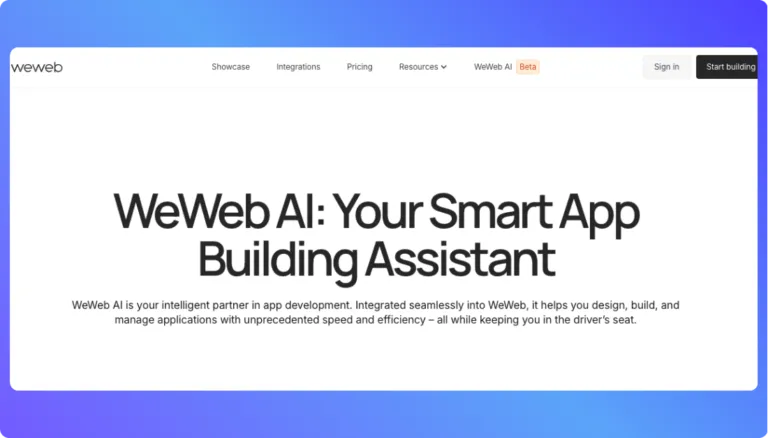
WeWeb is a strong choice for users who want more frontend freedom than Softr without jumping fully into traditional coding from day one. It is built for teams that care about design flexibility, custom UI, and better backend connectivity. Instead of working like a fixed portal builder, WeWeb gives users a visual frontend layer that can connect with tools like Supabase, Xano, and APIs. That makes it a much more flexible option for people building serious products, not just simple internal apps.
Key features
- Visual frontend builder for creating custom web apps with more UI flexibility.
- Works with external backends like Supabase, Xano, REST APIs, and other data sources.
- Offers reusable components, workflows, and custom logic options.
- Gives teams more control over frontend structure and app design than many traditional no code builders.
Pros
- Much stronger design freedom than Softr for teams that want a more custom product experience.
- Good fit for apps that need to connect with external backends and APIs.
- Better long term flexibility for teams that want more ownership over what they build.
- Useful middle ground between simple no code tools and full manual frontend Software development.
Cons
- It has a bigger learning curve than Softr because it gives users more control.
- It may feel too advanced for people who only want a very simple portal or internal dashboard.
- Backend setup can require more planning compared to all in one beginner friendly tools.
Pricing
- Free: $0/month
Includes access to start building and test the platform before moving to a paid plan. - Starter: paid plan available
Designed for users who want to launch projects with more features than the free version and move into real product building. - Higher tier plans: available for growing teams
WeWeb offers paid plans for users who need more scale, collaboration, hosting flexibility, and advanced capabilities. - Enterprise: Custom pricing
Enterprise options are available for teams that need stronger security, support, and large scale deployment control.
Best for
WeWeb is best for startups, agencies, product teams, and more technical builders who want a visual builder with stronger frontend flexibility and better backend connectivity.
Also Read: Weweb Alternatives
Softr competitor for
WeWeb is a strong Softr alternative for users who want more custom UI control, better API and backend integration, and a more flexible path toward production ready web apps.
6. Hostinger Horizons
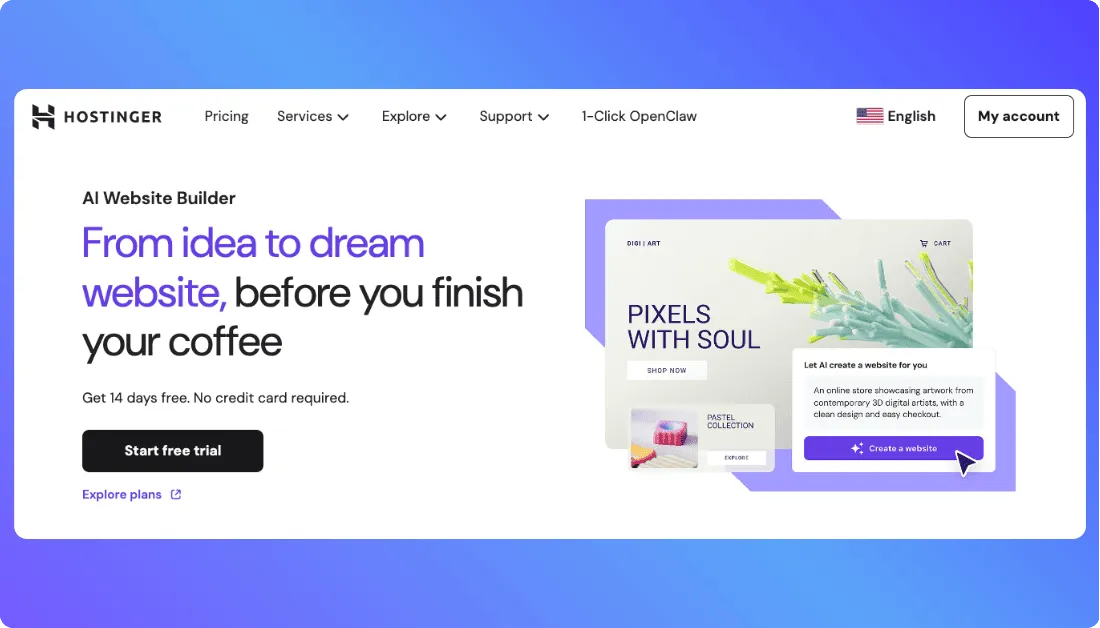
Hostinger Horizons is one of the best Softr alternatives for users who want to build web apps with AI instead of starting from a traditional no code interface. It is especially useful for founders, creators, small businesses, and early stage teams that want to turn an idea into a working web app fast. Hostinger’s official site positions Horizons as a prompt based AI app builder that can create web apps, user accounts, logins, data storage, SEO ready projects, and app features through natural language prompts.
Key features
- Prompt based AI app builder for creating websites and web apps without coding.
- Supports user accounts, logins, data storage, project version history, and SEO optimized projects.
- Allows users to build business sites, online stores, dashboards, fitness trackers, project management tools, and other web apps.
- Includes image and voice prompting, project collaboration, analytics, AI features, and credit top ups on selected plans.
- Offers code editor access on higher plans and code download on paid plans.
Pros
- Easier for beginners who want to describe an app idea and let AI create the first working version instead of building every screen manually. This is an inference based on Hostinger Horizons’ prompt based app building workflow.
- Strong fit for MVPs, small business tools, simple SaaS ideas, landing pages, dashboards, and AI assisted web apps that need fast launch and testing.
- Useful for non technical users because it combines app creation, hosting, domain, email, and launch support in one platform.
Cons
- It is not the best fit for teams that need native mobile apps for the App Store or Google Play because Hostinger Horizons currently focuses on web apps.
- Some useful features such as code editor, higher AI credits, more websites, and template duplication are available only on higher plans.
- Teams that need deep backend control, advanced product logic, or a developer first workflow may prefer a more flexible full stack AI app builder. This is an inference based on Hostinger Horizons’ beginner friendly and hosting centered product model.
Pricing
- Explorer: starts at $6.99 per month
Includes 30 AI credits per month, 1 website, user accounts, logins, data storage, project version history, SEO optimized projects, text prompting, and basic support.
- Starter: starts at $13.99 per month
Includes 70 AI credits per month, up to 25 websites, free domain for 1 year, priority 24 by 7 customer support, subscriptions, AI features, ecommerce features, analytics, image and voice prompting, credit top ups, and project collaboration.
- Hobbyist: starts at $39.99 per month
Includes 200 AI credits per month, up to 50 websites, free domain for 1 year, 5 free mailboxes per website for 1 year, code editor, and project duplication for templates.
- Hustler: starts at $79.99 per month
Includes 400 AI credits per month, everything in Hobbyist, and early access to new features.
Best for
Hostinger Horizons is best for founders, creators, small businesses, and beginners who want to build and launch AI generated web apps quickly without hiring developers or learning a full no code platform from scratch. This is an inference based on its prompt based workflow, hosting support, and beginner friendly pricing.
Softr alternative for
Hostinger Horizons is a strong Softr alternative for users who want AI guided web app building, faster MVP creation, simple SaaS app development, online stores, landing pages, and business web apps with hosting and launch support included.
7. Webflow
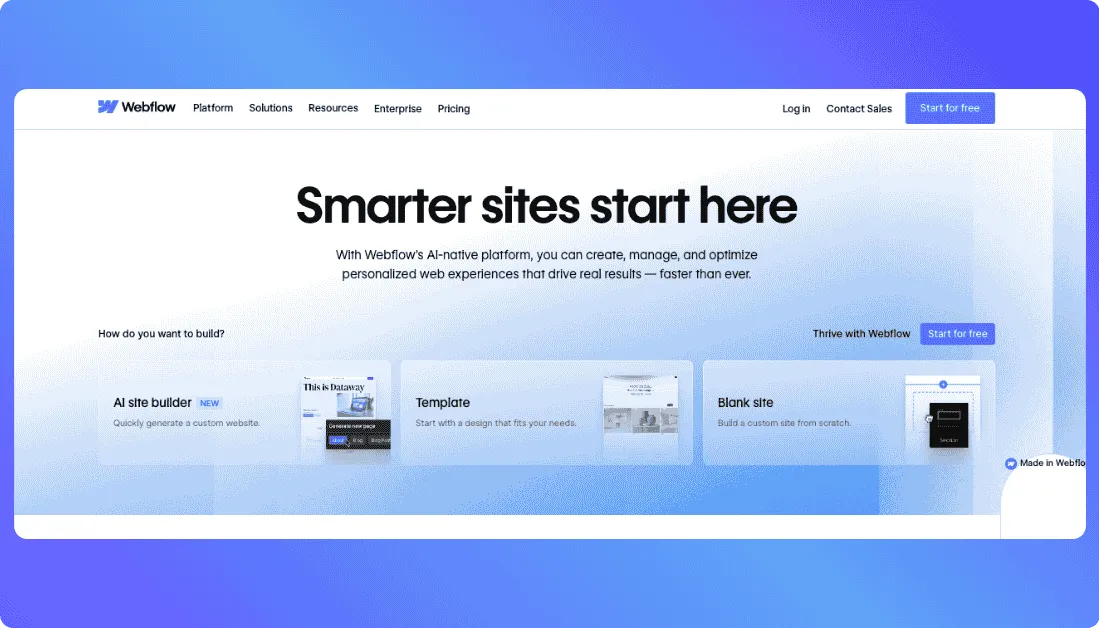
Webflow is one of the best Softr alternatives for teams that want more design freedom, stronger website control, and a polished front end experience. It is especially strong for marketing websites, CMS driven websites, landing pages, ecommerce sites, portfolios, and branded web experiences. Webflow’s official site positions it as an AI native web platform for creating and optimizing websites, with built in CMS, SEO, AEO, hosting, Webflow AI, ecommerce, and collaboration features.
Key features
- Visual website builder with strong control over layout, animations, design systems, and responsive pages.
- Includes Webflow CMS for blogs, directories, resource hubs, location pages, and content rich websites.
- Offers Webflow AI for generating sites, sections, CMS items, copy, code components, and SEO or AEO improvements.
- Supports custom code, forms, site search, password protection, ecommerce, analytics, localization, and Webflow Cloud app hosting.
- Includes hosting, CDN, DDoS protection, two factor authentication, and custom domain publishing on paid plans.
Pros
- Better than many no code builders when the goal is to create a highly branded website with strong visual control. This is an inference based on Webflow’s design first builder and advanced layout options.
- Strong fit for marketing teams, agencies, startups, and businesses that need polished landing pages, CMS websites, product pages, and SEO focused web experiences.
- Useful for teams that want more creative freedom than Softr offers for page design, animations, content structure, and front end presentation.
Cons
- Building complex app logic, dashboards, user portals, and backend heavy workflows may require third party tools, integrations, or developer support.
- Beginners may need more time to learn Webflow compared with simpler no code tools because it gives deeper control over design and structure.
Pricing
- Starter: Free
Includes a Webflow.io domain, limited Webflow CMS, 2 static pages, 1 GB bandwidth, 50 form submissions, Webflow AI, MCP server, Webflow Cloud app hosting, and a free Starter Workspace.
- Basic: starts at $15 per month
Includes a custom domain, 300 static pages, 10 GB bandwidth, unlimited form submissions, password protection, Webflow AI, MCP server, Webflow Cloud app hosting, and a free Starter Workspace. Webflow’s pricing page shows this starting price on yearly billing.
- Premium: starts at $25 per month
Includes everything in Basic, plus Webflow CMS, higher bandwidth options, code components, site search, form file upload, and well known files. Webflow’s pricing page shows this starting price on yearly billing.
- Team: starts at $2,500 per month
Includes everything in Premium, plus Site and Workspace, Webflow Localization, AEO agents, publishing workflows, single page publishing, site activity log and API, foundational governance, enhanced security and compliance, and priority support. Webflow lists this plan with an annual contract.
- Enterprise: Custom pricing
Includes everything in Team, plus enterprise ready scale, granular permissions, custom roles, advanced governance, secure integrations, a dedicated account manager, enhanced SLAs, and custom configurations.
Best for
Webflow is best for designers, agencies, marketers, startups, and businesses that want to build visually rich websites, CMS pages, landing pages, ecommerce sites, and branded web experiences without depending on developers for every change. This is an inference based on Webflow’s design first positioning and CMS focused feature set.
Softr alternative for
Webflow is a strong Softr alternative for users who want better design control, stronger website customization, CMS flexibility, SEO focused pages, ecommerce support, and polished marketing websites instead of simple portals or internal business apps.
So Which One Should You Use?
The right Softr alternative depends on what you want to build next. A feature list can help, but it does not tell the full story. The better question is simple. Do you need more app logic, more design freedom, more AI support, or a faster way to launch?
If the goal is to build a more advanced no code app with deeper workflows, stronger logic, and more product control, Bubble is usually the better move. It works well for founders and teams that have outgrown Softr and want to build SaaS MVPs, marketplaces, and custom web apps without moving fully into traditional coding.
If the goal is to build faster with an AI first workflow, Vitara stands out. It is a strong fit for modern vibe coding because it helps users move from idea to working product through prompts, quick iteration, editable code, and more development freedom.
If the goal is to create internal tools, dashboards, or operational apps connected to structured data, Glide is one of the safest choices. It works well when teams want something practical, easy to manage, and useful for daily business workflows.
If the goal is to build a production focused app with AI doing more of the heavy lifting, Emergent is a stronger fit. It makes sense for startups and product teams that want a full stack, AI led workflow instead of a simple visual builder.
If the goal is to get more frontend control and connect the app with external backends, WeWeb is the right direction. It suits teams that care about custom interfaces, API driven products, Supabase, Xano, and more flexible backend setups.
If the goal is to build a web app quickly by chatting with AI, Hostinger Horizons is worth considering. It is a good fit for founders, creators, and small businesses that want to launch simple web apps, business tools, landing pages, online stores, or MVPs with hosting support already included.
If the goal is to create a polished website, CMS, landing page, ecommerce site, or branded web experience, Webflow is the better choice. It gives more design control than Softr and works well for teams that care about visual quality, SEO, content pages, and marketing websites.
A simple way to choose:
- Choose Bubble if you want deeper no code power.
- Choose Vitara if you want AI first app building with more code freedom.
- Choose Glide if you want fast business apps and internal tools.
- Choose Emergent if you want AI led product development.
- Choose WeWeb if you want frontend freedom and backend flexibility.
- Choose Hostinger Horizons if you want to build web apps quickly with AI prompts.
- Choose Webflow if you want better design control for websites and CMS pages.
FAQs About Softr Alternatives
What is the best alternative to Softr?
he best alternative depends on what you want to build and how you prefer to work. Here is a simple breakdown:
Vitara
A strong choice for users who want fast AI app creation with a simple workflow and more flexibility than basic prompt based builders.
Emergent
Better for startups and teams that want full stack depth, stronger scalability, and a more production focused app building experience.
Bubble
A good fit for users who want visual no code control and need to build custom web apps with more workflow flexibility.
Glide
Best for internal tools, dashboards, and business apps that need quick setup, structured data, and a team friendly workflow.
WeWeb
Ideal for users who want more frontend freedom, custom UI control, and stronger backend connectivity for serious web apps.
Hostinger Horizons
A good option for users who want to build simple web apps, landing pages, online stores, or MVPs quickly by chatting with AI.
Webflow
Best for users who want more design control, CMS flexibility, SEO focused pages, ecommerce support, and polished website experiences.
Which Softr alternative is easiest for beginners?
Glide is often the easiest for beginners who want to build simple business apps or internal tools. It works well with structured data and feels very intuitive for non technical users.
Vitara is also a beginner friendly option, especially for users who prefer a prompt based workflow. Instead of setting everything up manually, users can describe what they want to build and let the AI handle most of the initial setup.
Softr remains beginner friendly too, but among the alternatives listed here, Glide and Vitara usually feel the most approachable depending on whether you prefer visual building or AI led creation.
Is Bubble better than Softr?
Bubble is better for users who need more control, advanced workflows, and stronger customization. Softr is better for quick and simple builds. So Bubble is not better for everyone, but it is often the better choice once a project becomes more complex.
Which Softr alternative is best for internal tools?
Glide is one of the best options for internal tools because it works well with structured data, team workflows, dashboards, and business operations. It is a practical choice for teams that want speed without too much complexity.
Which Softr alternative is best for AI app building?
Vitara and Emergent stand out for AI app building. Both are better suited to users who want to create products through prompts and faster iteration instead of relying only on a traditional no code builder.
Which Softr alternative gives more design freedom?
WeWeb gives more design freedom than Softr for users who want a custom frontend and stronger UI control. It is a better fit for teams that care about product design and want more flexibility in how the app looks and behaves.
Are there free Softr alternatives?
Yes, several Softr alternatives offer a free plan. Bubble, Glide, Vitara, Emergent, and WeWeb all give users a way to test the platform before moving to a paid plan. The free versions usually come with limits, but they are useful for early testing.
Which Softr alternative is best for startups?
For startups, Bubble is a strong choice if the goal is to build a custom MVP with more control. Emergent is a good option for teams that want an AI led product workflow. Vitara also works well for founders who want to move fast with an AI first approach.
Can Softr alternatives support scalable apps?
Yes, but the level of scalability depends on the platform. Bubble, Emergent, and WeWeb are usually better fits for products that need more flexibility and room to grow.
Vitara can also support scalability for many use cases, especially for fast growing apps built with an AI first workflow, though it is better suited for rapid development and iteration rather than highly complex enterprise systems.
Glide is strong for operational business apps and internal tools, while Softr is often better suited to simpler use cases and early stage builds.
How should someone choose the right Softr alternative?
Start with the type of product you want to build. If you need deep workflows, look at Bubble. If you want a fast internal tool, Glide makes sense. If you want AI driven app creation, Vitara or Emergent are stronger options. If frontend freedom matters most, WeWeb is the better choice.
What’s New?