Trickle vs Lovable: Which AI App Builder Is Best for You? (Side-by-Side Comparison)
If you’re exploring Trickle vs Lovable, chances are you’re already deep in the AI app builder world.
Lovable shines when you’re staring at a blank screen with nothing but an idea. You type a prompt, hit enter, and suddenly you have a working app. Tweak it. Refine it. Ship a demo the same day. That feedback loop is fast, almost addictive. It feels like cheating in the best possible way.
But here’s what usually happens next.

Your prototype starts getting traction. Real users sign up. You begin thinking about performance, flexibility, and ownership. You wonder whether you should stick with Lovable’s code first workflow or move to something like Trickle, where hosting, database, and backend live under one roof. That’s when the comparison becomes serious.
So if you’re weighing Trickle vs Lovable, this guide will help you figure out which tool fits where you are right now and where you’re headed next.
What is Trickle
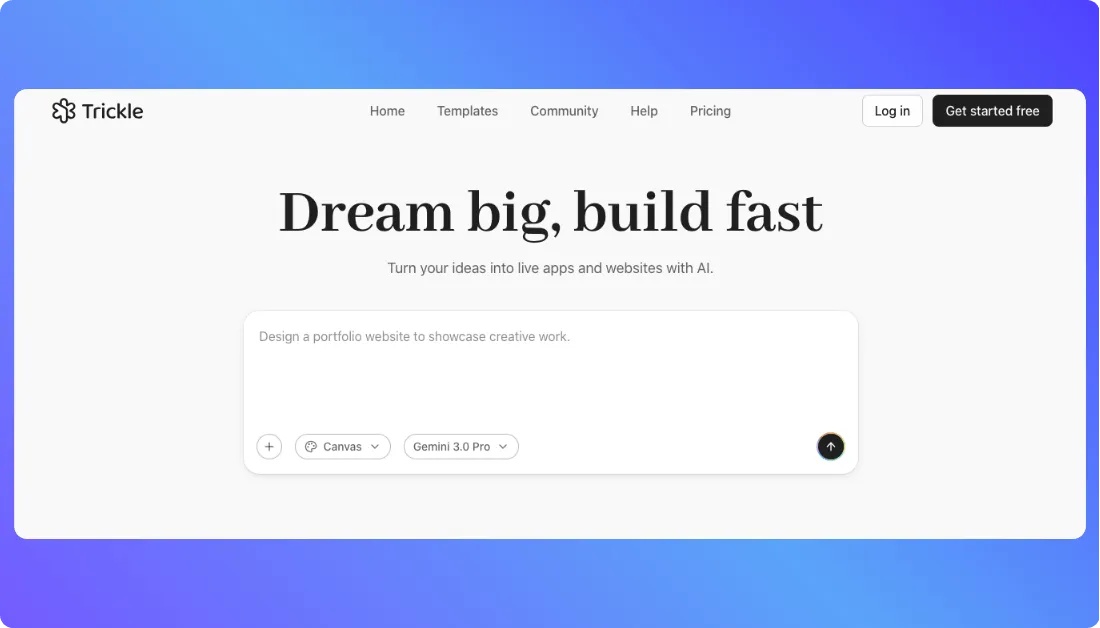
Trickle is an AI app builder that lets you create, host, and manage an application in one place. You describe what you want, adjust it visually, and the platform handles the backend, database, and deployment for you. It’s designed for founders and makers who want to move from idea to working product fast without setting up servers or writing complex infrastructure code.
Also Read: Trickle Alternatives
What is Lovable
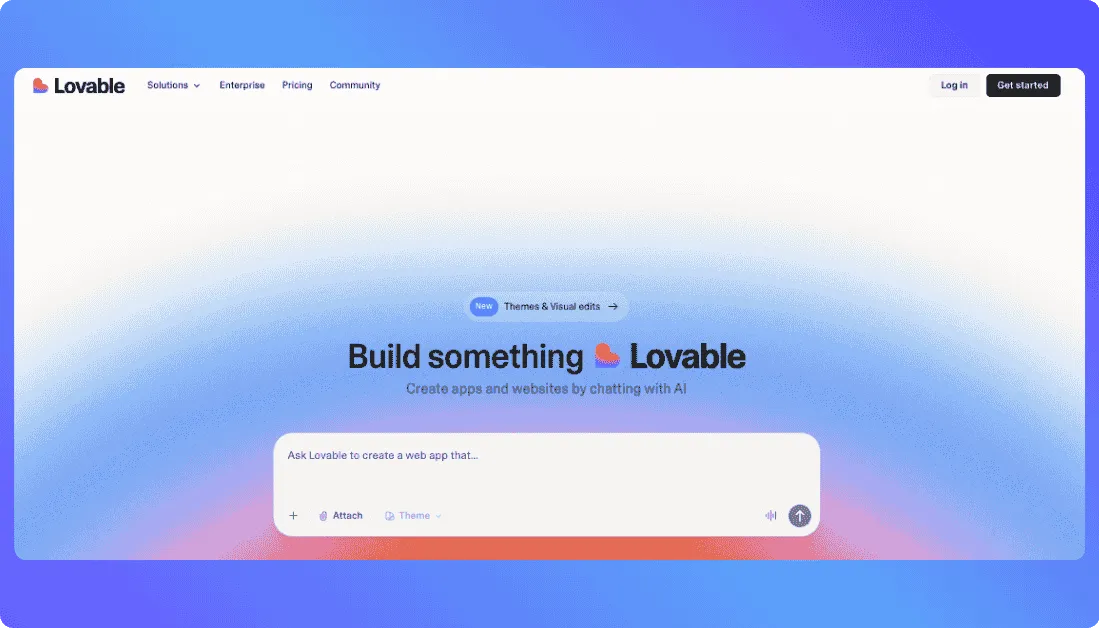
Lovable is a prompt based AI development tool that generates real, exportable code from your instructions. Instead of locking you into a closed platform, it creates a project you can sync with GitHub and expand like any normal codebase. It’s built for developers and technical teams who want AI speed but still want full ownership and control of their application.
Also Read: Lovable Alternatives
Quick comparison table of Trickle vs Lovable
If you just want the high level differences in the Trickle vs Lovable comparison, start with this table. Everything after this section will unpack what these rows actually mean in real world use.
| Feature | Trickle | Lovable |
|---|---|---|
| Core Approach | All in one AI app builder with visual editing | Prompt driven AI that generates real production code |
| Best For | Non technical founders and fast MVP launches | Developers who want full code control |
| Hosting | Built in hosting included | Requires external hosting setup |
| Database | Native database built into the platform | Connect your own database |
| Code Ownership | Platform managed environment | Full exportable code with GitHub sync |
| Workflow Style | Visual plus AI assisted building | Chat style prompting inside a repository workflow |
| Setup Time | Minimal, everything lives in one place | Slightly longer if configuring repository and backend |
| Scalability Control | Platform handled scaling | Developer controlled infrastructure |
| Custom Integrations | Limited to platform capabilities | Flexible API and custom integrations |
| Pricing Model | Fixed monthly subscription tiers | Credits or usage based pricing |
Real Life Use Cases of Trickle and Lovable
Both tools can help you ship fast. The difference shows up in how you like to build and how much control you want once things grow. Here’s where each platform naturally fits.
Use Trickle if you:
- Want to launch a full working app without setting up hosting, databases, or backend services yourself
- Are validating a startup idea and need frontend, backend, and deployment handled in one place
- Prefer a visual building experience supported by AI instead of managing a GitHub repo
- Have limited technical skills but still want real user authentication and data storage
- Need to spin up internal dashboards or simple SaaS tools quickly
- Are building an MVP and care more about speed than deep infrastructure control
- Don’t want to deal with local development environments or server configuration
- Like the idea of everything living inside one managed ecosystem
- Are testing multiple product ideas and want to iterate fast
Use Lovable if you:
- Want exportable, production ready code you fully own
- Are comfortable working inside GitHub and real repositories
- Need flexibility to customize backend logic beyond platform limits
- Plan to scale the product with a developer team later
- Prefer a prompt to code workflow that fits into a traditional development setup
- Want to connect custom APIs, third party services, or complex integrations
- Care about long term maintainability of the codebase
- Are a technical founder who wants AI speed without giving up control
- Expect your app to evolve into something more complex than a basic MVP
Pricing Comparison of Trickle and Lovable.dev: See Which One Fits Your Budget and Delivers More Value
When you’re deciding between Trickle vs Lovable.dev, cost isn’t just about the number at the bottom of the page. You want to know how much you pay, what you actually get, and how that aligns with your goals. Below is a clear snapshot of current pricing for both platforms, based on their official pricing pages.
Trickle Pricing
- Free Plan — $0/month
Great for trying things out, experimenting, or learning the platform. Includes 70 daily credits (up to 350 per month), built-in database, website hosting, and up to 3 projects. - Pro Plan — $17/month
Everything in Free plus 1,500 monthly credits, unlimited projects, private projects, a custom domain, and removal of the Trickle badge. - Premium Plan — $42/month
Includes all Pro features plus 3,750 monthly credits, more domains, and 10,000 database rows for bigger projects. - Credit Add-Ons
Buy additional credits in blocks (e.g., +750 or +1500) whenever you need more usage without changing plans.
Lovable.dev Pricing
- Free Plan — $0/month
Lets you start building without paying anything. You get access to core features and basic monthly credits to explore Lovable.dev. - Pro Plan — $25/month
Adds 100 monthly credits, daily bonus credits, custom domains, unlimited lovable.app domains, credit rollover, user roles, and removes the Lovable badge. - Business Plan — $50/month
Everything in Pro plus internal publishing capabilities, single sign-on (SSO), team workspaces, design templates, and role-based access controls. - Enterprise — Custom Pricing
Tailored for larger teams needing dedicated support, governance controls, custom connectors, and enterprise-grade features.
Where the Real Value Lives
Choosing between Trickle and Lovable.dev isn’t just about monthly fees. Think in terms of what you’re really buying at each price point:
- Trickle’s plans include hosting and database resources right out of the box. You don’t need to stitch together external services to get a live app up and running.
- Lovable.dev’s pricing focuses on credits and collaboration features. It gives you flexibility to generate and export real code, but backend services and cloud usage can add to costs depending on how you deploy and scale.
Which AI App Builder is Right for You?
- For non technical founders: Trickle lets you generate and launch a full app without worrying about servers, databases, or writing backend code.
- For product designers and frontend focused teams: Lovable helps you turn interface ideas into clean, exportable code you can refine inside a real repository.
- For fast MVP launches: Trickle is ideal when you want frontend, backend, and hosting handled in one streamlined workflow.
- For developers who want control: Lovable gives you ownership of the codebase and the freedom to extend it however you like.
- For growing startups: You can prototype quickly in Trickle, then move to Lovable if you need deeper customization and long term flexibility.
- For internal dashboards and admin tools: Trickle simplifies logic, data handling, and deployment so you can ship without extra setup.
- For stakeholder demos or early user testing: Lovable makes it easy to generate polished UI flows that feel production ready.
Want an Alternative to Trickle and Lovable?
If you’re not sure about Trickle and lovable. Then check Vitara.ai out, currently its the best alternative to lovable and trickle both.
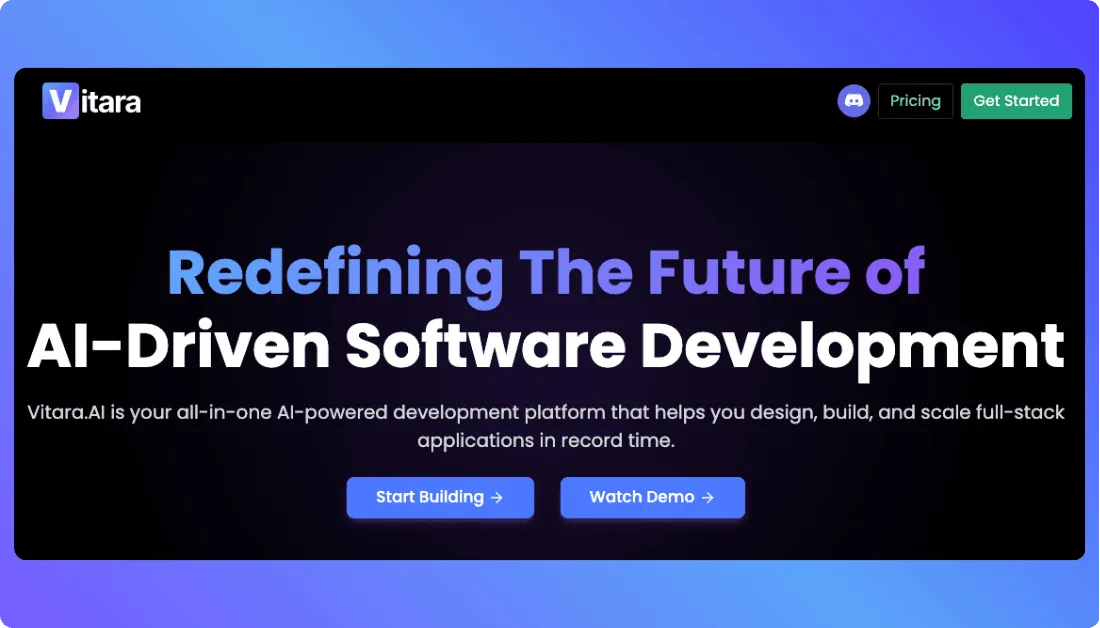
Here’s why Vitara.ai stands out:
- Combines visual building with real code export so you don’t trade flexibility for speed
- Handles backend, database, and hosting without forcing you into a managed sandbox
- Lets developers and non technical founders work from the same project without switching tools
- Generates clean, production ready code that fits into real workflows like GitHub
- Makes it simple to integrate custom APIs and third party services
- Offers a natural prompt to UI to backend flow that feels intuitive and efficient
- Supports team collaboration with roles, permissions, and shared workflows without complexity
- Helps you scale from prototype to full app without painful rewrites
Recommend To Also Read This:
Final Thoughts
Choosing between Trickle vs Lovable really comes down to how you like to build. One gives you speed and simplicity inside a managed environment. The other gives you code ownership and long term flexibility.
If you care most about launching fast without touching infrastructure, Trickle makes that easy. If you want full control over your code and plan to scale with a developer team, Lovable will feel more natural.
FAQs About Trickle vs Lovable
Is Trickle better than Lovable for non-technical founders?
If you don’t have coding experience, Trickle usually feels easier. It handles hosting, database, and deployment in one place, so you can focus on the idea instead of infrastructure.
Does Lovable give you full ownership of the code?
Yes. Lovable generates real, exportable code that you can sync with GitHub, edit freely, and host wherever you want. You are not locked into a closed platform.
Which AI app builder is better for rapid MVP development?
For quick MVPs where speed matters more than deep customization, Trickle often wins because everything is built in. Lovable can also move fast, but you may need extra setup for backend and hosting.
Can I scale a production app with Trickle?
You can scale within the limits of the platform’s ecosystem. However, if you expect complex backend logic, heavy integrations, or advanced infrastructure control, Lovable may offer more long term flexibility.
How does pricing compare between Trickle and Lovable?
Trickle uses fixed monthly subscription tiers with included credits and hosting. Lovable focuses more on credit or usage based pricing, especially for code generation and team features. The better value depends on how often you build and iterate.
Which platform is better for developers?
Developers who prefer working inside real repositories and managing their own infrastructure often lean toward Lovable. It fits naturally into traditional development workflows.
Can I switch from Trickle to Lovable later?
Yes, but it may require rebuilding parts of your app depending on how deeply you rely on Trickle’s built in systems. If long term code ownership is important from day one, that’s something to consider early in the Trickle vs Lovable decision.