What is Bubble.io? Is this AI App Builder Worth the Hype?
In today’s fast-moving digital world, speed matters, especially when building apps. That’s where Bubble.io comes in. It’s a powerful no-code platform built for founders, startups, and teams who want to create full-featured web applications without writing a single line of code.
While it might not be as widely recognized as tools like WordPress or Webflow, Bubble is a strong force in the no-code movement. What makes it stand out is its ability to do more than just design web pages. Bubble lets you build logic, manage databases, and launch dynamic, data-powered web apps from a single visual interface. It offers full-stack functionality without needing a traditional coding background.

In this article, we’ll explore what Bubble.io is, how it works, its standout features, the pros and cons, and whether it’s the right choice for your next project.
What is Bubble.io?
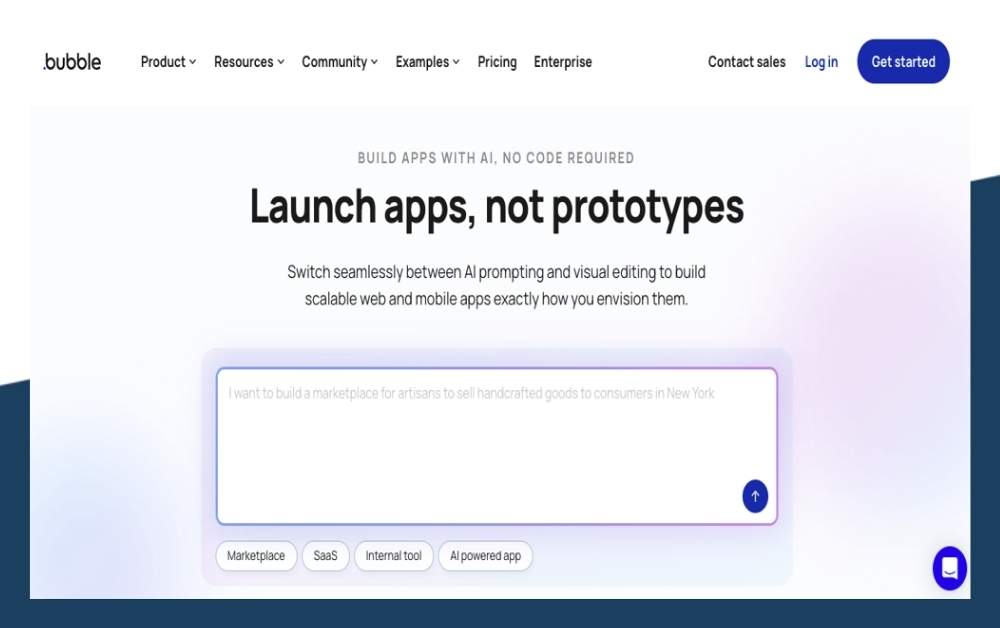
Bubble.io is a no-code vibe coding platform that lets you build fully functional web applications without writing code. It combines a visual interface with powerful backend capabilities, allowing you to design your front end, create database structures, and set up complex workflows all in one place.
Instead of just designing static websites, Bubble empowers users to build dynamic, interactive apps. You can manage user accounts, connect APIs, run logic, and even launch marketplaces, SaaS products, or internal tools. Everything happens inside a drag-and-drop editor that feels more like a creative studio than a developer console.
You Might Also Like to Read This:
What is Emergent AI? A Deep Dive into the AI App Builder
Key Features of Bubble.io AI App Builder
Bubble.io stands out for combining visual design tools with powerful backend capabilities all in a single platform. Below are the key features that make it a go-to choice for building full-featured web apps without code.

1. AI-Powered App Generation
Bubble allows you to describe your app idea in plain language and instantly generate a working application template. The generated structure includes pages, workflows, and database setups, saving hours of manual work.
2. Visual Drag-and-Drop Editor
You can build your UI using a simple and intuitive drag-and-drop interface. Everything from navigation to responsive layouts is handled visually, making design both accessible and flexible.
3. Workflow Logic and Backend Control
Bubble includes a powerful workflow builder to define logic for user actions like registration, data updates, and automated tasks. You can also manage data types, privacy rules, and backend logic without any coding.
4. Built-in Database and Data Handling
Bubble comes with a fully integrated database system. You can create data types, define custom fields, manage privacy, and connect to external APIs to dynamically load or send data.
5. Integrations and Plugins Ecosystem
Bubble supports external API connections and has a growing library of plugins for payments, analytics, chat, email, and more. These plugins expand what you can build and simplify integration with popular services.
6. Responsive Design Across Devices
Bubble apps are built with responsiveness in mind. You can create layouts that automatically adapt to various screen sizes, including mobile, tablet, and desktop, without needing separate codebases.
7. SEO and Web Performance Tools
Bubble provides tools for managing meta tags, creating sitemaps, and optimizing performance. These features help your app become more discoverable and perform smoothly across devices.
8. Scalability and Enterprise-Grade Hosting
Bubble is built on scalable infrastructure that supports high-traffic apps. It offers enterprise-level reliability, allowing you to grow without needing to migrate your tech stack.
Thought You Like This:
What is Windsurf? A Deep Dive into the AI Builder
Pros and Cons of Bubble.io
Before choosing any platform, it’s important to weigh its strengths and limitations. Here’s a clear breakdown of what Bubble.io does well and where it might fall short.
✅ Pros
- Rapid development and MVP friendly: You can go from idea to functioning web app in days rather than months.
- Full-stack capability without coding: UI, database, workflows, and integrations are all managed within a single platform.
- Cost-effective for early stage: Lower upfront development cost compared to hiring full development teams.
- Strong plugin and integration ecosystem: Plenty of ready-made templates, plugins, and API connectivity to extend functionality.
- Responsive design support: Apps built with Bubble adapt smoothly to desktop, tablet, and mobile screens.
❌ Cons
- Steep learning curve for advanced features: While drag-and-drop helps beginners, mastering workflows and responsive layouts takes time.
- Platform dependence with no code export: Once your app is built on Bubble, you’re locked into its ecosystem. Migrating away means rebuilding.
- Performance and scalability limits: Apps with large datasets or heavy user traffic may require additional optimization and could hit performance ceilings.
- Customization and native mobile constraints: Creating highly custom designs or native mobile features may require workarounds or third-party tools.
You Might Like Reading This:
What is WeWeb AI? Detailed Review of the AI App Builder
Bubble.io: Pricing Explained
Bubble offers a tiered pricing model that scales with your app’s size and usage. Each plan is based on Workload Units (WUs), which measure how much server-side processing your app performs, such as database queries, page loads, and API calls.
Bubble’s main pricing plans include:
Free tier
Great for learning the platform or testing ideas. It includes basic editor access and limited WUs. Your app runs on a Bubble subdomain with Bubble branding.
Starter plan
Designed for your first live app. It unlocks custom domains, increases WU limits, and provides more flexibility. Monthly pricing begins at approximately 32 USD.
Growth plan
Ideal for apps gaining traction or businesses needing advanced features. It offers higher WU limits, collaboration options, and branding control. Monthly pricing starts around 134 USD.
Team plan
Built for teams and agencies managing multiple apps. It includes higher performance limits, multiple editors, and advanced workflow features. Pricing starts around 349 USD per month.
Enterprise plan
Made for large-scale or mission-critical applications. It offers custom WU limits, dedicated infrastructure, advanced security, and priority support. Pricing is customized based on requirements.
Key cost factors to consider:
- Workload Units (WUs): Every workflow, data query, and server-side task consumes WUs. Exceeding your limit may require add-ons or a plan upgrade.
- Add-ons: Additional storage, plugin subscriptions, and third-party tools can increase monthly costs.
- Project type: Bubble differentiates between Web, Mobile, and Web plus Mobile apps, and your selection may affect plan requirements.
My Personal Tip for You:
Start with the Free or Starter plan to validate your idea. Track your WU usage as your app grows and upgrade only when you begin to feel real performance or feature limitations.
You’ll Want to Read This:
What is Codev? Everything About This AI App Builder
Best Bubble.io Alternative
If you’re exploring a platform similar to Bubble.io but want a fresh, AI‑powered twist with full‑stack flexibility, Vitara.ai stands out. It flips the script: you describe your app, and Vitara.ai builds the frontend and backend, giving you code ownership and speed in one package.

Why Vitara.ai is a Strong Alternative to Bubble.io
- Vitara.ai supports natural‑language prompts to generate a working app prototype, so you move from idea to app faster than traditional no‑code platforms.
- It gives you exportable code (for both UI and backend) so you’re not locked in important if you plan to scale long‑term.
- The frontend built by Vitara.ai uses modern frameworks and the backend leverages reliable infrastructure, which appeals to developers and teams alike.
- Because of the code‑export and development‑friendly tools, Vitara.ai offers more control and transparency than many pure no‑code platforms.
- If you foresee the need to go beyond the web and build mobile‑friendly or extendable apps, Vitara.ai gives you more runway.
When Vitara.ai Might Be the Better Choice
- If you want to build both the frontend and backend at once, with fewer manual steps.
- If you value code ownership and want the ability to hand over the codebase or migrate later.
- If you expect your app to grow, integrate complex logic, or require custom workflows beyond typical no‑code limits.
- If you’d rather minimize infrastructure overhead (servers, setup) but still keep the freedom of code.

When You Might Still Prefer Bubble.io
- If your primary goal is a fast web‑app prototype, minimal setup, and you accept being inside a no‑code ecosystem.
- If you’re building primarily web (not mobile or heavy backend logic) and want the largest marketplace of plugins/templates.
- If you want to stay fully in a drag‑and‑drop environment without thinking about code at all.
Final Thoughts: Who is Bubble.io AI for?
Bubble.io AI is best suited for founders, solo builders, and small teams who want to turn ideas into fully functional web applications without needing to write code. If you’re building an MVP, a SaaS product, a marketplace, or an internal tool, Bubble gives you the power to create logic, connect databases, and manage workflows visually. It is a great choice for those who want speed, flexibility, and full-stack control without diving into backend development.
However, it is not just for beginners. Experienced developers and product teams also use Bubble to speed up prototyping, validate features, or build client apps faster. If you’re comfortable working within a no-code platform and can manage its learning curve, Bubble.io AI offers a scalable, powerful environment to bring your ideas to life quickly and affordably.
Frequently Asked Questions (FAQs)
What exactly is Bubble.io used for?
Bubble.io is used to build fully functional web applications without writing code. It lets you design UI, create workflows, manage databases, and launch apps all inside a visual editor.
Is Bubble.io really no-code?
Yes. Bubble is a true no-code platform, meaning you can build complex logic, user authentication, and dynamic features without programming. However, advanced customization may require understanding core app logic.
Can beginners use Bubble.io?
Absolutely. Beginners can start with templates and drag-and-drop tools. While the basics are easy, mastering responsive design and workflows may take time.
Does Bubble.io support mobile apps?
Yes, Bubble.io supports mobile apps, but with some limitations. You can build mobile-responsive web apps and even publish them to app stores using wrappers or Bubble’s native mobile features. However, fully native mobile functionality may require extra tools or workarounds.
Is Bubble.io good for building MVPs?
Yes, Bubble is one of the best platforms for creating MVPs quickly. It helps founders and creators go from idea to functioning product in a fraction of the time compared to traditional development.
Does Bubble.io provide hosting?
Yes. Bubble handles hosting, scaling, security, and infrastructure automatically. Your app runs on Bubble’s servers, which simplifies deployment and maintenance.
Is Bubble.io suitable for large-scale apps?
Bubble can scale, but very large or high-traffic applications may require optimization, higher-tier plans, or even considering alternative platforms if you expect extreme growth.
How much does Bubble.io cost?
Bubble.io offers several pricing tiers based on features, performance, and Workload Units (WUs). Here’s a quick breakdown:
- The Free plan is available for learning and basic testing.
- The Starter plan starts at around $32/month for launching simple live apps.
- The Growth plan starts at approximately $134/month for scaling apps with higher performance needs.
- The Team plan begins at about $349/month for teams and agencies.
- The Enterprise plan offers custom pricing for large-scale, secure, mission-critical applications.
- Costs can increase depending on WU consumption, plugin purchases, add-ons, and storage needs.
What is the best alternative to Bubble.io?
Vitara.ai is a strong alternative if you want AI-powered app generation with the ability to export real code, making it ideal for long-term scalability and customization beyond typical no-code limits.