Top AI Tools for Healthcare in 2026: Features, Use Cases, and How to Choose the Right One
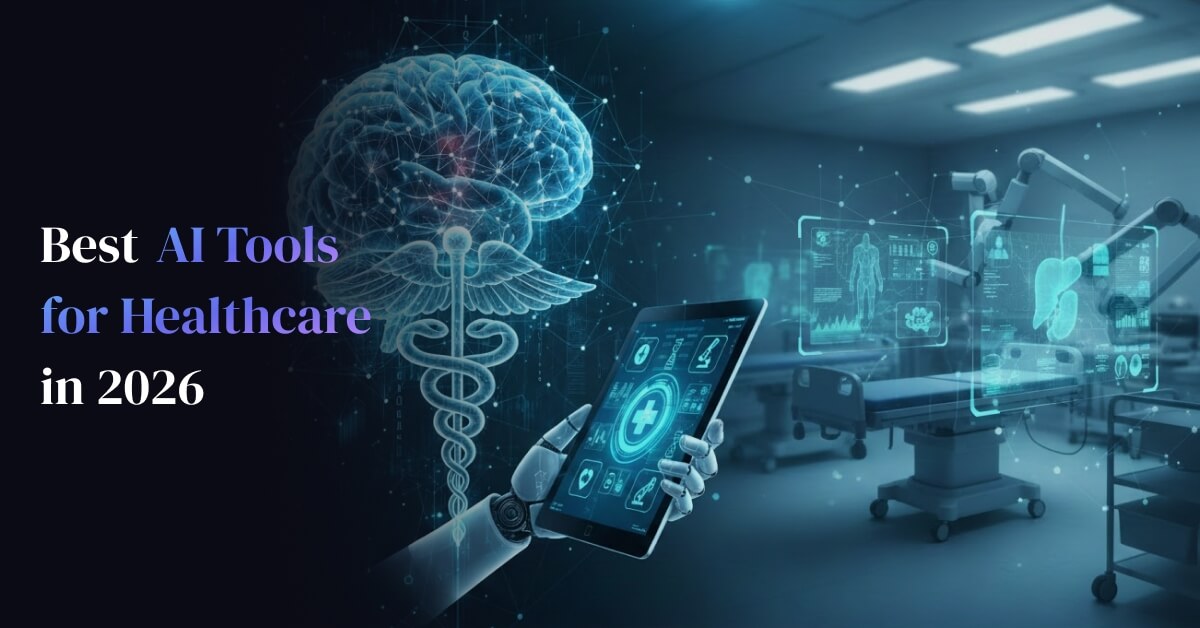
The world of healthcare isn’t just evolving, it’s transforming at lightning speed. And at the heart of this transformation? Artificial Intelligence.
Once confined to labs and research papers, AI is now deeply embedded in the everyday lives of doctors, nurses, and patients. From detecting early signs of disease in medical scans to easing the paperwork burden for clinicians, AI tools are quietly but powerfully changing how healthcare works behind the scenes.
This guide is your front-row seat to that transformation.
We’re diving into the most innovative AI tools shaping modern medicine. These are tools that don’t just promise change but deliver it in real hospitals, clinics, and labs worldwide. You’ll learn what these tools do, how they work, and why they matter.
But more importantly, you’ll discover how AI is becoming the trusted partner every healthcare provider needs. Not to replace the human touch, but to amplify it.
Best AI Tools for Healthcare
AI in healthcare isn’t about the future anymore, it’s happening now. Here are some of the most effective AI tools making a real impact in hospitals, clinics, and research labs. These tools save time, improve accuracy, and support better patient outcomes.
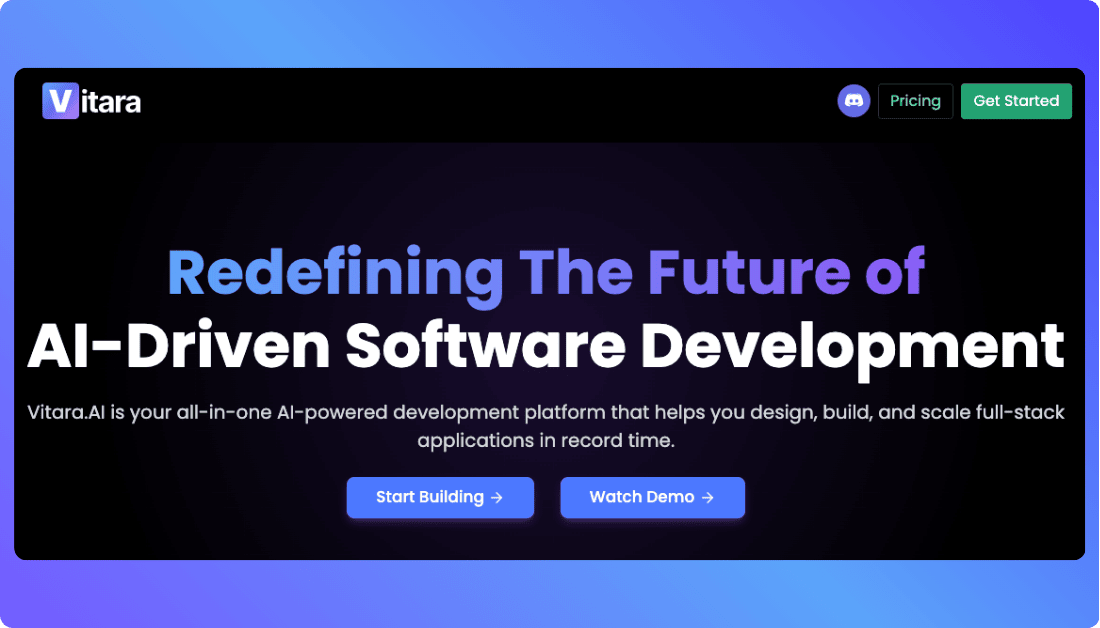
1. Vitara.ai – AI App Builder for Healthcare Workflows
Vitara.ai helps healthcare teams build custom tools without needing advanced coding skills. Whether it’s a dashboard for patient vitals or a full appointment system, teams can create real, usable apps in record time.
Key features
- Visual drag-and-drop interface for designing UIs
- Smart app generation from text-based prompts
- Seamless database and API integration
- Prebuilt templates tailored to healthcare use cases
Real use cases
- Internal dashboards to monitor patient metrics or staff loads
- Patient-facing portals with scheduling and record access
- Automated intake forms for faster check-ins
- Custom tools for managing claims and report generation
Why it matters
Healthcare teams often struggle with outdated tools or expensive development. Vitara.ai levels the playing field. It allows non-technical staff to create secure, scalable tools that fit their workflow without waiting on IT.
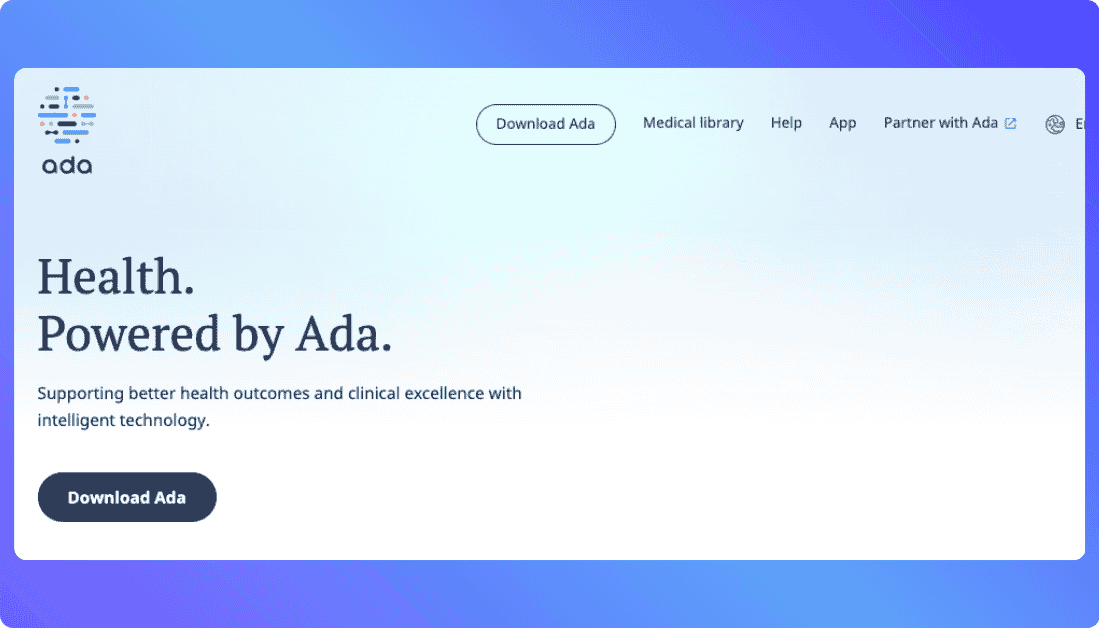
2. Ada Health – AI Symptom Checker and Triage Assistant
Ada Health is an AI-powered assistant that helps patients identify possible causes of their symptoms. It uses adaptive questioning to suggest what actions to take next, whether it’s self-care or visiting a doctor.
Key features
- Smart, dynamic questioning based on symptom input
- Real-time suggestions tailored to patient answers
- Easy integration with websites or mobile apps
- Multi-language support for diverse populations
- Tracks user patterns to improve its own accuracy
Real use cases
- Pre-visit self-assessment for patients at home
- Clinic website integration to reduce unnecessary visits
- Remote triage for virtual health consultations
- Empowering patients with health literacy tools
- Supporting front-desk staff by reducing incoming triage calls
Why it matters
Patients often delay care because they’re unsure what symptoms mean. Ada guides users clearly and calmly, helping them decide whether to rest, call a doctor, or visit the ER. It builds trust and reduces system overload.
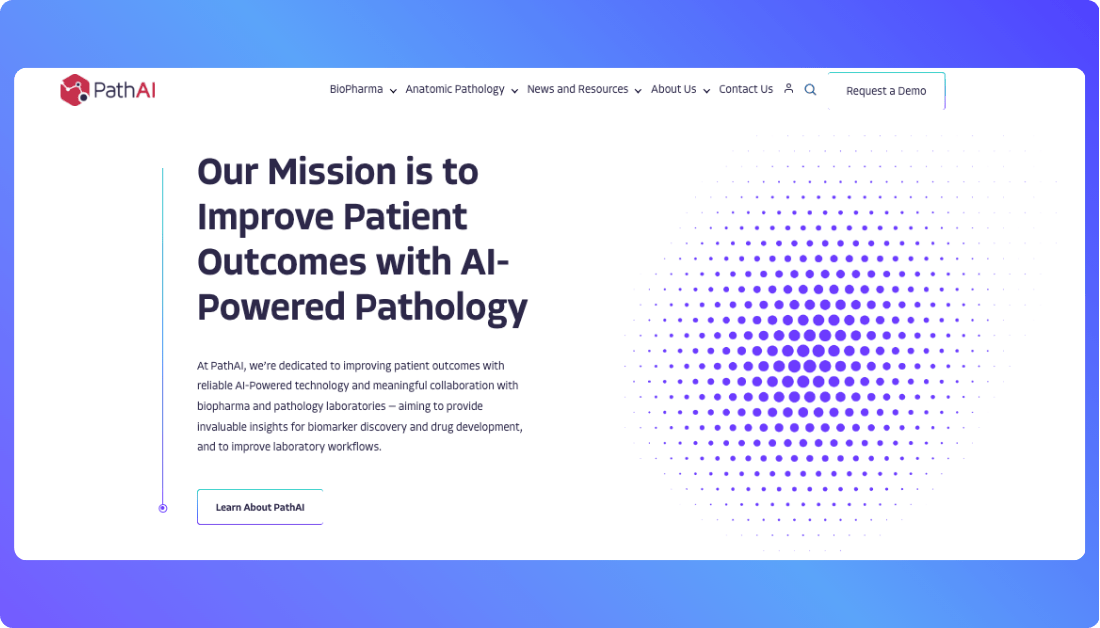
3. PathAI – AI for Precision Diagnostics
PathAI applies deep learning to pathology. It analyzes slides with high accuracy, helping pathologists detect abnormalities in tissue samples faster and more reliably.
Key features
- Image classification and segmentation for tissue samples
- Predictive models trained on large medical datasets
- Built-in quality assurance tracking
- Cloud-based platform for collaboration
Real use cases
- Reviewing biopsy slides to detect cancer cells
- Flagging inconsistencies in pathology reports
- Double-checking critical diagnoses for second opinion
- Training and supporting junior lab staff
- Streamlining quality control in high-volume labs
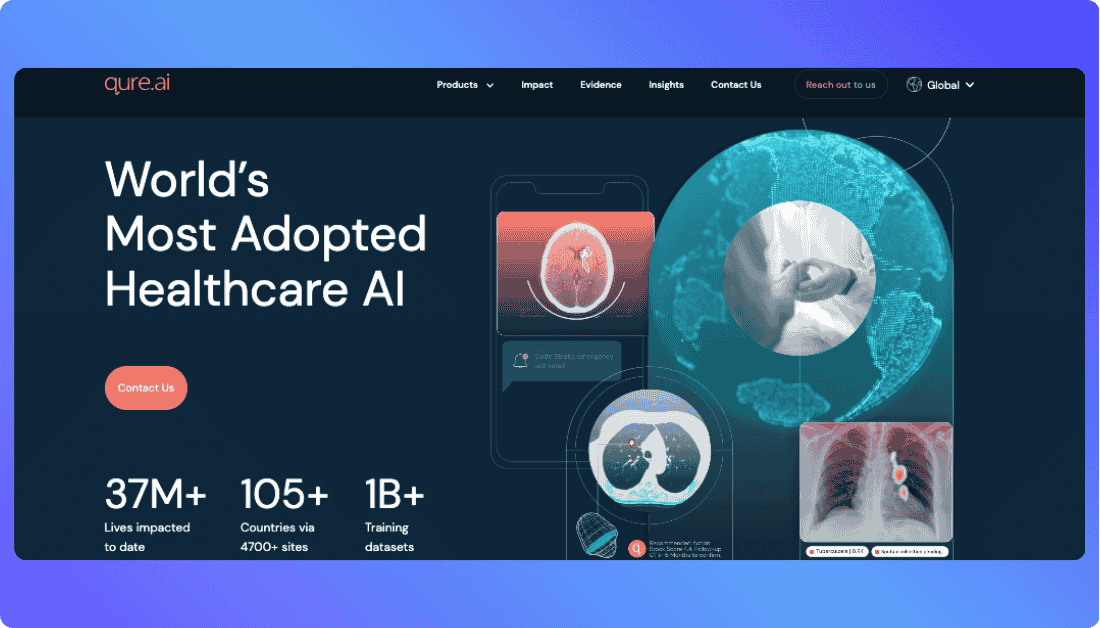
4. Qure.ai – AI for Faster Image Interpretation
Qure.ai develops advanced AI models to interpret medical images like X-rays, CT scans, and MRIs. Its tools help radiologists identify critical issues quickly, even in busy or resource-limited settings.
Key features
- Rapid detection of abnormalities in head, chest, and musculoskeletal images
- Automated prioritization of urgent cases
- Longitudinal tracking of patient scans over time
- Seamless integration with PACS and radiology systems
Real use cases
- Triage of emergency CT brain scans to detect bleeding or stroke
- Screening chest X-rays for signs of tuberculosis or pneumonia
- Reducing backlog in imaging departments with auto-analysis
- Supporting rural clinics without full-time radiologists
- Flagging missed anomalies for quality assurance
Why it matters
Imaging is often the first step toward diagnosis. Qure.ai shortens that journey by helping radiologists focus on what matters most. It’s especially valuable in high-pressure or under-resourced environments.
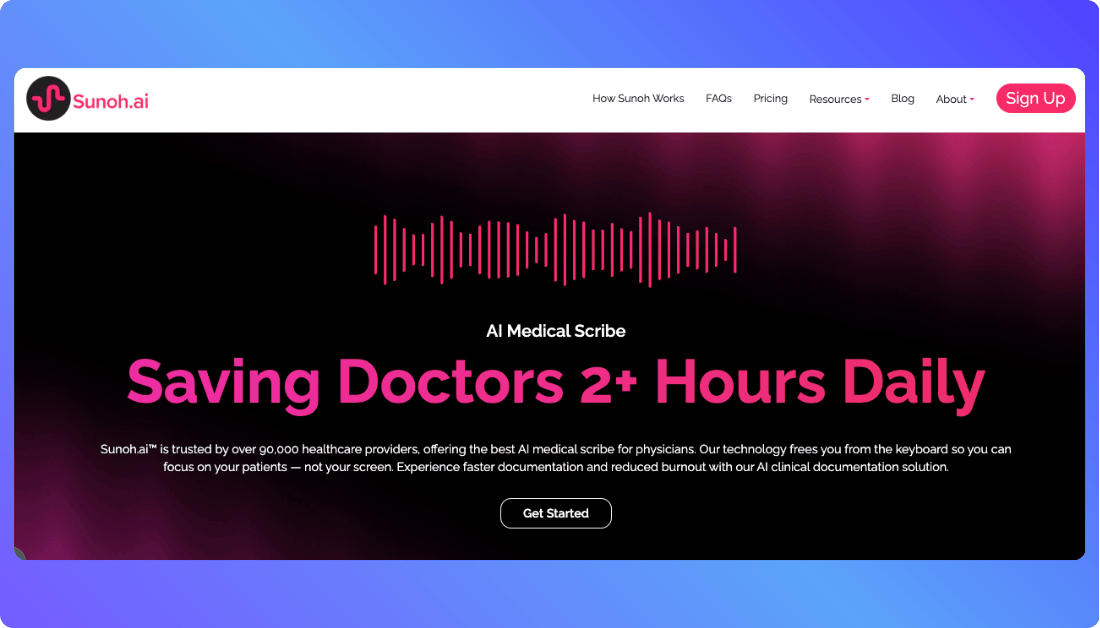
5. Sunoh.ai – AI Medical Scribe and Documentation Assistant
Sunoh.ai listens to real-time clinician-patient conversations and turns them into structured medical notes. It eliminates most manual typing, reducing burnout and boosting efficiency.
Key features
- Real-time transcription of consultations
- Automatic generation of SOAP notes
- EHR integration for seamless record-keeping
- Customizable to different specialties
- High speech recognition accuracy, even in noisy clinics
Real use cases
- Capturing patient histories during in-person or telehealth visits
- Auto-filling medical records with structured summaries
- Reducing after-hours charting for physicians
- Improving billing accuracy with complete documentation
Why it matters
Doctors spend hours each day documenting care. Sunoh gives them that time back, allowing for more face-to-face interaction and less screen time. This improves both clinician satisfaction and patient engagement.
6. MONAI – Open-Source Medical Imaging AI Framework
MONAI (Medical Open Network for AI) is an open-source framework built to support deep learning in medical imaging. It helps developers and researchers create high-performance models quickly and efficiently.
Key features
- Optimized tools for segmentation, registration, and classification
- Pretrained models for rapid prototyping
- Full PyTorch compatibility
- Strong support for 3D medical imaging workflows
Real use cases
- Building AI models to detect tumors in brain or lung scans
- Segmenting organs for surgical planning or radiation therapy
- Academic research and medical AI innovation
- Custom diagnostic tool development by in-house data science teams
Why it matters
Many hospitals want to innovate but lack the right foundation. MONAI provides that technical base, speeding up experimentation while keeping quality high. It’s the engine behind many of today’s custom AI imaging tools.
How to Choose the Right AI Tools for Your Healthcare Practice
With hundreds of AI solutions on the market, choosing the right one starts with asking the right questions. Here’s how to find a tool that fits your practice:
1. Start With the Problem You Want to Solve
AI works best when it solves a real, specific issue. Whether it’s slow documentation or overloaded imaging, identify one clear problem to tackle first.
2. Define Success for Your Team
Don’t just install tech for the sake of it. Set goals like reducing admin time, improving diagnosis, or speeding up patient flow so you can measure what matters.
3. Check for Compatibility with Existing Systems
A great AI tool should work seamlessly with your EHR, billing, or lab systems. If it causes disruption or slows workflows, it’s not the right fit.
4. Prioritize Data Privacy and Compliance
Choose AI that’s built with HIPAA, GDPR, and other healthcare standards in mind. Patient trust depends on strong security, encryption, and responsible data handling.
5. Choose Tools That Can Grow With You
Look for platforms that scale as your practice expands. Whether you add more users, data, or departments, your AI solution should evolve without needing a rebuild.
6. Don’t Fall for Hype — Look for Proof
Skip the buzzwords and ask for real-world results. Case studies, clinical outcomes, and provider testimonials tell you more than flashy marketing ever will.
Conclusion
AI is no longer a future concept in healthcare. It is already making a measurable impact. From diagnosing diseases faster to freeing up doctors’ time, the right tools are helping providers deliver smarter, more efficient care.
As the technology evolves, so will the opportunities. Practices that adopt AI thoughtfully today will be better prepared for tomorrow’s challenges and better equipped to put patients first.
What’s New?